How to test your safety sensors after a windshield replacement
The Modern Windshield: More Than Just a Pane of Glass
In my twenty-five years as a Master Glazier, I have seen the industry shift from simple plate glass to high-performance architectural glazing. But nowhere is the precision of a glass installer more critical today than in the automotive sector. When you seek a mobile service for a windshield replacement, you are not just getting a new piece of glass: you are getting a critical optical component for your Advanced Driver Assistance Systems (ADAS). A modern windshield is effectively a lens. If that lens is distorted, or if the glass installer fails to respect the tolerances of the rough opening, your safety sensors will fail. Testing these sensors after a same-day replacement is the difference between a functional safety net and a dangerous liability.
I sat across from a high-pressure salesman last week who was trying to convince a customer that recalibration was an unnecessary add-on. I had to explain to the homeowner, who was also a car owner, why that logic was flawed. I told them that a windshield is like a high-performance window in a coastal zone: if the glass isn’t perfectly aligned and the optical clarity isn’t met, the entire system fails. The salesman didn’t want to hear about the refractive index of the glass or the precision of the camera mount, but the data does not lie. If the camera is off by even a single millimeter, its field of vision at one hundred yards could be off by several feet. This is why testing is mandatory.
“Installation is just as critical as the window performance itself. A high-performance window installed poorly will fail.” AAMA Installation Masters Guide
Understanding the Optical Path and Glass Quality
When we talk about chip repair or a full replacement, we are dealing with the physics of light. In residential glazing, we worry about the Solar Heat Gain Coefficient (SHGC) and how the Low-E coating on Surface #2 reflects heat. In your vehicle, the glass installer must ensure the glass has zero distortion in the camera’s viewing area. This area is often surrounded by the frit: those black dots that act like a muntin to protect the adhesive from UV degradation. If you choose a low-quality glass, the camera may struggle to see through the material, much like trying to look through a wavy piece of historic cylinder glass. The sensors, which include CMOS cameras and sometimes LIDAR, rely on the glass being an operable part of the electronic system.
The Post-Installation Test: Lane Departure and Collision Warnings
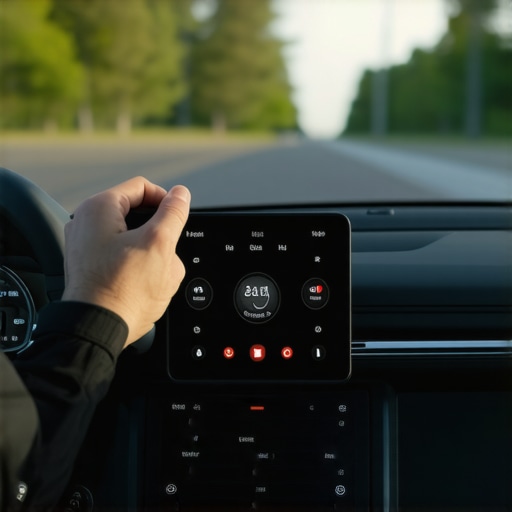
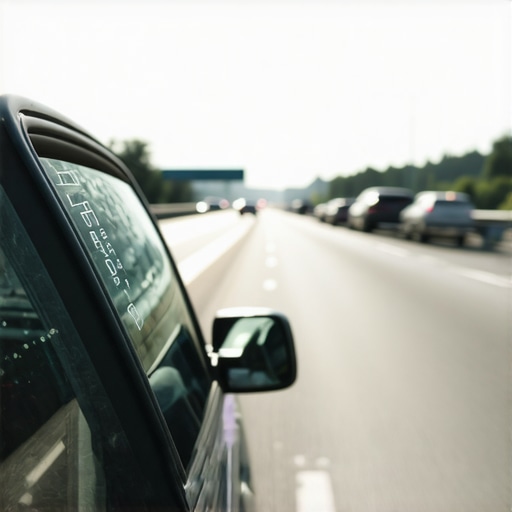
Once your same-day mobile service is complete, the first thing you must test is the Lane Departure Warning (LDW). This is the most sensitive system to glass misalignment. Drive on a well-marked highway and observe if the car accurately detects the lines. If the car ‘wanders’ or triggers the alarm when you are centered, the camera is likely tilted because the glass was not seated correctly in the frame. In the glazing world, we would say the rough opening was not properly respected. In a car, it means the urethane bead was uneven, causing the glass to sit at an incorrect angle. Unlike a residential window where you might use a shim to level the sash, a windshield relies entirely on the consistency of the adhesive bead.
The Physics of Calibration: Static vs. Dynamic
Testing your sensors involves understanding how they were calibrated. Static calibration happens in a shop where the glass installer uses specific targets. If you had a mobile service, they likely performed a dynamic calibration. This requires driving the vehicle at specific speeds for a set amount of time so the sensors can map the environment. You should ask your technician for a calibration report. This is your ‘proof of performance,’ much like a NFRC label on a new triple-pane window. Without this report, you have no way of knowing if the Adaptive Cruise Control (ACC) will correctly calculate the distance to the car in front of you.
“Standard Practice for Installation of Exterior Windows, Doors and Skylights requires that the flashing system and the seal integrity be verified to ensure long-term performance.” ASTM E2112
Checking the ‘Sill Pan’ and Water Shedding
While the sensors are high-tech, the basic principles of glazing still apply. Every windshield installation must manage water. The area at the bottom of your windshield, the cowl, acts much like a sill pan in a window installation. It must be clear of debris, and the weep holes must be functional. If the glass installer was sloppy with the flashing tape or the urethane, water can leak into the dashboard. This moisture is the enemy of your safety sensors. High humidity inside the cabin can cause the camera’s viewing area to fog up, rendering the ADAS useless. If you see ‘sweating’ on the interior glass near the camera bracket, you have a seal failure that must be addressed immediately.
The Same-Day Service Trap
Everyone wants a same-day solution, but you cannot rush the chemistry of the bond. In hot climates like Texas or Florida, the Solar Heat Gain can accelerate the skinning of the urethane, but the full cure takes time. If you drive the car too soon and the sensors are active, the vibration can shift the glass before it is set. This is the ‘caulk-and-walk’ mentality that I despise. Ensure your installer uses a high-modulus, non-conductive urethane that matches the original equipment manufacturer’s specifications. This ensures the windshield remains a structural part of the vehicle, providing the necessary rigidity for the sensors to stay aligned over thousands of miles of road vibration.
The Verdict on Chip Repair Near Sensors
If you have a small rock chip directly in the line of sight of the camera, do not settle for a chip repair. While a good glass installer can make a chip nearly invisible, the resin used in the repair has a different refractive index than the surrounding glass. To a human eye, it looks fine. To a safety sensor, it looks like a permanent obstacle or a distortion. In these cases, a full replacement is the only way to ensure the ADAS functions as intended. Don’t buy the hype that every chip can be fixed; buy the numbers and the safety data that say a clear field of vision is non-negotiable for autonomous safety features.