Why insurance companies usually cover chip repairs for free
The Actuarial Logic Behind the Free Chip Repair
In the world of high-stakes glass management, nothing is truly free. When your insurance agent tells you that a mobile service can fix your glass chip at zero out-of-pocket cost, they aren’t being generous. They are performing a cold, calculated maneuver in loss mitigation. As a master glazier with a quarter-century in the field, I have seen exactly what happens when a minor impact is ignored. I once stood in a driveway in the dead of a Chicago winter, looking at a homeowner who had a tiny, sub-inch bullseye on their laminated glass. They figured it was a cosmetic nuisance. However, the moment they turned their defroster to maximum, the thermal gradient between the sub-zero exterior and the rising interior temperature caused a massive stress fracture. That tiny chip turned into a two-foot crack in seconds. What would have been a fifty-dollar repair for the insurance company became a thousand-dollar replacement. That is why they cover the chip.
“Installation and maintenance of the glazing system are just as critical as the glass performance itself. A compromised lite will eventually succumb to environmental loads.” – AAMA Installation Masters Guide
The Physics of the ‘Ticking Time Bomb’
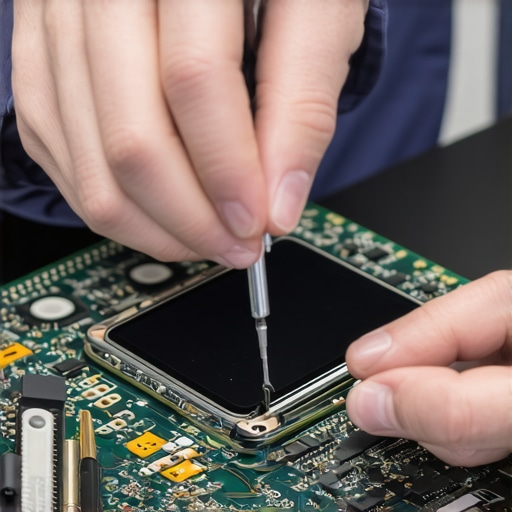
To understand why the ‘free’ repair exists, you must understand the tension and compression within a piece of glass. Most modern glass, whether it is an automotive windshield or a high-performance residential pane, is designed to handle specific wind loads and thermal stresses. When a stone or debris strikes the surface, it creates a break in the surface tension. We call this the ‘fracture toughness’ limit. This isn’t just a hole; it is a structural failure. In cold climates, water enters the chip. When that water freezes, it expands with a force that the glass cannot contain. In hot climates, the radiant heat from the sun causes the glass to expand. If the edges of the glass are locked into a sash or a frame, that expansion has nowhere to go but into the chip, forcing it to spread. A mobile service glass installer uses a vacuum-sealed bridge to inject a specialized resin into this void. This resin has a refractive index nearly identical to glass, but more importantly, it restores the structural bond of the PVB interlayer in laminated glass.
Why Insurance Prefers Repair Over Replacement
Insurance companies are in the business of risk assessment. A chip repair is a surgical strike. It takes thirty minutes, requires no removal of the glazing bead or the factory seal, and costs the carrier a fraction of a full replacement. From an engineering standpoint, maintaining the factory seal is always preferable. When we perform a full tear-out, we are dealing with the rough opening, the flashing tape, and the potential for installer error. A ‘caulk-and-walk’ technician can easily botch a full replacement, leading to future leaks and mold claims. By incentivizing the chip repair through a deductible waiver, the insurance company avoids the high cost of the glass itself, the labor of a two-man crew, and the liability of a structural replacement. They are essentially paying a small ‘bribe’ to the policyholder to prevent a much larger financial loss later.
“The integrity of the building envelope or vehicle safety system is compromised once a fracture exceeds the allowable tolerances of ASTM standards.” – ASTM E2112 Standard Practice
The Mobile Service Revolution
The rise of the same-day mobile service has fundamentally changed the glass industry. In the past, a homeowner or driver had to schedule a shop visit, which meant taking time off work. This delay is where the disaster happens. Now, a glass installer can meet you at your home or office, shim the vehicle or window if necessary for stability, and perform the resin injection on-site. This immediate intervention is the insurance company’s best defense against a crack spreading. If you wait even forty-eight hours, dust and road oils can contaminate the chip. Once the ‘weep hole’ of the chip is filled with debris, the resin cannot bond properly, and a replacement becomes the only viable path. This is why most carriers will waive the deductible only if the damage is smaller than a dollar bill; they know that beyond that point, the structural math no longer favors a simple fix.
Technical Constraints: When Repair Isn’t an Option
Not every chip is a candidate for this free service. If the impact has reached the inner layer of the laminate or if it is located directly in the critical field of vision, the glazier must call for a replacement. We look at the ‘sash’ and the ‘glazing bead’ to ensure there is no perimeter damage. If the chip is within two inches of the edge, the stress is too high for a repair to hold. In those cases, the thermal expansion of the frame will snap the resin bond within weeks. This is where the expertise of a veteran installer comes into play. We aren’t just looking at the hole; we are looking at the thermal dynamics of the entire installation. If you want to keep your glass intact and your deductible in your pocket, the same-day repair is the only logical choice. Do not wait for the first frost or the first heatwave to test the limits of your damaged glass.