The reason your windshield wipers are skipping after a repair
As a master glazier with over two decades in the trade, I have seen every imaginable failure of glass and sealant. While my usual day involves managing the thermal expansion of high-rise curtain walls or ensuring the sill pan of a historic wood sash is perfectly pitched, the physics of glass remain constant regardless of the frame. When you experience that rhythmic, annoying chatter of windshield wipers across your glass immediately following a chip repair, it is not a coincidence. It is a symptom of a mechanical and chemical failure in the surface restoration process.
The Residual Resin Autopsy
I recall a specific instance where a homeowner called me in a panic because their brand-new automotive glass was ‘sweating’ and the wipers were jumping like a nervous heartbeat. I walked out to their driveway with my hygrometer and a high-magnification loupe. It turned out the humidity was hovering at 70 percent, and the mobile service technician who had performed the same-day repair had failed to account for the dew point. They had injected the resin, but because of the ambient moisture, the bond was compromised at the molecular level. It was not the glass that was the problem; it was the lack of environmental control during the installation.
“Installation is just as critical as the window performance itself. A high-performance window installed poorly will fail.” AAMA Installation Masters Guide
When a glass installer performs a chip repair, they are injecting a specialized polymer resin into the damaged area. This resin is designed to mimic the refractive index of the glass, but it is fundamentally a different material. If the technician does not use a high-quality pit filler and then polish it back to a perfectly flush state, you are left with what we call a ‘micro-mound.’ Even a deviation of a few microns creates a speed bump for your wiper blade. As the rubber edge hits this obstruction, the friction coefficient spikes, causing the blade to lift slightly and then slam back down. This is the ‘skip’ you feel and hear.
The Physics of Surface Energy and SHGC
In hot, southern climates like Texas or Florida, the Solar Heat Gain Coefficient (SHGC) of your glass plays a massive role in how repairs behave. If the car has been sitting in the sun, the glass temperature can easily exceed 140 degrees Fahrenheit. If a mobile service tech applies a cold resin to that hot substrate, the expansion rates will be mismatched. When the glass cools down, the resin may slightly protrude from the surface. Surface #2 of the laminated glass is where the heat is absorbed, and this thermal transfer can actually soften the resin if the technician used a cheap, non-UV-stable product. This creates a tacky residue that attracts road grime, further increasing the friction between the wiper and the glass surface.
The Friction Coefficient and Chemical Contamination
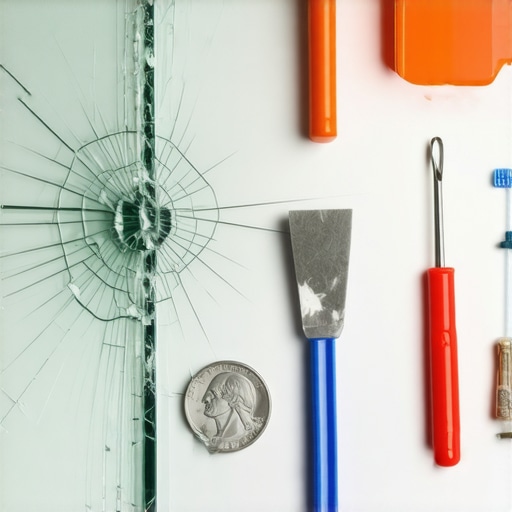
Many ‘same-day’ repairs rely on speed over precision. After the resin is cured with a UV lamp, the excess must be scraped off with a razor blade and then polished. If the glass installer uses a dull blade or skips the polishing step, the surface remains ‘hydrophilic’ (water-attracting) in that one spot while the rest of the glass remains ‘hydrophobic’ (water-repelling). This disparity in surface energy causes the water film to break unevenly. When the wiper blade transitions from a dry spot to a wet spot, the sudden change in resistance causes the skipping motion.
“The integrity of the building envelope, or in this case the vehicle envelope, depends entirely on the continuity of the seals and the smoothness of the transitions.” ASTM E2112 Standard Practice
Why Mobile Service Speed Can Lead to Chatter
In the world of professional glazing, we talk about the ‘Rough Opening’ tolerances for windows. In auto glass, your tolerance is even tighter. A chip repair is essentially a microscopic version of filling a structural void. If the technician does not clean the chip properly, they are trapping oils and road salts inside the repair. These contaminants can leach out over time, especially under the heat of the sun, creating a film on the glass that ruins the glide of your wipers. Furthermore, if the ‘Weep Hole’ or drainage areas at the base of the windshield are clogged with debris, the moisture levels around the glass remain high, preventing the wiper blades from ever truly drying out, which leads to premature rubber degradation and more skipping.
Corrective Measures for the Professional Installer
To fix a skipping wiper after a repair, you cannot just ‘caulk-and-walk.’ You need to address the mechanical surface. I always recommend a deep cleaning with a cerium oxide polish. This removes any microscopic resin haze that the initial technician might have missed. Additionally, check the wiper blades themselves. If they have spent months dragging over a jagged chip before it was repaired, the rubber has likely been ‘scored’ or sliced. Once the glass is smooth, you must have a fresh, unmarred edge on your wipers to restore the silent glide. Remember, water management is a science. Whether it is a sill pan in a luxury home or the curve of a windshield, the goal is to move water away from the surface with as little resistance as possible. Do not settle for a repair that leaves your visibility compromised by mechanical chatter.