The best time of day to schedule a mobile glass fix
In the world of professional glazing, we do not just look at a window as a piece of translucent material. We see a complex interaction of physics, thermal expansion, and chemical bonding. When a homeowner or vehicle owner asks about the best time of day to schedule a mobile glass fix, they are often thinking about their own calendar. However, as a master glazier with a quarter-century in the field, I am thinking about the dew point, the surface temperature of the glass, and the viscosity of the resin. Scheduling a glass installer for a same-day mobile service is not a matter of convenience; it is a matter of ensuring the repair does not fail before the technician even pulls out of your driveway.
The Thermal Stress Crisis: A Real-World Failure
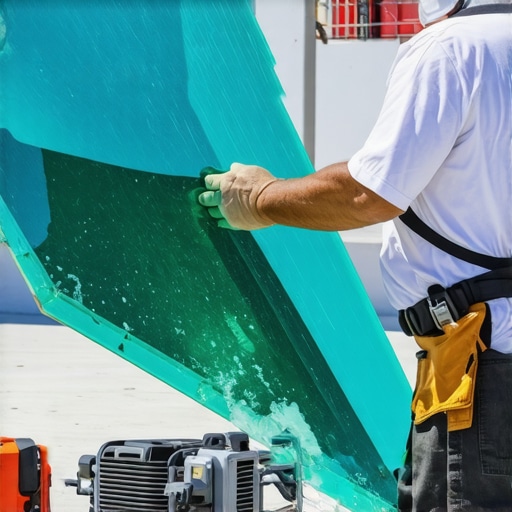
I recall a specific incident in the blistering heat of mid-July. A client called me in a panic because their glass was ‘sweating’ and a recent chip repair had suddenly spider-webbed across the entire pane. I walked in with my hygrometer and an infrared thermometer. I showed them that while the ambient air was 95 degrees, the glass surface temperature was hovering near 145 degrees due to direct solar absorption. I had to explain to the homeowner that the high-pressure salesman who sent a tech out at 2:00 PM in the direct sun was doomed from the start. The humidity was over 65 percent, and the moisture trapped in the chip before the resin injection created a pocket of steam. It was not the windows that failed; it was the failure to respect the atmospheric conditions of the installation environment.
“Installation is just as critical as the window performance itself. A high-performance window installed poorly will fail.” – AAMA Installation Masters Guide
The Science of the Morning Appointment
For any mobile service involving chip repair or glass installation, the early morning hours are objectively superior. Why? It comes down to the Coefficient of Thermal Expansion (CTE). Every material expands and contracts at different rates. Glass has a relatively low CTE, but the metal or vinyl frames and the polymer resins used in repairs have significantly higher rates. If you attempt a repair when the glass is at its peak expansion in the afternoon sun, the repair is being performed on a ‘stretched’ substrate. As the evening cools, the glass contracts, putting immense shear stress on the newly cured resin or the glazing bead holding the pane in place.
Furthermore, in the morning, the glass is typically at a stable temperature. For those in southern climates where the Solar Heat Gain Coefficient (SHGC) is the primary enemy, morning scheduling avoids the radiant heat that can cause resins to ‘boil’ or thin out before they can be properly cured with a UV lamp. A lower SHGC means the glass is designed to reflect that heat, but during a mobile glass fix, the technician often has to work on Surface #1 or Surface #2 of the glass. If those surfaces are already saturated with infrared energy, the adhesive bond of the flashing tape or the structural silicone will be compromised.
Understanding the NFRC Ratings in Repair Context
When we talk about a mobile glass fix, we are often dealing with high-performance units. The NFRC (National Fenestration Rating Council) labels you see on new glass tell a story of U-Factor and Visible Transmittance. In a mobile repair scenario, we must maintain these ratings. For instance, if you are replacing an operable sash on a mobile basis, the rough opening must be checked for squareness even in a quick swap. If the mobile tech ignores the sill pan or the weep hole alignment during a same-day installation, you might have a window that looks fine but fails the first time a heavy rain hits. The ‘shingle principle’ of water management must be maintained, where each layer of flashing and glazing overlaps the one below it to ensure gravity carries moisture away from the interior of the wall.
“The method of installation must account for the expansion and contraction of materials under varying thermal loads.” – ASTM E2112 Standard Practice
The Humidity Factor and Resin Integrity
In a mobile service, the ‘shop’ is the back of a van. This means the environment is uncontrolled. Professional glass installers know that high humidity is the silent killer of a chip repair. If you schedule your fix during a humid afternoon, moisture molecules can bond to the glass’s micro-fractures more quickly than the resin can displace them. This results in a foggy or ‘milky’ repair that is structurally inferior. In the early morning, while there might be dew on the surface, it is easier to mechanically dry a surface than it is to fight the invisible moisture saturated in the air during a humid midday peak.
If we are performing a mobile service on a residential unit, such as replacing a broken pane in a large picture window, the glazing bead becomes a critical point of failure. In the heat, vinyl glazing beads become overly pliable and can stretch; in the cold, they become brittle and snap. A master glazier knows how to find that ‘Goldilocks’ window of temperature, usually between 50 and 75 degrees Fahrenheit, to ensure the muntin bars and frames are handled without damage. This is why the best time of day is often dictated by the orientation of the window. A north-facing window might be safe all day, but a south-facing window with high solar exposure must be serviced before 10:00 AM or after the shadow of the house provides natural cooling.
The Math of Mobile Service: ROI and Comfort
Many homeowners believe that a quick chip repair is just a cosmetic fix. The reality is that the structural integrity of the glass is what maintains the thermal envelope of your home. A single crack can ruin the argon gas fill of a dual-pane unit, causing the U-Factor to skyrocket. This leads to heat loss in the winter and heat gain in the summer, effectively throwing money out of the window. By scheduling your mobile glass fix at the technically optimal time, you are ensuring the seal lasts for the remaining life of the unit, rather than just for a few months. Do not buy the hype of a ‘fifteen-minute fix’ in the middle of a parking lot in the noon sun; buy the expertise of a technician who understands that the molecular bond of the glass requires a stable environment.
Ultimately, water management and thermal stability are sciences, not suggestions. When you call for a glass installer, ask them about their protocol for surface temperature management. If they do not mention an infrared thermometer or thermal cooling blankets for the glass, you are likely dealing with a ‘caulk-and-walk’ operation. Insist on a morning appointment, ensure the rough opening is clear of debris, and make sure any new flashing tape is applied to a substrate that is not so hot it will melt the adhesive on contact. That is how you guarantee a repair that stands the test of time and temperature.
{“@context”:”https://schema.org”,”@type”:”HowTo”,”name”:”How to Schedule an Optimal Mobile Glass Repair”,”step”:[{“@type”:”HowToStep”,”text”:”Assess the orientation of the glass to determine when it receives direct sunlight.”},{“@type”:”HowToStep”,”text”:”Monitor the surface temperature to ensure it is below 85 degrees Fahrenheit for resin stability.”},{“@type”:”HowToStep”,”text”:”Schedule the mobile technician for an early morning slot to minimize thermal expansion issues.”},{“@type”:”HowToStep”,”text”:”Clear the rough opening or work area of any obstructions before the installer arrives.”}]}