Why you should avoid gravel roads right after a glass repair
The Science of Surface Tension: Why Gravel Roads are the Enemy of a Fresh Glass Repair
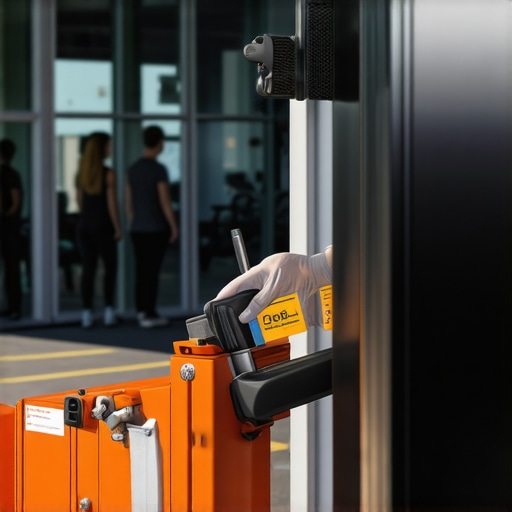
Every day, I see homeowners treat a window or a windshield like it is a solid, indestructible block of ice. It is not. Glass is an amorphous solid, a material that exists in a state of perpetual tension. When a mobile service glass installer arrives for a same-day chip repair, they are performing a delicate surgical procedure on a pressurized membrane. If you take that vehicle or that sash onto a gravel road immediately after the technician leaves, you are inviting a catastrophic failure of the repair bond. I pulled a vinyl window out of a house in Chicago and the header was completely black with rot. Why? The previous installer relied on the nailing fin instead of proper flashing tape. That failure of basic physics is the same logic that applies here: if you ignore the mechanics of how materials bond, the system fails. A chip repair is not just a cosmetic fix; it is a structural reinforcement. When a stone hits your glass, it creates a break in the surface tension. The technician uses a vacuum tool to extract air from the micro-fissures and then injects a methacrylate-based resin. This resin must undergo polymerization, a process where small molecules chemically combine to form a larger network. This transition from liquid to solid is not instantaneous.
“Installation is just as critical as the window performance itself. A high-performance window installed poorly will fail.” – AAMA Installation Masters Guide
The Physics of Harmonic Vibration on Uncured Resin
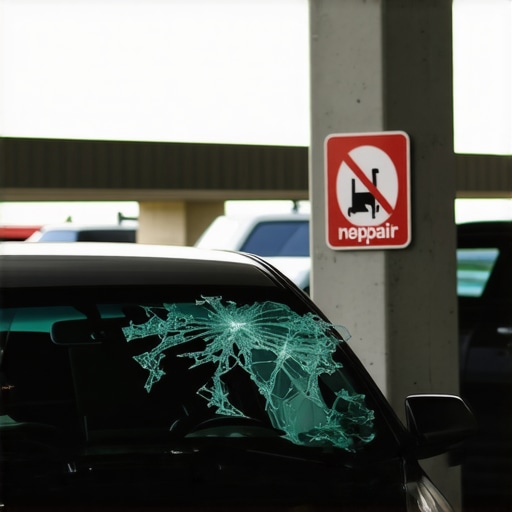
Why are gravel roads so dangerous for a same-day chip repair? It comes down to harmonic resonance and mechanical stress. A paved road is relatively smooth, but a gravel road creates high-frequency vibrations that travel through the tires, into the frame, and directly into the rough opening of the glass. If the resin has not fully cross-linked, these vibrations cause the micro-fissures to oscillate. This oscillation can lead to the ‘flow’ of the resin out of the crack or, worse, cause the crack to extend past the repair zone before the bond is permanent. In my 25 years as a glazier, I have seen the same principle in residential windows. If we set a large pane into a sash and don’t allow the glazing bead or the structural silicone to skin over before moving the unit, we risk a seal failure. On a gravel road, each individual stone creates a momentary impact that acts like a tiny hammer against the glass. For a fresh repair, this is like trying to heal a broken bone while running a marathon. The resin needs a stable environment to reach its peak Shore D hardness.
The North/Cold Climate Factor: Why Temperature Matters
In colder climates like Minneapolis or Chicago, the enemy of glass repair is the Dew Point and the slow molecular movement of the curing agent. In the North, heat loss is our primary concern, and we focus heavily on the U-Factor. When a mobile service technician performs a chip repair in 30-degree weather, the glass is in a contracted state. If you then drive onto a bumpy gravel road, the mechanical energy of the bumps generates localized friction and heat. This rapid cycling of temperature and vibration in a cold environment makes the glass more brittle. We often use warm-edge spacers in window units to prevent condensation, but in a chip repair, we are relying on the resin to act as its own thermal bridge. If the resin is cold, its viscosity is higher, meaning it didn’t penetrate the deepest parts of the break as easily as it would in July. Moving the glass too soon on a rough surface can snap those fragile new bonds.
“Proper glass preparation and the application of sealants must occur within a controlled environment to ensure long-term structural integrity.” – ASTM E2112 Standard Practice
The Installation Autopsy: Why Repairs Fail
When I perform an autopsy on a failed glass repair, I look at the ‘shingle principle’ of the fix. In a window installation, we ensure water flows down and out via a sill pan and weep hole. In a glass chip repair, we are looking for a seamless integration between the resin and the original silica structure. A gravel road introduces dust and fine particulates. If the repair hasn’t skinned over, these microscopic stones can embed themselves in the resin, creating a site for future stress fractures. Many high-pressure salesmen will tell you that a mobile service repair is ‘good as new’ the second they pack their tools. That is a myth. While the UV light helps accelerate the cure, the secondary chemical stabilization takes hours. If your home or vehicle is near a construction site or a rural route, you need to account for the ‘settling’ period of the glass. Just as we use a shim to level a sash in a rough opening to prevent bowing, the resin acts as a chemical shim for your glass. If you shake that shim before it’s set, the whole structure loses its level.
The Math of Comfort and Integrity
Homeowners often ask about the ROI of a repair versus a full replacement. A same-day chip repair is incredibly cost-effective, but its value is erased if the repair ‘runs.’ A crack that spans the length of the glass often starts as a small chip that was agitated by vibration. In the world of fenestration, we measure success by how well we manage the hole in the wall. Whether it is an operable wood sash or a fixed picture window, the glazing bead must remain intact to prevent air infiltration. A failed repair on a vehicle or a window doesn’t just look bad; it creates a point of thermal leakage. In the winter, that small crack will radiate cold air into the cabin or the room, forcing your HVAC system to work harder. By avoiding gravel roads for at least 24 hours, you are protecting the U-Factor of your glass and ensuring that the solar heat gain remains managed by the original factory coatings. Don’t let a ten-minute drive home ruin a professional glazier’s work. Patience is the final tool in any successful glass installation.