Why DIY resin kits usually end in a $400 mistake
The Sound of a Costly Miscalculation
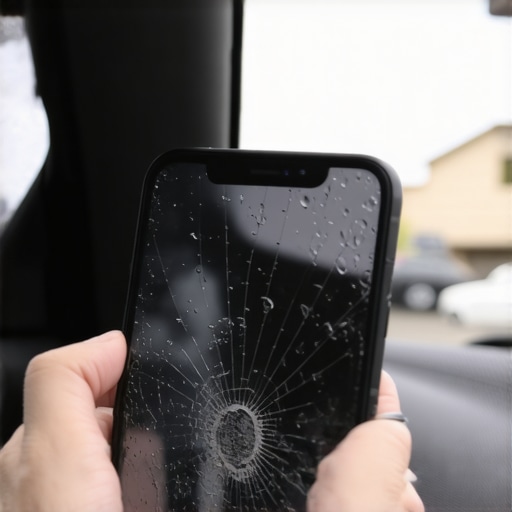
It usually starts with a sharp ‘tink’ sound while you are driving or a stray pebble from a lawnmower hitting your patio door. You see that small, star-shaped fracture and think you can handle it with a fifteen-dollar tube of goo from the local hardware store. As a Master Glazier with over two and a half decades in the field, I have seen this movie play out a thousand times. You apply the resin, you wait for the sun to hit it, and three days later, that tiny chip has sprinted across the entire pane like a lightning bolt. What was a minor blemish is now a catastrophic structural failure of the glass, necessitating a full unit replacement that will easily set you back four hundred dollars or more.
I recall a specific instance where I sat across from a homeowner who had tried to save a few bucks on a double-pane architectural window. He had watched a three-minute video online and thought he was a glass installer. He showed me the ‘miracle’ resin kit he bought. I had to explain that while the salesman at the big box store made it sound easy, the ROI on that DIY attempt was actually negative. By the time I arrived, the resin had partially cured in a way that prevented a professional bridge tool from ever drawing a proper vacuum. Because he didn’t understand the physics of the IGU, or Insulated Glass Unit, he had effectively sealed a death warrant for that specific sash. We weren’t talking about a simple chip repair anymore; we were talking about a full tear-out of the glazing bead and a custom-ordered glass replacement.
“Installation is just as critical as the window performance itself. A high-performance window installed poorly will fail.” AAMA Installation Masters Guide
The Physics of the Fracture: Why Resin Fails the DIYer
To understand why these kits fail, you have to understand the molecular nature of glass. Glass is not a typical solid; it is an amorphous solid that behaves with extreme sensitivity to thermal stress. When a stone hits the glass, it creates a localized area of high tension. A professional mobile service technician doesn’t just squirt resin into that hole. They use a precision bridge and injector to create a vacuum environment. This vacuum is critical because it pulls the air out of the microscopic fissures that the naked eye cannot see. If you leave even a microscopic bubble of air trapped in that fracture, the repair is doomed.
In northern climates where the temperature can swing sixty degrees in a single day, the air trapped inside a DIY repair becomes a tiny engine of destruction. As the air heats up, it expands. Because the glass is constrained by the sash and the rough opening, that expansion has nowhere to go but further into the glass. This is how a chip becomes a crack. A professional same-day chip repair involves using resins with specific refractive indices and thermal expansion coefficients that match the glass silicate structure. Most DIY kits use a generic acrylic resin that expands and contracts at a rate three times higher than the glass itself. It is not a matter of if it will fail, but when.
The Thermal Expansion Trap in Cold Climates
In regions like Chicago or Minneapolis, the U-Factor of your windows is the primary metric for comfort. When you have a chip in the exterior pane of a double-pane unit, you are compromising the thermal envelope. If you use a cheap resin kit, you are often introducing a material that lacks UV stabilizers. Over one winter, that resin yellows and becomes brittle. More importantly, it fails to handle the thermal gradient. On a January day, the interior surface of your glass might be sixty-eight degrees while the exterior surface is ten below zero. This creates immense shearing stress within the glass.
A professional glass installer understands that the ‘sweet spot’ for a repair requires the glass to be at a specific temperature before the resin is even introduced. We use thermal probes to ensure the substrate is ready. If you apply a DIY kit to cold glass, the resin will not penetrate the ‘legs’ of the crack. You might fill the center of the impact, but the radiating fractures remain empty and ready to spread the moment your furnace kicks on and creates a temperature differential across the pane.
“The service life of a fenestration product is directly dependent on the integrity of the seal and the management of moisture at the rough opening.” ASTM E2112 Standard Practice
The Anatomy of the Window: Why Knowledge Matters
When you are dealing with modern windows, you aren’t just looking at a piece of glass. You are looking at a complex system involving the sash, the muntins, the glazing bead, and often a Low-E coating. Most residential windows today have a Low-E coating on Surface #2 or Surface #3. If you aggressively scrub or prep a chip for a DIY kit, you risk scratching that microscopic metallic layer, which leads to permanent ghosting or haze around the repair site. A professional mobile service knows how to identify the coating type and location before a tool ever touches the glass.
Furthermore, many DIYers do not realize that their windows might have a specific gas fill, like Argon or Krypton, between the panes. While a surface chip doesn’t always breach the seal, an amateur repair that involves drilling (a common step in some advanced DIY kits) will almost certainly vent that gas. Once the gas is gone, the U-Factor of your window skyrockets, and you will eventually see condensation inside the unit. At that point, the window is ‘blown,’ and no amount of resin can save it. You are looking at a full replacement of the IGU within the sash.
The Logistics of Professional Mobile Service
The value of a professional same-day glass installer is not just in the resin they use, but in the specialized equipment they bring to the rough opening. Professional technicians use UV lamps with specific wavelengths to ensure a total cure in minutes, rather than relying on inconsistent sunlight. They also use high-viscosity pit fillers that are polished flush with the glass surface so that your window wipers or cleaning rags don’t catch on the repair site. This attention to detail is what separates a permanent fix from a temporary patch that will eventually fail and cost you a four hundred dollar replacement fee.
When you consider the cost of your time, the cost of the kit, and the very high probability that the repair will fail under thermal stress, the ‘savings’ of a DIY approach vanish. A professional repair maintains the structural integrity of the pane, keeps your thermal envelope intact, and prevents the need for a total tear-out. In the world of glazing, doing it right the first time is the only way to save money.