The specific temperature that turns a chip into a total loss
The Moment of Fracture: A Glazier’s Perspective on Thermal Shock
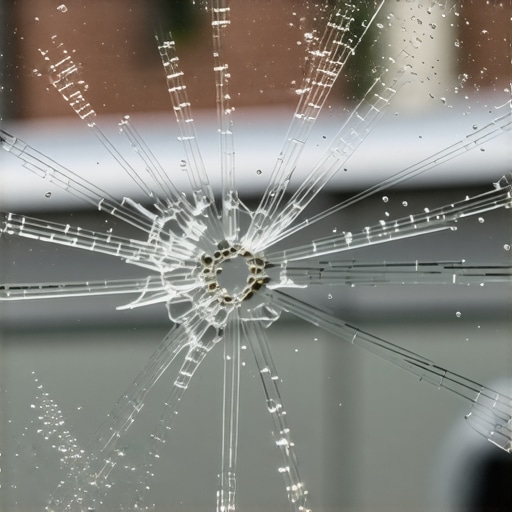
Most homeowners and drivers view a small rock chip as a cosmetic nuisance, something to be addressed when the schedule allows. As a master glazier with over 25 years in the field, I can tell you that a chip is not a static flaw; it is a structural failure waiting for a catalyst. That catalyst is almost always temperature. I recall a specific instance in early November when a client called me about a tiny bullseye in her laminated glass. She had been idling her vehicle to defrost the morning frost. I arrived just in time to see a hairline fracture race across the entire span of the pane. I walked over with my infrared thermometer and showed her that the glass near the vent was 75 degrees Fahrenheit while the exterior surface was a biting 28 degrees. It was not the chip that killed the glass; it was the physics of the thermal delta. That 47-degree difference created enough tension to overcome the remaining structural integrity of the laminated bond. When you ignore a chip, you are gambling against the laws of thermodynamics.
The Molecular Reality of Laminated Glass and PVB Interlayers
To understand why temperature is the enemy, we must look at the anatomy of the glass. Whether we are discussing high-performance residential glazing or automotive windshields, we are often dealing with laminated glass. This is a sandwich consisting of two layers of annealed or heat-strengthened glass bonded together by a Polyvinyl Butyral (PVB) interlayer. The PVB is designed to hold the glass fragments together in the event of an impact, providing safety and security. However, this interlayer also has a different coefficient of thermal expansion than the glass itself. When the glass is compromised by a chip, the uniform distribution of stress is shattered. The chip creates a concentrated point of tension. In a cold climate, the glass contracts. If you introduce sudden heat from a defroster or a localized heater, the inner layer of glass expands rapidly while the outer layer remains contracted. This differential creates a shearing force at the site of the chip. This is why a glass installer emphasizes same-day chip repair. The goal is to inject a clear, curable resin into the void before moisture enters or temperature fluctuations turn the chip into a long-crack failure.
“Installation is just as critical as the window performance itself. A high-performance window installed poorly will fail.” AAMA Installation Masters Guide
The North/Cold Context: Why U-Factor and Warm-Edge Spacers Matter
In northern regions where the mercury regularly dips below freezing, the enemy is heat loss and the resulting condensation. A chip in this environment is particularly dangerous because of the U-Factor requirements. In these climates, we prioritize a low U-Factor to keep radiant heat inside the structure. We often use triple-pane units with Argon or Krypton gas fills and Low-E coatings on Surface #3 to reflect heat back into the room. When a chip occurs on the exterior lite of such a unit, the thermal performance is immediately degraded. Moisture can be drawn into the chip through capillary action. When that moisture freezes, it expands by approximately nine percent. This mechanical expansion acts like a wedge, driving deeper into the glass. If you do not utilize a mobile service for an immediate resin injection, that ice-wedge will ensure the unit requires a full replacement rather than a simple repair. We also look at the glazing bead and the seal. If the chip is near the edge of the glass, it is within the edge stress zone where the glass is held by the frame. This area is already under mechanical pressure, making it even more susceptible to thermal shock.
The Science of Chip Repair: Viscosity and Refractive Index
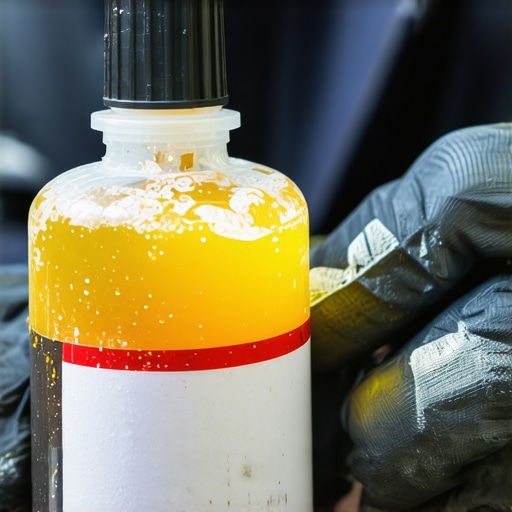
A professional chip repair is not just a patch; it is a chemical weld. As a glass installer, my process involves using a bridge and injector tool to create a vacuum over the impact point. This vacuum draws out the air and any trapped moisture from the break. We then inject a specialized methacrylate resin. The technical challenge here is matching the refractive index of the resin to the glass so that the repair is nearly invisible. We also must consider the viscosity of the resin based on the ambient temperature. In colder weather, the resin thickens, making it difficult to penetrate the microscopic fissures of a star break. This is why a controlled environment or specialized heating of the glass surface is necessary during the repair process. Once the resin has fully permeated the break, we use a UV light source to trigger the polymerization process, curing the resin into a solid that restores the structural integrity of the pane. If you wait too long, dirt and road oils will contaminate the break, preventing the resin from bonding and making a total loss inevitable.
“Glass is strongest in compression and weakest in tension. Thermal gradients are the primary driver of tension-induced fracture propagation.” ASTM C1036 Standard Specification for Flat Glass
Analyzing the Rough Opening and Edge Stress
In residential glazing, a chip often occurs during the handling or installation phase. If the rough opening is not square or if the installer fails to use the proper shim placement, the glass can be subjected to twisting forces. A small chip on the edge of the glass, often hidden by the sash or the glazing bead, becomes a ticking time bomb. This is why the shingle principle is so important in our installations; we manage water and stress from the top down. If we have a chip near a weep hole, the constant exposure to moisture and temperature cycling at the sill will almost certainly lead to a crack. My advice is always to seek a glass installer who understands the specific pressures of your climate. A same-day mobile service is often the only thing standing between a fifty-dollar repair and a thousand-dollar replacement. Don’t wait for the crack to reach the edge of the frame. By then, the physics of the glass have already decided your ROI, and it won’t be in your favor.
[IMAGE_PLACEHOLDER]