How to tell if your new windshield seal is airtight
The Phantom Whistle: A Master Glazier’s Perspective on Automotive Glass
As a Master Glazier with over a quarter-century in the field, I have seen it all, from tempered glass failures in skyscrapers to the delicate replacement of 19th-century wood sashes. One truth remains universal across all glazing disciplines: a seal is either absolute or it is a failure. There is no middle ground. When we talk about windshields, we are not just discussing a piece of glass that keeps bugs out of your teeth. We are talking about a structural component that contributes to the rigidity of the vehicle frame and ensures proper airbag deployment. If that seal is not airtight, the vehicle is compromised.
“The windshield is a safety component. Proper installation using approved materials and procedures is essential to ensure that the glass remains in place during an accident and provides the necessary structural support for the roof.” – ANSI/AGSC 003-2015 Standard
I remember a specific case where a homeowner called me because their ‘brand new’ windshield, installed by a mobile service that promised a same-day fix, was producing a high-pitched scream every time they hit 45 miles per hour. I took one look at the cowl and the molding and knew exactly what happened. I pulled the trim and found that the installer had performed a ‘caulk-and-walk.’ Instead of a full cut-out and a clean prep of the pinch weld, they had simply buttered a new layer of urethane over the old, contaminated bead. The bond was non-existent. Air was screaming through a micro-gap where the urethane had failed to cross-link with the substrate. This is the danger of prioritizing speed over the physics of the bond.
The Science of the Bond: Urethane, Primers, and the Frit
To understand an airtight seal, one must understand the chemistry of one-part moisture-cure polyurethanes. This material relies on ambient humidity to trigger a chemical reaction that transforms the liquid bead into a high-modulus elastomer. In cold climates, like Minneapolis or Chicago, this process slows down significantly. If an installer does not account for the ‘Safe Drive-Away Time’ (SDAT), the seal may appear airtight initially but will develop micro-fissures as the vehicle frame flexes during driving before the urethane has reached its structural shore hardness. The ‘Frit’—that black ceramic band around the perimeter of the glass—is critical here. It provides a porous surface for the primer to bite into and protects the urethane from ultraviolet radiation. Without a proper primer application on both the glass frit and any nicks in the pinch weld’s paint, the bond will eventually delaminate, leading to air leaks and, eventually, water intrusion.
The Installation Autopsy: Where Shortcuts Lead to Leaks
In a proper installation, the glass installer must manage the ‘Rough Opening’ of the vehicle—the pinch weld. This area must be free of rust, old urethane, and skin oils. If the mobile service technician doesn’t wear gloves, the oils from their hands can prevent the primer from adhering. We look for a ‘V-bead’ geometry. A professional glazier uses a notched nozzle to create a triangular bead of urethane. When the glass is set, this V-shape collapses outward, ensuring a consistent contact patch without air pockets. A flat bead, often used by inexperienced techs, frequently traps air bubbles, which are the primary highway for wind noise and moisture.
“Installation of automotive glass must follow the manufacturer’s instructions regarding adhesive systems. Failure to follow these instructions can lead to catastrophic failure of the glass retention system.” – AGRSS (Auto Glass Replacement Safety Standards)
How to Verify Your Seal is Airtight
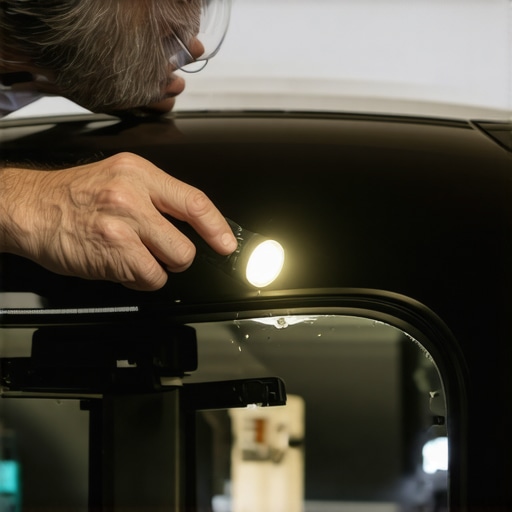
There are three primary methods to verify that your glass installer has achieved a true airtight seal. First is the ‘Soap Solution Test.’ This involves spraying a high-viscosity soapy water solution around the exterior perimeter of the windshield while the interior blower motor is on high (non-recirculating). If you see bubbles forming on the outside, air is escaping from the cabin through a gap in the urethane. This is a definitive sign of a failed seal. Second is the ‘Ultrasonic Leak Detector.’ This is the high-tech approach where a transmitter is placed inside the car, and a receiver is moved along the exterior seal. Any spike in decibels indicates a hole in the seal. Finally, the ‘Slam Test’—closing the car door with all windows up. A properly sealed windshield will resist the pressure spike. If the glass ‘jumps’ or you hear a sudden hiss, the seal is not structural.
The Climate Factor: Cold Weather Challenges
In northern climates, heat loss is not the only concern; condensation at the base of the windshield can indicate a seal failure. If the U-factor of the installation is compromised by air gaps, the interior surface temperature of the glass near the pinch weld will drop below the dew point. This leads to fogging and moisture pooling on the dashboard, which can eventually fry the vehicle’s electronic control modules located in the cowl area. A warm-edge approach to windshield installation doesn’t exist in the same way it does for home windows, but the integrity of the urethane bead acts as the primary thermal break. If that bead is thin or missing in spots, the thermal bridging will be extreme.
The Myth of the Same-Day Quick Fix
While everyone wants a same-day chip repair or replacement, the physics of the bond cannot be rushed. A chip repair is a different beast—it involves injecting a low-viscosity resin into the laminate layer. But a full replacement requires the urethane to reach a specific state of cure. If you are in a climate with low humidity, the cure will take longer. Always ask your glass installer for the specific SDAT based on the current weather conditions. If they can’t give you a number, they don’t understand the science of what they are selling. A professional will always prioritize the ‘Sill Pan’ integrity of the pinch weld and ensure that the water management system—the moldings and Cowl—is reinstalled so that water flows over the seal, not into it, following the ‘Shingle Principle’ of glazing.