The simple trick to stop a rock chip from spreading today
You are driving down the highway when you hear that unmistakable metallic ‘tink.’ A pebble, launched from the tire of a tractor-trailer, has just collided with your glass. At first, it looks like a minor speck, a tiny ‘bullseye’ or a ‘star’ break no larger than a dime. Most people ignore it. They think it is a cosmetic issue. As someone who has spent over two decades as a glass installer, I can tell you that ignoring that chip is the fastest way to turn a fifty-dollar repair into a five-hundred-dollar replacement. Glass is not a static material; it is a supercooled liquid in a state of constant tension. That tiny crater has just compromised the structural integrity of the entire lite.
A homeowner called me in a panic last February because their new high-efficiency windows were ‘sweating’ and then, suddenly, the outer pane of the sliding door cracked from top to bottom. I walked in with my hygrometer and showed them the humidity was 60 percent. It was not a manufacturing defect; it was a combination of high internal moisture and a microscopic edge chip that had been stressed by the extreme thermal gradient of a Chicago winter. When the temperature inside is 70 degrees and the temperature outside is 5 below, the glass undergoes massive expansion and contraction. That chip was the ‘weakest link’ where the stress concentrated until the molecular bonds finally gave way.
“The structural integrity of a fenestration assembly is compromised the moment the outer lite surface tension is breached by a projectile.” – ASTM E2112 Standard Practice
To understand why a chip spreads, we have to look at the physics of the glass itself. Most windows and windshields are made of annealed or laminated glass. Laminated glass consists of two lites of glass bonded together with a PVB (polyvinyl butyral) interlayer. This interlayer is designed to hold the glass together upon impact, but it is also highly sensitive to moisture and dirt. When a rock hits the glass, it creates a void. If you leave that void open, moisture from rain or even humidity enters the break. This moisture carries microscopic particulates of dirt and road grime. More importantly, when that moisture freezes, it expands, acting like a wedge that drives the crack deeper into the glass. This is especially true in northern climates where heat loss and condensation management are critical. If the U-Factor of your glass is low, it means the thermal resistance is high, creating a sharp temperature boundary right at the glass surface. This thermal stress is the primary driver of crack propagation.
So, what is the simple trick to stop a rock chip from spreading today? It is not a miracle cure, but it is a vital ‘first aid’ step: Seal the breach immediately with a small piece of clear packing tape. This is not meant to hold the glass together. The tape serves one purpose: keeping the ‘wound’ clean and dry. By preventing water and debris from entering the fracture, you ensure that when a professional glass installer arrives for a same-day mobile service, the resin they inject will have a 100 percent bond with the glass. If the chip is contaminated with dirt or wax from a car wash, the resin cannot fill the microscopic fissures, and the repair will be visible and structurally weak. This simple trick preserves the refractive index of the glass, making the repair nearly invisible once the resin is cured.
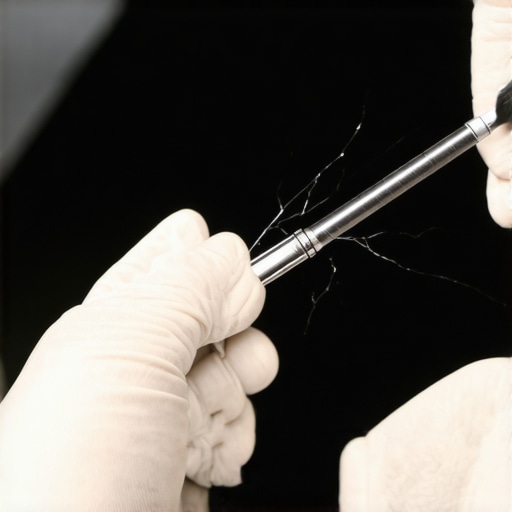
A professional chip repair is a precise technical process. We use a vacuum-pressure tool to extract the air out of the break. If you leave air in there, the repair will look like a silver reflection. Once the vacuum is achieved, we inject a high-viscosity, UV-cured resin into the Rough Opening of the chip. This resin is engineered to match the refractive index of glass (approximately 1.52). We then use a UV lamp to cure the resin, essentially welding the glass back together at a molecular level. This is why mobile service is so critical; you want to get this resin in before the glass has a chance to cycle through another day of heating and cooling. In the South, where the Solar Heat Gain Coefficient (SHGC) is the primary concern, the sun beating down on a chipped pane can cause the air inside the chip to expand rapidly, ‘popping’ the crack across the entire surface in minutes.
“Installation and maintenance are just as critical as the window performance itself. A high-performance window or glazing unit that is breached and left untreated will inevitably fail.” – AAMA Installation Masters Guide
When you are looking for a glass installer, do not settle for someone who just squirts some glue in the hole. You need someone who understands the importance of the glazing bead and the integrity of the sash. If the chip is near the edge of the glass, it is even more dangerous. Edge chips are under more stress because of how the glass is seated in the frame, often resting on shims that can create point loads. A professional will check the weep hole to ensure no moisture is backing up into the frame, which could further exacerbate the damage through hydrostatic pressure. The goal of a same-day repair is to restore the structural strength so the glass can continue to handle wind loads and thermal expansion. Whether it is a storefront with a large operable sash or a vehicle windshield, the science remains the same. Manage the stress, seal the breach, and keep the contaminants out. That is how you save a window and your wallet.