Why you should never use clear nail polish on a windshield chip
The Dangerous Myth of the Cosmetic Quick-Fix
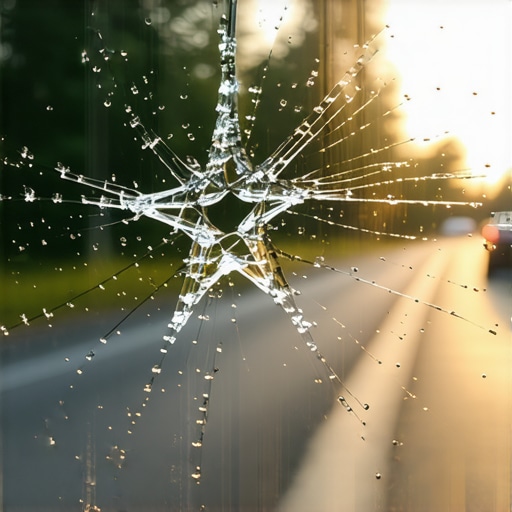
The sound is unmistakable: a sharp, metallic thwack against the glass while you are cruising at sixty miles per hour. You look down and see it—a bullseye or a star-break right in your line of sight. For many, the immediate reaction is to search for a DIY hack to prevent the damage from spreading. This is where the clear nail polish myth originates. As a glass installer with over twenty-five years of experience handling everything from residential glazing to structural automotive glass, I have seen the disastrous results of these ‘life hacks’ firsthand. People treat their windshield like a fingernail, but a windshield is a sophisticated structural component, not a keratin plate. Applying nitrocellulose-based lacquer to a structural crack is like putting a bandage on a severed artery.
A driver once called me in a panic because their windshield was ‘sweating’ and turning a milky white around a small chip they had tried to fix themselves. I arrived with my hygrometer and found that moisture was trapped between the layers of glass. They had applied clear nail polish on a humid morning, effectively sealing a micro-reservoir of water inside the laminate. I had to explain that it was not the glass failing; it was their attempt to bypass professional physics. Because they had sealed the moisture in, the PVB interlayer was delaminating. What could have been a simple twenty-minute repair turned into a full-frame replacement because the structural integrity was compromised beyond recovery.
“Installation is just as critical as the window performance itself. A high-performance window installed poorly will fail.” – AAMA Installation Masters Guide
The Science of Laminated Glass and the PVB Interlayer
To understand why nail polish is a failure, you must understand what you are actually looking at. Your windshield is not a single pane of glass. It is a sandwich consisting of two layers of annealed glass bonded together by a Polyvinyl Butyral (PVB) interlayer. This construction is designed to keep the glass intact during an impact, preventing shards from flying into the cabin. When a rock hits the outer layer, it creates a void. This void is not just a surface scratch; it is a breach of the structural ‘rough opening’ of the glass surface. Professionals use a specific resin with a refractive index that matches the glass. Clear nail polish, however, has a completely different refractive index. This means that even if it fills the hole, the light will bend differently as it passes through, creating a permanent visual distortion that can be dangerous during night driving.
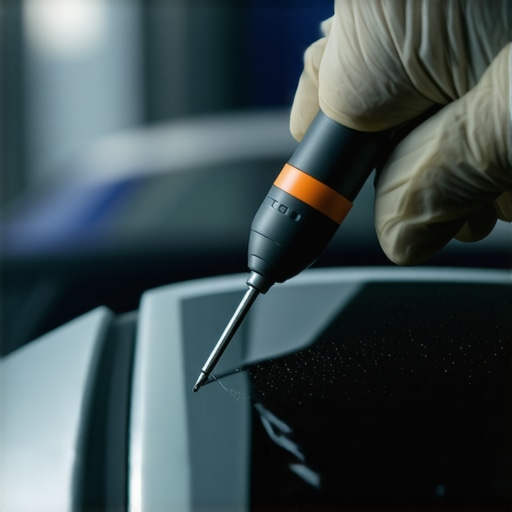
Furthermore, the chemistry of nail polish is entirely incompatible with automotive glass. Nail polish dries through the evaporation of solvents. As it dries, it shrinks. This shrinkage creates tensile stress on the edges of the chip, which can actually pull the glass apart and encourage the crack to spread. A professional glass installer uses a high-viscosity resin that is injected under a vacuum. This removes the air—and the moisture—from the break before the resin is cured using specific UV wavelengths. This creates a structural bond that restores the strength of the unit. [image]
Thermal Shock and the Northern Climate Reality
In colder climates like Minneapolis or Chicago, the physics of glass becomes even more unforgiving. Glass has a specific coefficient of thermal expansion. In the winter, you might have the interior of your car at 70 degrees while the exterior is at sub-zero temperatures. This creates massive thermal stress across the glass. If you have filled a chip with nail polish, that material expands and contracts at a different rate than the glass. While the glass is trying to flex, the rigid, brittle lacquer is fighting against it. This leads to ‘flowering,’ where the chip begins to spider-web in every direction the moment you turn on your defroster.
The U-Factor of your windshield is not something most people think about, but the thermal management of that glass is critical. Professional resins are engineered to mimic the expansion rates of the glass layers. Without this synergy, the first cold snap will turn a small chip into a crack that spans the entire width of the dash. This is why same-day service is not just a convenience; it is a structural necessity. Waiting even twenty-four hours allows road salts, oils, and moisture to penetrate the chip, making a clean repair nearly impossible.
The Fallacy of the ‘Tin Man’ Repair Kit
I often see homeowners and drivers fall for the ‘Tin Man’ pitch—cheap, over-the-counter repair kits that promise professional results for ten dollars. These kits often rely on low-grade resins that yellow over time when exposed to UV radiation. More importantly, they lack the bridge and injector tools necessary to clear the weep hole of the break. When I perform a mobile service repair, I am not just pouring glue into a hole. I am using a precision bridge to stabilize the glass, a vacuum cycle to evacuate air, and a pressure cycle to force the resin into the microscopic fissures of the break.
“The integrity of the building envelope, or in this case the vehicle safety cell, depends entirely on the seamless integration of all components.” – ASTM E2112 Standard Practice
If you use nail polish, you are also contaminating the site. Most professional resins will not bond to the residue left behind by store-bought lacquers or glues. If I see nail polish in a chip, my success rate for a chip repair drops significantly because I cannot guarantee the chemical bond. You are essentially trading a permanent, professional fix for a temporary, messy failure that will eventually cost you your entire deductible or a few hundred dollars out of pocket.
The Role of the Professional Mobile Service
The modern windshield is no longer just glass; it is a housing for cameras, rain sensors, and LIDAR systems. This makes the ‘rough opening’ of your view more critical than ever. When you call for a mobile service, you are getting an expert who understands the tolerances required for these systems. A chip that is improperly repaired can interfere with Advanced Driver Assistance Systems (ADAS). If the nail polish creates a blur, your lane-departure warning system might misinterpret the data, leading to a safety hazard that goes far beyond a simple crack.
Ultimately, the glass is a managed system of heat, light, and pressure. Treating it with anything less than industrial-grade materials is a recipe for failure. Don’t buy the DIY hype; buy the numbers and the expertise. A professional repair is an investment in the structural longevity of your vehicle’s safety system. If you see a chip, skip the vanity mirror and call a specialist who understands the molecular reality of the glass you are sitting behind.