The 30-second tap test for checking your new windshield seal
The Invisible Backbone of Your Vehicle: Beyond the Glass
I have spent over twenty five years in the glazing industry, and I have seen it all: from twenty story curtain walls that required crane-assisted placement to the most delicate historic wood sash restorations. However, one of the most misunderstood areas of glazing is the automotive sector. Many people view a windshield as a simple piece of glass, but as a master glazier, I see it as a structural component that must manage intense wind pressure, thermal expansion, and the safety of the occupants. When you hire a glass installer for a mobile service, you are essentially trusting them with a critical piece of engineering. If that same-day service is performed by someone who follows the ‘caulk-and-walk’ philosophy, you are at risk. A windshield is not just a window; it is a structural bond that must withstand thousands of pounds of force. During my decades in the field, I have learned that the difference between a safe vehicle and a rolling hazard often comes down to the integrity of the urethane bead. This article will provide the technical depth you need to ensure your recent chip repair or full replacement was handled with the precision it deserves.
The Condensation Crisis: A Narrative of Failure
A car owner called me in a panic because their new windshield was ‘sweating’ on the inside and making a high-pitched whistling sound whenever they exceeded forty miles per hour. I walked out to their driveway with my digital hygrometer and a set of specialized suction cups. After a quick inspection, I showed them that the interior humidity was nearly sixty-five percent, far higher than it should have been given the external environment. It was not a ‘lifestyle’ issue or a simple case of breath condensation. I traced the moisture path and found that the previous mobile service technician had failed to properly prep the pinchweld. They had relied on the old urethane as a base without applying a proper primer, leading to a total adhesion failure. I pulled back the molding to reveal that the urethane had never actually bonded to the metal. It was a classic case of skipping the fundamental steps of glazing science in favor of speed. This is why understanding the mechanics of a seal is vital for every driver.
“Installation is just as critical as the window performance itself. A high-performance window installed poorly will fail.” AAMA Installation Masters Guide
The Physics of the Bond: Urethane, Primers, and Surface Energy
To understand the tap test, you first need to understand what you are testing. When a glass installer replaces a windshield, they are using a high-modulus, low-conductive polyurethane. This material is not simple ‘glue.’ It is a sophisticated polymer that undergoes a chemical reaction called molecular cross-linking. This reaction is catalyzed by moisture in the air. In a hot, southern climate like Florida or Texas, the Solar Heat Gain Coefficient (SHGC) of the glass becomes a major factor. As the sun beats down on the glass, it can reach temperatures exceeding one hundred fifty degrees Fahrenheit. This heat can cause the urethane to skin over too quickly. If the installer does not account for this by using a hot-weather specific adhesive, the bead can develop a ‘skin’ that prevents it from properly wetting the pinchweld, which is the automotive equivalent of a rough opening in a building. The result is a ‘cold join’ where the bead appears solid but has no structural integrity. The 30-second tap test is designed to detect these hollow points or areas where the bond has failed to engage.
The Installation Autopsy: Why Mobile Service Often Fails
In this installation autopsy, we must look at the ‘Shingle Principle.’ Just as water must flow down and away from a building, it must be directed away from the pinchweld of a vehicle. A proper installation involves more than just a bead of sealant. It requires the use of a V-cut nozzle to create a triangular bead profile. This profile ensures that when the glass is set, the urethane compresses from the center outward, pushing out any trapped air. If an installer uses a standard round bead, they are likely to trap air pockets. These pockets become reservoirs for water, leading to rust on the pinchweld. Once rust begins, it expands, lifting the urethane and creating a leak. This is why I always check the ‘cowl’ area, which acts like a sill pan in residential glazing. If the weep holes in the cowl are blocked by excess adhesive or debris from a chip repair, water will back up and find its way into the cabin. A glazier knows that water management is a science, not an afterthought.
“The glass must be installed such that it remains retained in the pinchweld during a collision to ensure the proper deployment of the passenger side airbag.” AGSC Safety Standards
The 30-Second Tap Test: A Step-By-Step Diagnostic
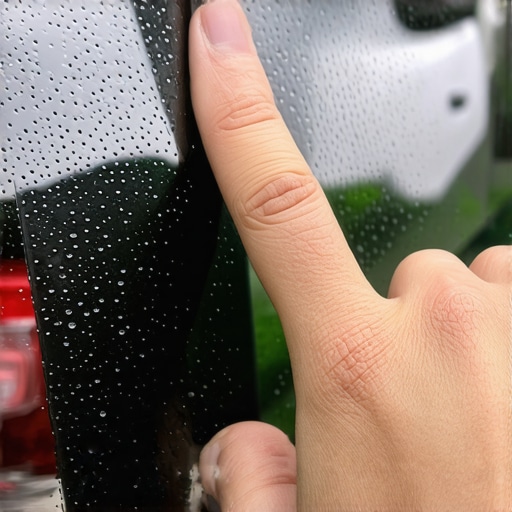
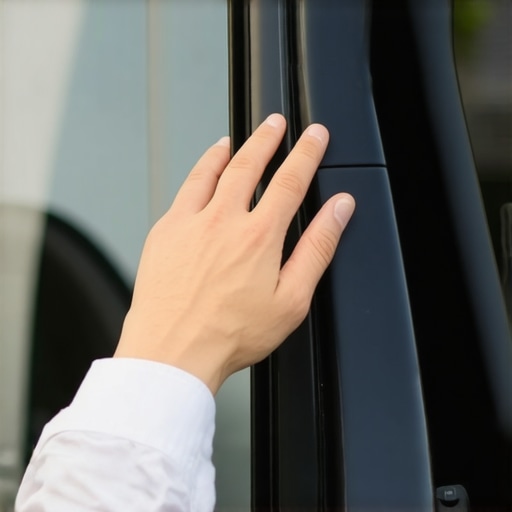
The tap test is a method used by professionals to verify the density and continuity of the glazing bead. It relies on the acoustic properties of the glass-to-metal bond. A solid, continuous bond will produce a dull, deadened thud because the vibration of the glass is being absorbed by the polyurethane and transferred into the vehicle frame. A compromised seal, however, will produce a higher-frequency ring or a hollow sound. To perform this test, you should wait until the adhesive has reached its ‘green strength,’ which is usually a few hours after a same-day installation. Start at the bottom corner of the glass near the cowl. Using the pads of your fingers, tap firmly along the perimeter. Move slowly, about two inches per second, listening for any change in pitch. Pay special attention to the top corners. Because the roof of a vehicle is often curved, this is where the ‘pinchweld’ tolerances are most tight, and where an installer might have struggled to maintain a consistent bead height. If you hear a ‘clack’ instead of a ‘thud,’ you have found a void.
Climate Logic: Managing Heat and Humidity
In southern climates, the enemy is Solar Heat Gain. We often use Low-E coatings on Surface #2 of the glass to reflect that heat back outside, but this also means the glass itself can become incredibly hot during an outdoor mobile service. This heat affects the viscosity of the adhesive. If the urethane becomes too thin, it may sag, pulling away from the top of the ‘sash’ or frame. This creates a gap at the header that is invisible from the outside but will leak air at high speeds. Conversely, if the air is too dry, the moisture-cure process slows down significantly. A glazier must be a chemist, a physicist, and a technician all at once. We don’t just ‘install’ glass; we manage a structural interface between the interior and exterior environments. This is why I prefer a shop-controlled environment for complex replacements, though a skilled technician can manage a mobile service if they use the correct thermal tools and primers.
The Math of Quality: Why Chip Repair Matters
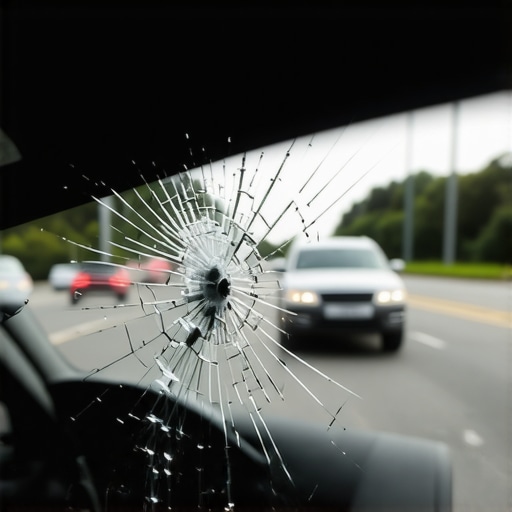
Even a simple chip repair is a glazing challenge. When a rock hits your windshield, it creates a ‘bullseye’ or ‘star’ break. This is a separation of the glass layers from the inner polyvinyl butyral (PVB) interlayer. A proper repair involves injecting a resin with a refractive index that matches the glass. But more importantly, it requires cleaning the ‘rough opening’ of the chip. If any moisture is trapped inside the break before the resin is cured with UV light, that moisture will eventually expand and contract, leading to a full crack. I have seen countless same-day repairs fail because the technician did not use a vacuum-pressure cycle to remove the air from the break. In the world of glazing, shortcuts always lead to callbacks. The ROI on a high-quality repair is measured in years of vehicle life, not just the ten minutes it takes to pump in some resin.
Final Verdict: The Installer is the Key
Ultimately, the glass is only as good as the person who sets it. You can buy the most expensive, acoustically dampened, UV-blocking laminated lite on the market, but if it is not shimmed correctly and the pinchweld is not prepped to a surgical standard, it is worthless. When you perform your tap test, you are not just checking the glass; you are auditing the work of the technician. Do not accept a hollow sound. Do not accept ‘wind noise’ as a normal part of a new installation. A perfect seal is silent. It is a barrier against the elements and a shield for your life. If your tap test reveals a void, call the installer back immediately. A true professional will appreciate your diligence because they know that in the realm of glazing, there is no such thing as ‘close enough.’ It is either a structural bond, or it is a failure waiting to happen.