
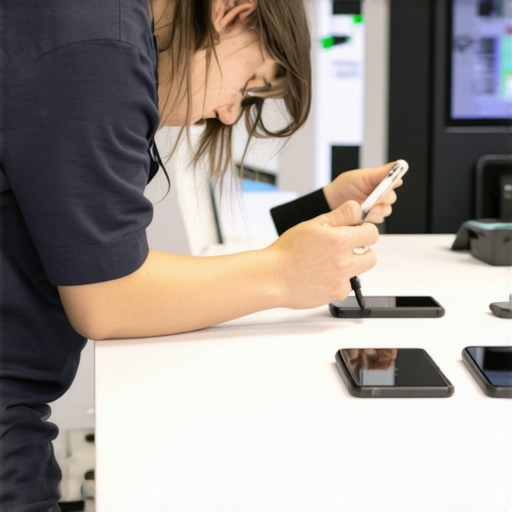
3 Quick Checks for Your 2026 Same Day Mobile Repair Service
The High Stakes of Mobile Glass Repair: Beyond the Surface
In the world of high-performance glazing, there is a dangerous trend emerging: the ‘caulk-and-walk’ technician. These are the folks who pull up in a van, squirt some resin into a chip, and call it a day without ever checking the thermal integrity of the Insulated Glass Unit (IGU). As a Master Glazier with a quarter-century in the trenches, I can tell you that a chip is never just a chip. It is a structural breach in a pressurized system designed to manage heat, light, and moisture. In the freezing climates of Minneapolis or Chicago, where the temperature differential between the interior sash and the exterior air can reach eighty degrees, that tiny ‘star break’ is a ticking time bomb for a stress fracture.
A homeowner called me in a panic last February because their expensive triple-pane windows were ‘sweating’ on the inside of the glass. I walked into the living room with my hygrometer and thermal camera. I showed them that the humidity was hovering at 60 percent. It was not a window failure: it was their lifestyle. They were running two humidifiers and had zero mechanical ventilation. But the kicker? A mobile ‘glass installer’ had been there the week before to fix a small chip in the outer pane and had completely ignored the fact that the primary seal was already showing signs of desiccant saturation. The resin fix was a cosmetic band-aid on a systemic failure. This is why we need to talk about the physics of glass before we talk about the tools of the trade.
“Installation is just as critical as the window performance itself. A high-performance window installed poorly will fail, regardless of its initial energy ratings.” – AAMA Installation Masters Guide
Check 1: Assessing Thermal Stress and the ‘Butterfly’ Fracture
The first check any legitimate 2026 same-day mobile repair service must perform is a thermal stress analysis. We are not just looking for the impact point: we are looking for the radiating fracture lines. In cold northern climates, the glass at the center of the pane expands differently than the glass tucked into the glazing bead. This creates a tension zone. If a chip occurs near the edge, the stress is magnified. When I evaluate a mobile repair, I look at the Rough Opening tolerances. If the window was shimmied too tightly, the frame has no room to breathe. A mobile service that does not check for frame squareness before injecting resin is setting you up for a catastrophic failure. We use the ‘Glazing Zooming’ technique to explain to clients that the molecular lattice of soda-lime glass is under constant pressure. If the resin’s coefficient of thermal expansion does not match the glass, the first deep freeze will cause the repair to pop out, taking a chunk of the original glass with it.
Check 2: IGU Pressure and Gas Retention Verification
The second check is about what you cannot see: the gas fill. Most modern high-performance windows are filled with an Argon-SF6 blend to lower the U-Factor. U-Factor is the king of metrics in the North. It measures the rate of non-solar heat loss, and a lower number means your furnace stays off longer. When a chip penetrates more than 30 percent of the outer pane’s thickness, it creates a micro-vent. This vent allows the heavy gas to escape and moisture-laden air to enter. A professional mobile service should use a non-invasive gas analyzer. If the Argon concentration has dropped below 85 percent, a simple chip repair is a waste of money. At that point, the desiccant in the spacer bar is already working overtime. Once that desiccant reaches its saturation point, you will see ‘Newton’s Rings’ or permanent fogging inside the unit. This is the difference between a glass installer and a glazing scientist.
“Standard practice for installation of exterior windows, doors, and skylights requires that the water-resistive barrier be integrated with the fenestration flashing to ensure long-term performance.” – ASTM E2112
Check 3: Low-E Coating Surface Mapping
The third check involves the Low-E coating. In cold climates, we typically see the Low-E coating on Surface #3. This is the inward-facing surface of the interior pane, designed to reflect long-wave infrared radiation (your home’s heat) back into the room. However, some 2026 high-performance units use a ‘hard coat’ on Surface #4 or a secondary ‘soft coat’ on Surface #2. If your mobile technician is drilling into a chip on a pane that has a Surface #2 coating, they risk oxidizing the silver or tin layers within the coating. This creates a permanent, ugly ‘halo’ around the repair that no amount of polishing can fix. We check the coating position using a digital detector. We also evaluate the weep hole system. If the mobile service doesn’t ensure that the weep holes are clear of debris while they are on-site, they are ignoring the most common cause of sill pan rot and sash failure. A window is a hole in your wall that is fighting a constant battle against gravity and thermodynamics. Every component, from the muntin to the sash lock, plays a part in that fight.
The Reality of ROI in Modern Glazing
Let’s be clear: the ‘Energy Savings’ pitch you hear from high-pressure salesmen is often a stretch. The real Return on Investment (ROI) for a proper glass repair or replacement is found in comfort and structural longevity. A drafty window in January is more than just a high heating bill: it is a source of localized convection currents that make a room feel five degrees colder than it actually is. When we perform a mobile repair, we are looking at the ‘Warm-edge spacer’ technology. If the spacer is a traditional aluminum box, it acts as a thermal bridge, sucking heat out of the room. A 2026 mobile service should be able to tell you if your spacer is failing or if your glazing bead has shrunk, allowing air to bypass the glass entirely. Don’t buy the marketing hype: buy the numbers and the technical expertise of a master who knows the difference between a shim and a prayer. If your mobile service doesn’t mention the NFRC label or the U-Factor, they aren’t glaziers: they are just people with a van and a tube of silicone. Water management is a science, and your home deserves a scientist.