
Stop the 2026 Frost Crack: 3 Reasons to Fix Your Chips Today
The Physics of the Freeze: Why a Chip is a Ticking Time Bomb
In my 25 years as a master glazier, I have seen thousands of homeowners make the same mistake. They look at a tiny bullseye or a star-shaped chip in their glass and think it is merely a cosmetic nuisance. That is a dangerous assumption. As we approach the 2026 winter season, understanding the thermal dynamics of glass is the only way to prevent a minor chip from becoming a total structural failure. When you have a break in the surface tension of a glass pane, you are not just looking at a mark; you are looking at a compromised structural system. Glass is a supercooled liquid that behaves like a solid, and its strength relies entirely on the integrity of its surface. Once that surface is breached, the internal stresses are no longer balanced.
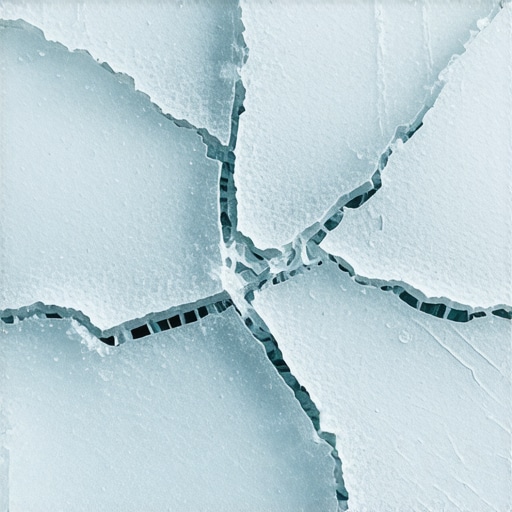
A homeowner called me in a panic last February because their new windows were ‘sweating’ and one had spontaneously shattered. I walked in with my hygrometer and showed them that while their humidity was at 60 percent, the real culprit was a microscopic chip on the exterior lite. The moisture from the air had migrated into that chip. When the temperature dropped below 32 degrees Fahrenheit, that trapped water underwent a phase change. As water turns to ice, it expands by approximately 9 percent. In the confined space of a glass fissure, that expansion exerts upwards of 30,000 PSI of pressure. This is what we in the industry call a ‘Frost Crack.’ It does not happen slowly; it happens with a crack like a pistol shot in the middle of a cold night.
“Installation is just as critical as the window performance itself. A high-performance window installed poorly will fail.” – AAMA Installation Masters Guide
Reason 1: The Molecular Trap and Hydraulic Expansion
When you ignore a chip, you are allowing the ‘Shingle Principle’ to work against you. Water always finds the path of least resistance. In a cold climate like ours, the U-Factor of your glass is designed to keep heat inside, but if the exterior lite is compromised, the thermal gradient across the IGU (Insulated Glass Unit) becomes unstable. A glass installer knows that the glazing bead and the weep hole system are designed to manage water, but they cannot protect the glass from internal moisture intrusion once a chip exists. A mobile service can perform a chip repair using a low-viscosity anaerobic resin that penetrates the micro-fissures. This resin has a refractive index nearly identical to glass, but more importantly, it is hydrophobic. By sealing the chip, you prevent water from entering the molecular structure of the glass, effectively neutralizing the threat of hydraulic expansion during the next freeze-thaw cycle.
[IMAGE_PLACEHOLDER]
Reason 2: Thermal Shock and the Defroster Effect
In the North, we deal with extreme temperature differentials. You might have a 70-degree interior temperature while the exterior glass surface is facing sub-zero winds. This creates massive thermal stress. If you have an operable window or a vehicle windshield with a chip, and you blast the heat to clear frost, you are inducing thermal shock. The area around the chip expands at a different rate than the rest of the glass. Because the chip has already disrupted the glass’s ability to distribute tension, the crack will propagate instantly along the lines of least resistance. This is why same-day service is not just a convenience; it is a technical necessity. Waiting until 2026 to address a 2024 chip is a gamble where the house always wins. I have seen rough opening tolerances shift just enough in the cold to twist a frame, and if that glass is already chipped, it provides the perfect starting point for a full-length fracture.
“Standard Practice for Installation of Exterior Windows, Doors and Skylights requires that all components must be free of defects that could compromise the thermal or structural integrity of the fenestration assembly.” – ASTM E2112
Reason 3: The Cost of Procrastination vs. Resin Injection
Let us talk about the math that ‘high-pressure’ salesmen won’t tell you. A chip repair is a fraction of the cost of a full IGU replacement. Once a crack exceeds the size of a dollar bill, the structural tension is gone. You cannot ‘fix’ a long crack; you have to replace the entire lite or the whole unit. When I perform a same-day repair, I am using a vacuum bridge to extract the air from the sash-held glass and replacing it with a UV-curable polymer. This restores the structural tension. If you wait, you aren’t just paying for the glass; you are paying for the shim adjustments, the potentially damaged flashing tape, and the labor of a full tear-out. Whether it is a muntin-divided lite or a large picture window, the science remains: a sealed surface is a safe surface. Don’t let a 10-cent drop of water turn into a 1,000-dollar replacement bill when the first deep freeze of 2026 hits.
The Glazier’s Final Verdict
Water management is a science, and glass maintenance is a discipline. When you see a chip, you are looking at a failure in your home’s thermal envelope. By utilizing a professional glass installer for a mobile service, you are reinforcing the sill pan and the entire window assembly’s longevity. We don’t just ‘fill holes’; we restore the chemical and physical equilibrium of the glazing system. Take action today, before the frost decides for you.