
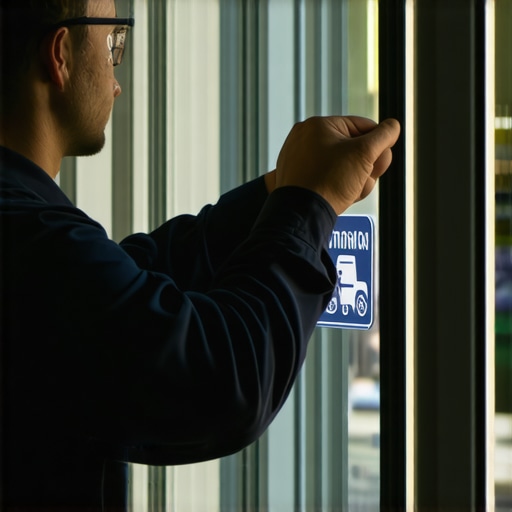
How to Spot a Certified 2026 Glass Installer in Seconds
The 2026 Glazing Standard: Beyond the Caulk Gun
In the current construction landscape, a window is no longer just a piece of soda-lime glass held in a frame. It is a sophisticated thermal barrier, a managed aperture that controls the movement of heat, moisture, and sound. If you are hiring a glass installer in 2026, you cannot afford to hire a ‘caulk-and-walk’ contractor. I have spent over 25 years in this trade, and I have seen the devastating results of poor installation—from structural rot to catastrophic seal failure. To spot a true professional in seconds, you need to look past the logo on the van and examine the technical precision of their methodology.
A homeowner called me in a panic last winter because their brand-new, expensive windows were ‘sweating’ so much that water was pooling on the wood sills. They were convinced the glass installer had sold them defective units. I walked in with my hygrometer and a thermal imaging camera. I showed them that the interior humidity was nearly 65% and the thermal bridging was happening at the edge of the glass because the previous installer had used cheap aluminum spacers instead of a stainless steel or structural foam warm-edge spacer. It wasn’t just a window problem; it was an installation and lifestyle mismatch. A certified expert would have caught the dew point risk before the first rough opening was even measured.
“Installation is just as critical as the window performance itself. A high-performance window installed poorly will fail.” – AAMA Installation Masters Guide
The Mobile Service Kit: A Diagnostic Laboratory
When a mobile service vehicle pulls up for a chip repair or a full glass replacement, the first thing I look at is their equipment. A certified 2026 pro doesn’t just carry a bucket and some resin. For a high-quality chip repair, they should be using a bridge-and-injector system capable of maintaining a vacuum to pull air out of the break before injecting high-viscosity, UV-curable resin. This resin must have a refractive index identical to the glass to ensure the repair is invisible and structurally sound. If they are just ‘dropping’ resin into the break, they aren’t fixing it; they are just hiding it temporarily.
Furthermore, look for a same-day provider who arrives with a digital glazing bead gauge and a laser-assisted measuring tool. In the world of high-performance IGUs (Insulated Glass Units), tolerances are measured in millimeters. A rough opening that is out of square by more than 1/4 inch requires specific shim placement to ensure the operable sash doesn’t bind or rack over time. If they don’t check for plumb, level, and square with a calibrated spirit level or laser, they are guessing. And in glazing, guessing is the precursor to a weep hole failure and internal mold growth.
The Physics of the North: Why U-Factor Governs the Cold
For those of us working in northern climates, the enemy is heat loss and the dreaded condensation. When you are vetting an installer, ask them about the U-Factor. In 2026, a certified pro will push for a U-Factor of 0.22 or lower. This isn’t just about the thickness of the glass; it’s about the physics of the Sash construction. We are looking for triple-pane units where the Low-E coating is applied to Surface #3. This placement is critical because it reflects long-wave infrared radiation back into the room, keeping the interior glass surface warmer and pushing the dew point further toward the exterior.
If your installer doesn’t mention the ‘Warm-Edge’ spacer, send them packing. Traditional aluminum spacers act as a thermal bridge, conducting the cold from the exterior directly to the interior glass edge, which is why you see frost at the bottom of the window. A professional understands that a structural foam or thermoplastic spacer (TPS) reduces this conduction, significantly improving the overall thermal performance of the unit. They should also be prepared to discuss the gas fill—typically Argon or, for ultra-high performance, a blend that minimizes convection currents within the IGU cavity.
“The U-factor of a window assembly is not just a measure of the glass, but the thermal performance of the entire unit including the frame and spacer system.” – NFRC Technical Bulletin
The Installation Autopsy: Water Management and the Sill Pan
The most common failure I see in ‘modern’ installations is a total lack of understanding of the ‘Shingle Principle.’ Water always moves down. If your glass installer is not using a sill pan with a back dam, they are relying on caulk to keep your house dry. Caulk is a secondary seal; the primary seal is the flashing tape and the mechanical shedding of water. A certified pro will ensure that the sill pan is integrated with the weather-resistive barrier (WRB) and that a drip cap is installed at the head of the window.
Watch how they handle the weep holes. These are small outlets in the frame designed to let water out. I’ve seen countless amateurs plug these with silicone because they thought they were ‘air leaks.’ This traps water inside the frame, which eventually rots the subfloor and causes the IGU seal to fail prematurely due to constant moisture exposure. A true expert knows that a weep hole must remain clear and that the glazing bead must be perfectly seated to prevent excess water from entering the glazing channel in the first place.
Refractive Index and Same-Day Chip Repair Technology
For mobile service calls regarding chip repair, 2026 standards require an understanding of molecular bonding. When a stone hits a windshield or a tempered glass door, it creates micro-fractures. A same-day service tech should explain that they are using a vacuum-pressure cycle. They first evacuate the air and moisture from the ‘star’ or ‘bullseye’ break. This is vital because trapped moisture will cause the resin to yellow and delaminate over time. They then inject a resin that is cured using a specific UV frequency. This is a scientific process, not a ‘quick fix.’ If the installer can’t explain why they are using a specific resin viscosity for the temperature of the glass, they aren’t a specialist; they are a hobbyist.
Final Quality Control: The “Light Test”
Before you sign off on a glass installer‘s work, perform a technical walk-through. Check the muntins for alignment across multiple windows. Test every operable sash; it should move with the pressure of a single finger. If it sticks, the frame is likely bowed because they drove the installation screws too tight or didn’t shim correctly at the mid-points. Finally, look at the flashing tape at the exterior. It should be rolled flat with a J-roller to ensure a permanent bond. If it’s wrinkled or hand-pressed, it will fish-mouth and leak within three years.