
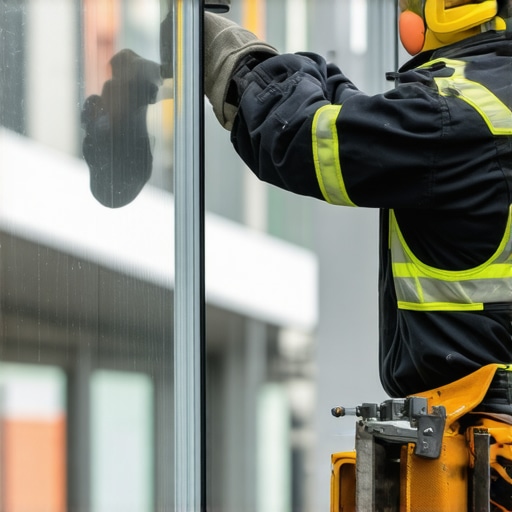
4 Safety Checks Your 2026 Glass Installer Must Perform
Why Glass Safety in 2026 Demands More Than Just a Level and a Shingle
In twenty-five years of pulling apart failed fenestration systems, I have learned that a window is a complex thermal valve, not just a transparent piece of silica. When you hire a glass installer, you aren’t just paying for the glass; you are paying for the management of the structural load path and the water-shedding surface of your home. By 2026, the standards for high-performance glazing have shifted, and if your installer is still using the ‘caulk-and-walk’ methods of the early 2000s, your home is at risk. Whether it is a routine chip repair on a mobile service call or a full-scale residential replacement, the physics of the installation remain the primary defense against structural rot and catastrophic glass failure.
A few years ago, I received a frantic call from a homeowner in a high-humidity climate who was convinced their brand-new, expensive windows were defective. They were ‘sweating’ so profusely that water was pooling on the wood trim. I walked in with my hygrometer and a thermal imaging camera. Within ten minutes, I showed them that the interior humidity was hovering at 62% while the outdoor temperature was plummeting. It wasn’t a manufacturing defect in the glazing bead or the sash; it was a fundamental misunderstanding of the dew point and how their HVAC system interacted with high-performance Low-E coatings. This is why a professional glass installer must be as much a building scientist as a craftsman.
“Installation is just as critical as the window performance itself. A high-performance window installed poorly will fail.” – AAMA Installation Masters Guide
1. The Structural Integrity of the Rough Opening and Load Path
The first safety check involves the rough opening. Before a single shim is placed, the installer must verify that the framing can support the weight of modern, heavy IGUs (Insulated Glass Units). A triple-pane unit with laminated glass can weigh significantly more than a standard single-pane unit from thirty years ago. If the header is sagging or the jack studs are compromised, the glass will eventually experience ‘edge bite’ or stress cracks. A master glass installer checks for squareness, level, and plumb, but also assesses the ‘load path’ to ensure the weight of the glass doesn’t bow the sill. We use high-density plastic shims specifically because they don’t rot or compress like cedar shims, ensuring the window remains in its designed position for decades.
2. Moisture Management and the ‘Shingle Principle’
Water is the ultimate enemy of the building envelope. The second check is the verification of the flashing system. We operate under the ‘Shingle Principle’—every layer of the weather-resistive barrier must overlap the layer below it. This ensures that any water that bypasses the primary sealant is directed outward. A critical component here is the sill pan. If your installer is not using a rigid or flexible sill pan with a back dam, they are relying entirely on the exterior caulk. Caulk eventually fails due to UV degradation and thermal expansion. A properly installed sill pan ensures that even when the caulk fails, the water has a clear path to the exterior via the weep hole system, preventing the ‘black rot’ that eats away at your wall’s framing.
“The window installation shall be designed to provide a continuous water-resistive barrier from the exterior of the wall to the window frame.” – ASTM E2112 Standard Practice
3. Glass Tempering and Safety Glazing Codes
The third check is the verification of safety glazing. By 2026, building codes have become increasingly stringent regarding ‘hazardous locations.’ Any glass installed near a door, in a bathroom, or close to the floor must be tempered or laminated. A professional glass installer will verify the ‘bug’—the permanent etch in the corner of the glass—to ensure it meets ANSI Z97.1 standards. During a same-day mobile service for a chip repair or glass replacement, the installer must confirm that the replacement lite matches the safety requirements of the specific zone. This isn’t just about code compliance; it’s about preventing life-altering injuries if the glass is impacted.
4. Sealant Adhesion and Thermal Stress Evaluation
Finally, we look at the chemistry of the installation. Not all sealants are created equal. In a northern climate, where the U-Factor is king, the glass installer must ensure that the sealant can handle the extreme contraction of the frame during a deep freeze. We look for High-Performance Low-E coatings on Surface #3 to reflect heat back into the room, but this increases the thermal stress on the glass itself. If the glass is not bedded correctly into the glazing bead with the right sealant, the edge of the glass can overheat, leading to a thermal stress crack. A true professional understands the expansion coefficients of vinyl, fiberglass, and aluminum, and selects a sealant that maintains a bond even when the materials are moving at different rates.