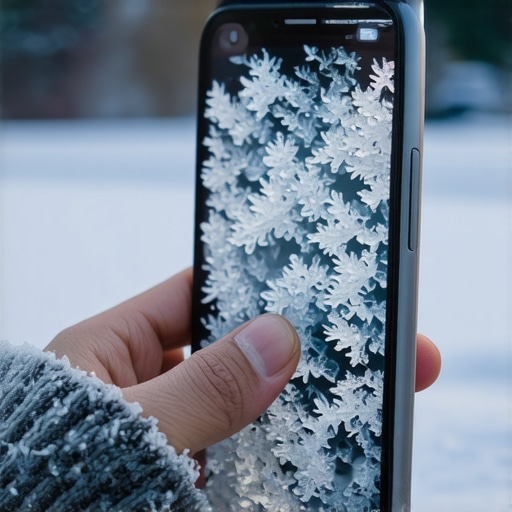
The reason your screen feels less responsive in cold weather
When the mercury drops below zero in regions like Chicago or Toronto, glass stops behaving as a passive transparent barrier and begins to act as a complex thermodynamic heat sink. If you have ever touched your windshield or a digital glass interface in the dead of winter and noticed a sluggish reaction, you are witnessing the intersection of material science and molecular physics. As a glazier with over 25 years in the field, I have seen every type of failure imaginable, from shattered storefronts to delaminating laminated glass, and the root cause is almost always a failure to account for thermal conductivity. Over my career, I have handled everything from the precision of a Rough Opening for a high-rise to the delicate chip repair of a high-end luxury vehicle. The physics remains constant: glass is a supercooled liquid that hates rapid temperature swings.
“Installation is just as critical as the window performance itself. A high-performance window installed poorly will fail.” : AAMA Installation Masters Guide
A homeowner called me in a panic because their new windows were ‘sweating’ and the glass felt ‘sticky’ or unresponsive to the touch. I walked in with my hygrometer and showed them the humidity was 60 percent. It wasn’t the windows; it was their lifestyle and the fact that the glass surface temperature had reached the Dew Point. This same phenomenon affects the glass on your mobile devices and vehicle windshields. When glass gets cold, the molecules lose kinetic energy. In the case of automotive glass or modern touch-sensitive glazing, this cold state increases the dielectric constant of the material, making it harder for the sensors to register the capacitive change from your finger. Furthermore, the PVB (Polyvinyl Butyral) interlayer in your laminated glass becomes more rigid, which changes how the glass resonates and responds to physical pressure. This is why a mobile service technician will tell you that a chip repair is significantly more precarious in January. The glass is under immense internal stress as the outer surface contracts while the inner surface remains closer to the cabin temperature.
In northern climates, the U-Factor is the absolute king of metrics. While many sales reps push the Solar Heat Gain Coefficient, in the cold, we are fighting a war against heat loss. A lower U-Factor means the glass is better at resisting the flow of non-solar heat. For those of us in the trade, we look at the Glazing Bead and the Sash construction to see how the unit manages the thermal break. If you are using a standard operable window without a warm-edge spacer, the edges of the glass will drop to temperatures that facilitate condensation. This moisture can then seep into the Rough Opening, bypassing the Flashing Tape and Sill Pan if they weren’t installed with the ‘shingle principle’ in mind. Once water reaches the Muntin or the structural framing, you are looking at rot that no amount of caulk can fix.
“Thermal performance of a fenestration product is determined by the heat transfer through the center-of-glass, the edge-of-glass, and the frame.” : NFRC 100 Standards
When it comes to same-day glass repair, the environment is your biggest enemy. If a glass installer tries to inject resin into a stone chip when the glass is below freezing, the resin won’t flow correctly into the microscopic fissures. The glass needs to be tempered or warmed slowly to avoid a stress crack that could run across the entire Sash. We often see DIY attempts fail because they don’t understand that glass expands and contracts. A Weep Hole in a window frame exists for a reason: to allow pressure equalization and moisture drainage. If that hole is blocked by ice or debris, the pressure buildup during a cold snap can literally pop the Glazing Bead out of its track. Understanding the Visible Transmittance and how Low-E coatings on Surface #3 reflect heat back into your room is essential for winter comfort. If the coating is on the wrong surface, you are essentially trying to heat the outdoors while your interior glass surface remains a frozen block that refuses to respond to your touch or keep your home warm.
Ultimately, whether you are dealing with a mobile service for your car or a full-frame replacement for your home, the numbers don’t lie. Don’t listen to the hype about revolutionary new coatings without checking the NFRC label. Look for a high Condensation Resistance rating and a low U-Factor. Make sure your installer uses Shim blocks correctly to ensure the window is level and square within the Rough Opening, or that chip repair technician uses a vacuum-sealed bridge to pull the air out of the break before injecting the polymer. Glass is a masterpiece of engineering, but in the cold, it requires a master’s touch to perform correctly.
{“@context”: “https://schema.org”, “@type”: “HowTo”, “name”: “How to Maintain Glass Performance in Cold Weather”, “step”: [{“@type”: “HowToStep”, “text”: “Monitor interior humidity to prevent condensation on cold glass surfaces.”}, {“@type”: “HowToStep”, “text”: “Inspect the Weep Hole and Glazing Bead for blockages or ice buildup.”}, {“@type”: “HowToStep”, “text”: “Ensure the U-Factor of your glass is optimized for northern climates to reduce heat loss.”}]}