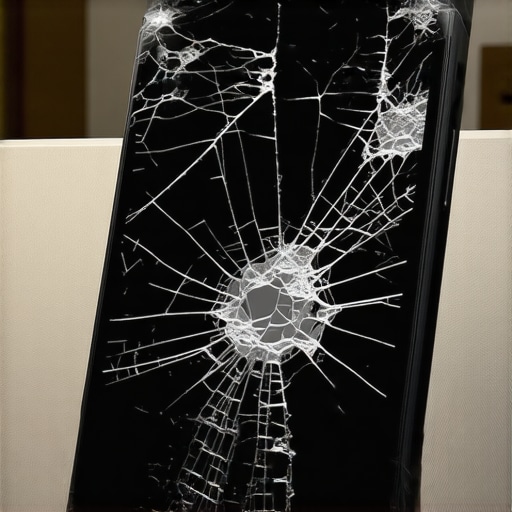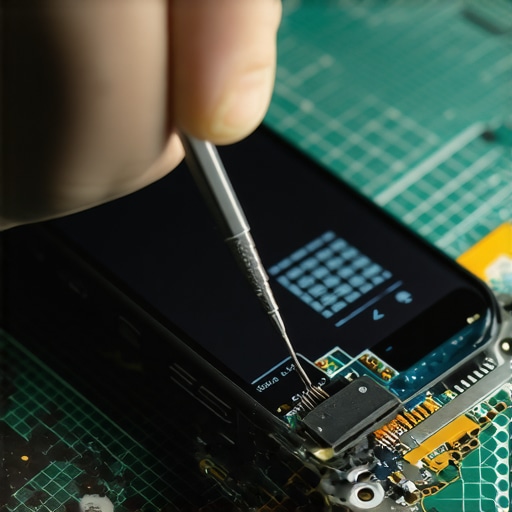
Why we always check your phone’s signal strength after a frame swap
The Invisible Barrier: Why Your Modern Windows Are Killing Your Signal
Most homeowners assume that when a glass installer finishes a same-day installation, the only thing that has changed is the clarity of their view and the efficiency of their home. However, as a master glazier with a quarter-century in the field, I have seen the confusion on a client’s face when they realize their five-bar LTE signal has dropped to a single, flickering dot the moment the last sash is set into place. This is not a failure of your cellular provider. It is the physics of high-performance fenestration at work. When we perform a mobile service for a chip repair or a full frame swap, the technical specs of the glass we install act as more than just a thermal barrier; they often function as a localized Faraday cage.
“Installation is just as critical as the window performance itself. A high-performance window installed poorly will fail.” – AAMA Installation Masters Guide
A homeowner called me in a panic because their new windows were ‘sweating.’ I walked in with my hygrometer and showed them the humidity was 60 percent. It was not the windows; it was their lifestyle. They were boiling pasta and running a humidifier in a sealed box. That same tightness that traps moisture also traps electromagnetic waves. To understand why your phone struggles, we have to look at the Glazing Bead and what lies beneath it. Modern high-efficiency glass utilizes Low-E (Low Emissivity) coatings. These are microscopically thin layers of metallic particles, often silver or tin oxide, sputtered onto the glass surface in a vacuum chamber. While these layers are designed to reflect long-wave infrared radiation, they are also remarkably effective at attenuating radio frequency signals. If you have triple-pane glass with multiple Low-E coatings on Surface #2 and Surface #5, you are essentially surrounding yourself with a metallic shield.
The Physics of Sputter Coating and RF Attenuation
Let us use some Glazing Zooming here. A standard piece of clear float glass allows most of the solar spectrum to pass through. However, to meet modern energy codes in cold climates, we focus heavily on the U-Factor. The U-Factor measures the rate of non-solar heat loss. To drive this number down, we use argon or krypton gas fills between the panes and apply those metallic coatings. In the North, we want to reflect heat back into the room, so we often place the coating on Surface #3. When a mobile service technician arrives to handle a chip repair on a laminated unit or a full frame swap, they are introducing a material that treats a cell signal like a heat wave: it reflects it. This is why we check your signal. If we are installing a high-performance system in a Rough Opening that was previously occupied by single-pane wood windows, the change in connectivity will be jarring.
We have to talk about the Rough Opening tolerances. A lot of “caulk-and-walk” installers will just slap a window in and fill the gaps with expanding foam. That is a recipe for disaster. We use Shim blocks to ensure the frame is perfectly level, square, and plumb, ensuring the Operable parts of the window do not bind. But even with a perfect physical install, the thermal envelope is so tight that the lack of air exchange can lead to the condensation issues mentioned earlier. This is where the Sill Pan and Flashing Tape come into play. If water cannot get out through the Weep Hole, it stays in the wall. If the signal cannot get through the glass, it stays outside.
“Performance ratings such as U-factor and SHGC provide a reliable way to compare the energy efficiency of windows, but they do not account for the impact on wireless communication signals.” – NFRC Performance Standards
The Difference Between a Chip Repair and a Full Frame Swap
In our mobile service, we often see clients who think a chip repair on a residential unit is the same as an automotive one. It is not. If a double-pane unit is chipped and the seal is broken, the same-day fix is rarely a repair; it is a replacement of the Insulated Glass Unit (IGU). Why? Because the desiccant in the spacer bar will quickly become saturated with atmospheric moisture, leading to permanent fogging between the panes. When we do a full frame swap, we are looking at the entire wall interface. We are looking for rot in the header and ensuring the Muntin bars, if present, are not just aesthetic but properly integrated. The Glazing Bead must be snapped in with precision to ensure a watertight seal against the glass. If any of these steps are missed, your high-tech glass is worthless.
Climate Specifics: Why Your Location Matters
In colder regions, the enemy is heat loss. We want the sun to come in (high SHGC) but the heat to stay in (low U-Factor). This requires specific Low-E placement that happens to be the most aggressive at blocking cell signals. If you are in a fringe signal area, the difference between an old wood sash and a new triple-pane fiberglass unit can be the difference between making a call and having a paperweight. We use Flashing Tape to create a Seamless transition from the window frame to the house wrap, ensuring that no air or water bypasses our thermal barrier. This level of detail is what separates a master glazier from a handyman. We do not just look at the glass; we look at the Rough Opening as a gateway that must be managed for moisture, heat, and, yes, connectivity. Next time a glass installer finishes their work, do not just check for streaks: check your signal bars. It is the ultimate proof of a high-performance seal.
{“@context”:”https://schema.org”,”@type”:”HowTo”,”name”:”Checking Window Installation Impact on Signal”,”step”:[{“@type”:”HowToStep”,”text”:”Assess the existing Rough Opening for moisture or rot before the frame swap.”},{“@type”:”HowToStep”,”text”:”Install the new frame using precision shims to maintain level and square alignment.”},{“@type”:”HowToStep”,”text”:”Apply flashing tape and ensure the sill pan is correctly integrated for water management.”},{“@type”:”HowToStep”,”text”:”Install the IGU and secure with the glazing bead.”},{“@type”:”HowToStep”,”text”:”Test cellular signal strength inside the room to calibrate for Low-E interference.”}]}