How to check if your phone frame is bent after a hard fall
The Structural Integrity of Micro-Fenestration
When you drop your mobile device, your first instinct is to check the glass for a spiderweb fracture. As a master glazier with over two decades of experience, I can tell you that the glass is often just the victim of a much deeper crime: a compromised frame. In the world of high-rise construction, we treat every window as a system where the glass must be ‘floated’ within a perfectly plumb structure. Your phone is no different. It is a miniaturized fenestration system where the chassis acts as the rough opening and the screen is the glazing. If that rough opening is out of square by even a fraction of a millimeter, the glass is under constant, invisible tension.
I remember a project in downtown Chicago where I pulled a vinyl window out of a house and the header was completely black with rot. The previous installer relied on the nailing fin instead of proper flashing tape, but more importantly, they forced a square window into a trapezoidal hole. The glass didn’t break that day, but three years later, a minor thermal expansion caused it to explode. This is exactly what happens to your phone. A hard fall can introduce a ‘tweak’ in the aluminum or titanium frame. You might not see it, but the glass ‘remembers’ that stress. Eventually, that stress manifests as a ghost touch or a sudden crack during a simple temperature change.
“Installation is just as critical as the window performance itself. A high-performance window installed poorly will fail.” – AAMA Installation Masters Guide
The Physics of the Bend: Why Planarity Matters
In the glazing trade, we talk about planarity, which is the state of a surface being perfectly flat. When your phone hits the pavement, the kinetic energy has to go somewhere. If the frame absorbs that energy and deforms, it creates a localized stress concentration. Because modern mobile glass is chemically strengthened, it has high compressive stress on the surface but high interior tension. A bent frame acts like a permanent shim that was placed in the wrong spot, pushing against the glass edges. This is why a chip repair is often temporary if the underlying structure is warped; the glass installer must first ensure the ‘sash’ of the phone is true before attempting to seat new glass.
To check for this, you need to perform a ‘sight-line’ test. Lay your phone face down on a known flat surface, like a granite countertop or a piece of tempered glass. If you can see light passing under any part of the frame, or if the phone wobbles when you press on opposite corners, you have a structural deviation. In my world, we would use a laser level to check a rough opening, but for a mobile device, this ‘rocker test’ is the gold standard. If the frame is bent, the glazing bead (the adhesive gasket holding the screen) is being pulled away from the frame, which compromises the water resistance, much like a failed sill pan in a residential window installation.
Thermal Expansion and the Coastal Context
If you live in a coastal or high-humidity environment, a bent frame is even more dangerous. We treat coastal installations with sacrificial layers and stainless steel hardware because of the salt air. In a mobile device, a bend often creates a microscopic gap in the seal. This allows humid, salty air to penetrate the ‘weep hole’ equivalents of your phone (the speakers and ports). Once inside, this moisture can corrode the internal logic board. From a glazing perspective, the enemy is always water management. A bent frame is a failed flashing system. You might get a same-day chip repair, but if the technician doesn’t address the frame alignment, the new glass will be seated under tension, leading to a much higher U-Factor for stress-induced failure.
“The structural integrity of the fenestration system relies entirely on the planarity of the rough opening.” – ASTM E2112
Determining if Mobile Service Can Save the Device
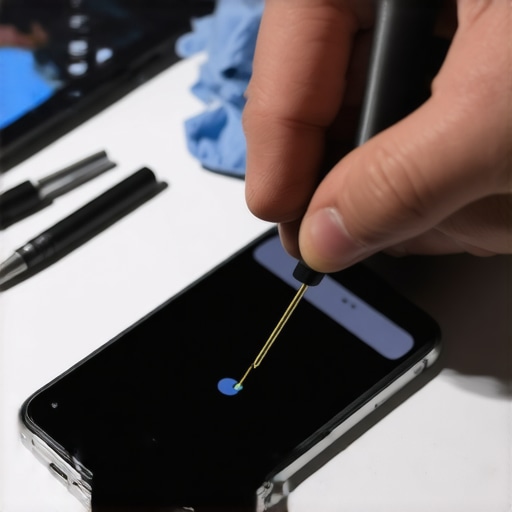
When you call for a mobile service to handle a glass replacement, you must ask if they perform frame truing. Most ‘caulk-and-walk’ installers will just slap a new screen onto a bent chassis. This is the equivalent of putting a new sash into a rotted frame. A true glass installer will use precision tools to gently move the aluminum back into alignment, ensuring the rough opening is square before the glass is set. If the bend is near an operable part of the phone, like the volume buttons, the structural risk is even higher because the muntin-like supports of the internal frame are weakened. Do not settle for a quick fix; ensure the planarity is restored so your device can handle the next thermal cycle without catastrophic failure.