How to get gunk out of a silent switch without breaking it
After twenty-five years in the glazing industry, I have seen every possible failure point where glass meets the frame. People often think a window is just a static piece of silica, but in modern high-performance builds, it is a complex machine. When a client calls about a mobile service for a glass installer to fix a silent switch that has become jammed with gunk, they are usually talking about the precision-engineered dampened locking actuators or the electronic sensors found in smart-tinting glass systems. These components are the unsung heroes of the building envelope, and when they fail due to debris, the entire thermal performance of the unit can be compromised. Handling these delicate parts requires the steady hand of a master glazier, not a general handyman who treats every problem with a can of WD-40 and a prayer.
The Condensation Crisis: A Narrative of Neglect
A homeowner called me in a panic because their new windows were ‘sweating’ and the integrated silent switches were failing to engage. I walked in with my hygrometer and showed them the humidity was 60%. It wasn’t the windows; it was their lifestyle choices combined with a complete lack of maintenance on the weep holes and hardware tracks. The gunk in their switches was a cocktail of pet dander, kitchen grease, and high-altitude dust that had turned into a literal cement because of the high interior moisture. This is a classic case where the hardware becomes the victim of the microclimate inside the home. As a specialist in mobile service and same-day chip repair, I had to explain that if we didn’t address the environmental factor, the hardware would continue to seize regardless of how many times I cleaned it.
“Installation is just as critical as the window performance itself. A high-performance window installed poorly will fail.” – AAMA Installation Masters Guide
The Physics of the Northern Climate: Why Gunk Is the Enemy
In cold climates like Minneapolis or Chicago, we deal with the brutal reality of heat loss. In these regions, the U-Factor is the king of metrics. A lower U-Factor means the window is better at keeping the heat inside where it belongs. To achieve these low numbers, manufacturers use triple-pane units with Argon or Krypton gas fills and Low-E coatings on Surface #3 to reflect long-wave infrared radiation back into the room. However, all that thermal engineering is useless if the window sash does not seat perfectly against the weatherstripping. This is where the silent switch or the precision locking actuator comes into play. If gunk or debris builds up in these mechanisms, the sash fails to pull tight against the frame, creating a thermal bridge that allows cold air to infiltrate the rough opening. This infiltration drops the local temperature of the glass below the dew point, leading to the very condensation that ruins hardware.
The Anatomy of a Silent Switch: Precision Cleaning
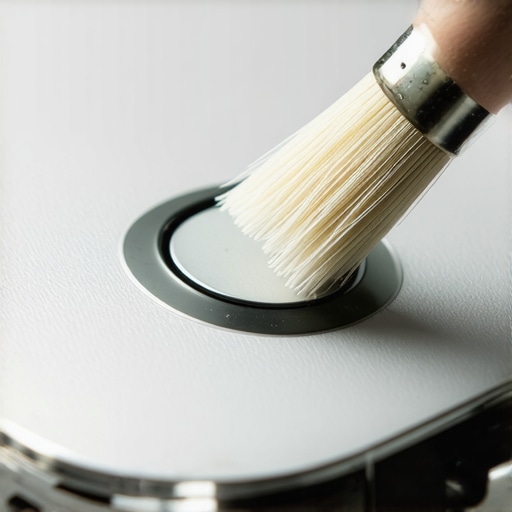
To get gunk out of a silent switch without breaking it, you must understand the glazing bead and the tolerance of the sash. You cannot just dig in with a screwdriver. I use a surgical approach. First, we identify the type of debris. Is it organic or mineral-based? For same-day chip repair on glass, we use high-viscosity resins, but for hardware, we need volatile cleaners that leave zero residue. We start by using compressed air at a specific PSI to dislodge loose particles from the muntin junctions and the switch housing. Then, using a fine-tipped probe, we gently lift the impacted gunk. The goal is to avoid scarring the finish or deforming the internal spring mechanism. If you bend a shim-grade component inside a high-end window switch, the tactile feedback is gone forever, and the ‘silent’ feature becomes a ‘clicking’ nightmare.
“The performance of a fenestration product is dependent on the integrity of the entire system, including the hardware and the sealant interfaces.” – NFRC Performance Standards
The Science of Low-E and Thermal Performance
When I am out on a mobile service call, I often find that homeowners don’t realize how their glass type affects their hardware. In the North, we use warm-edge spacers to prevent the perimeter of the glass from getting too cold. If you have a standard aluminum spacer, the edge of the glass stays freezing, which attracts moisture right toward the silent switch. This moisture acts as a magnet for dust. By utilizing a Low-E coating on Surface #3, we ensure that the glass surface stays warmer. This isn’t just about comfort; it’s about protecting the mechanical integrity of the operable parts of the window. A dry environment is a clean environment. When we perform a chip repair, we are also looking at the integrity of the vacuum seal. If the gas fill has leaked out, the thermal properties shift, and the internal hardware starts to suffer from the temperature swings.
Mobile Service and Professional Intervention
Why do you need a professional glass installer for a hardware issue? Because a window is a system of managed pressures. When we look at a silent switch, we are also checking the sill pan for proper drainage and ensuring that the flashing tape hasn’t been breached. If water is backing up because of a blocked weep hole, it will find its way into the hardware tracks. My mobile service units are equipped with ultrasonic cleaners and specialized lubricants that do not attract dust. Most off-the-shelf lubricants are oil-based, which is the worst thing you can put near a window switch. Oil traps dust and creates a grinding paste that will eventually eat through the metal. We use dry-film lubricants that provide the necessary slip without the sticky residue. This is the difference between a ‘caulk-and-walk’ amateur and a master glazier.
The Math of Replacement vs. Repair
I often hear high-pressure salesmen trying to convince people that a bit of gunk in a switch means they need a full-frame tear-out. That is nonsense. If the frame material is stable, such as fiberglass or high-quality vinyl, a precision cleaning and hardware replacement is far more cost-effective. Fiberglass is particularly stable because it expands and contracts at nearly the same rate as the glass itself, meaning the stress on the silent switches is minimal compared to cheap vinyl that moves like a snake in the sun. We focus on the ROI of comfort and functionality. If I can restore the operation of your window in a same-day visit, I have saved you thousands in unnecessary replacement costs while maintaining the building’s thermal envelope. Don’t buy the sales pitch; buy the technical solution that addresses the physics of your specific opening.