Why a tiny chip near the edge of your windshield is a major risk
The Deceptive Nature of the Edge Chip
In my 25 years as a master glazier, I have seen every type of glass failure imaginable. From 50-story curtain walls to the delicate sash of a 19th-century restoration, the physics of glass remain constant. It is a material that handles compression like a titan but fails under tension with heartbreaking speed. When it comes to your vehicle, the windshield is not just a viewport; it is a structural component of the passenger compartment. A tiny chip near the edge of that glass is a ticking time bomb, and it is far more dangerous than a bullseye right in the center of your vision.
“Installation is just as critical as the window performance itself. A high-performance window installed poorly will fail.” – AAMA Installation Masters Guide
I pulled a windshield out of a late-model sedan last month in a cold climate zone, and the owner was baffled. They had a pinhead-sized chip near the A-pillar that they had ignored for weeks. As soon as they turned on the defroster on a 20-degree morning, a crack zipped across the entire span of the glass like a lightning bolt. Why? Because they didn’t understand the tension zones. The previous glass installer had done a ‘caulk-and-walk’ job, but the real culprit was the physics of the edge. The edge of the glass is where the most significant thermal and structural stresses reside. In the glazing world, we treat the perimeter with sacred respect. Whether we are talking about the rough opening of a building or the pinch weld of a car, the interface between the glass and the frame is where the battle for integrity is won or lost.
The Glazing Zoom: Understanding the Perimeter Stress
To understand why an edge chip is a crisis, we have to look at the glass through a technical lens. Windshields are made of laminated safety glass: two layers of annealed glass bonded by a Polyvinyl Butyral (PVB) interlayer. This interlayer is designed to hold the glass together during an impact, preventing shards from flying. However, the manufacturing process of curving the glass to fit the vehicle’s aerodynamic profile creates inherent stress. This stress is highest at the perimeter, specifically where the glass is bonded to the frame. When a professional glass installer sets a windshield, they are managing a delicate balance of tolerances.
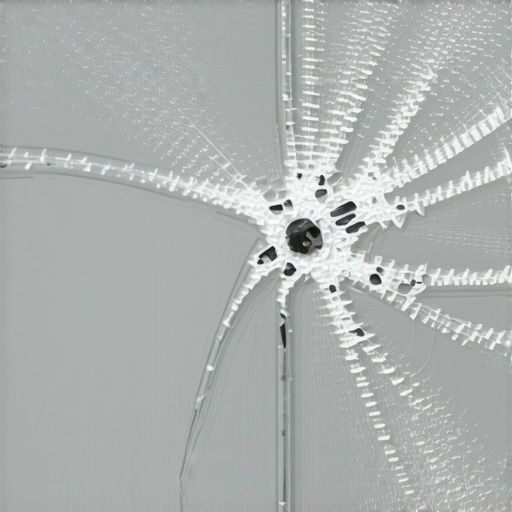
Think of the glass edge like the sash of a window. In a house, the sash allows for some movement, but in a vehicle, the glass is often a stressed member of the frame. An edge chip acts as a stress concentrator. Because the edge of the glass is under constant pressure from the urethane adhesive and the rigid metal frame, that tiny chip provides an easy path for a fracture to follow. This is why same-day chip repair is not just a convenience; it is a structural necessity. If the chip is within two inches of the edge, the likelihood of it spreading increases by nearly 80 percent compared to a center-pane chip.
The Thermal Dynamics of Failure
In colder regions, the enemy is the U-Factor and thermal shock. When your car sits outside in the freezing cold, the glass contracts. The metal frame of the vehicle, acting as the rough opening, also contracts but at a different rate. When you jump in and blast the defroster, you are creating a massive temperature gradient. The center of the glass expands rapidly while the edges, shielded by the frit (the black ceramic paint) and the frame, stay colder longer. This differential creates a tensile force that pulls on that tiny chip. Without a shim to absorb this or a proper sill pan equivalent for drainage, the glass has nowhere to go but to crack.
“Glass is a brittle material that does not provide warning before failure. Its performance is dictated by the presence of surface flaws and the intensity of applied stress.” – ASTM E2112 Standards Commentary
I often tell my clients that ignoring a chip near the frit is like ignoring a leak in your flashing tape. You might not see the rot today, but the structural failure is already underway. The frit is that black dotted pattern you see around the edges. Its job is to provide a surface for the adhesive to grab and to protect the urethane from UV degradation. However, it also absorbs heat faster than the clear glass. This creates a localized heat zone right where the glass is already under the most mechanical stress. If a chip sits in or near this frit zone, the thermal expansion of the black paint will drive the crack deep into the laminate layers faster than you can call for a mobile service.
Why Same-Day Mobile Service Is the Only Logic
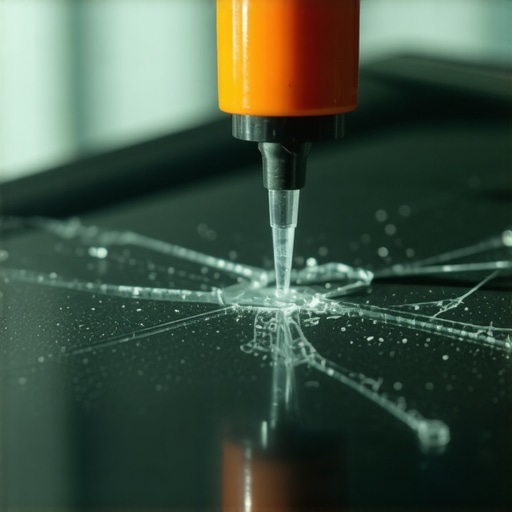
When you have a chip near the edge, the clock is your enemy. This is where a professional glass installer providing same-day mobile service becomes your best ally. The process of chip repair involves vacuum-sealing the area and injecting a high-grade resin that mimics the refractive index of the glass while restoring its structural bond. If you wait, moisture and dirt will enter the chip. In cold climates, that moisture will freeze and expand, acting like a wedge that splits the glass further. A weep hole in a window frame is designed to let water out, but a chip in your windshield is a hole that lets destruction in.
The mobile service technician is effectively a master glazier on wheels. They understand that the resin must cure at a specific rate to ensure it bonds with the PVB interlayer. If the repair is done correctly, it can stop the crack in its tracks and save you the cost of a full replacement. However, if the crack has already reached the edge, the integrity of the ‘seal’ is gone. Just as you wouldn’t install an operable window without proper shims and a level sill, you cannot expect a compromised windshield to protect you in a rollover accident. The windshield provides up to 60 percent of the structural strength of the vehicle’s roof. An edge chip is not a cosmetic flaw; it is a breach in your safety cage.
The Mathematics of Resistance
We often talk about the Solar Heat Gain Coefficient (SHGC) in residential glazing, but it applies to your car too. The amount of energy the glass absorbs directly impacts its expansion. A chip disrupts the ability of the glass to distribute this energy. When a glazier looks at a piece of glass, they see a map of forces. The muntins in a traditional window provide a grid that distributes stress, but a windshield is one large, unsupported span. This is why the precision of the repair is so critical. The resin must be forced into the very tip of every microscopic fissure extending from the chip. If even a fraction of a millimeter is missed, the crack will continue to grow through the path of least resistance.
Don’t fall for the ‘Tin Man’ sales pitch that a chip can wait. In my decades of experience, the ‘wait and see’ approach ends in a full frame tear-out. Whether it is applying flashing tape to a window header or resin to a windshield, the goal is the same: water management and stress distribution. When the chip is near the edge, you are at the mercy of the elements. The next time you see a tiny mark near your A-pillar or roofline, remember that the glass is screaming for help. Get a professional glass installer out there immediately. Your safety, your wallet, and your vehicle’s structural integrity depend on it.
{“@context”:”https://schema.org”,”@type”:”LocalBusiness”,”name”:”Master Glazier Chip Repair”,”description”:”Professional same-day mobile windshield chip repair and structural glass services provided by master glaziers.”,”areaServed”:{“@type”:”Country”,”name”:”US”},”serviceType”:”Windshield Repair”}