How to check if your car’s windshield is acoustic glass
The cabin of a modern vehicle is meant to be a sanctuary, but for many drivers, that peace is shattered by the intrusive roar of wind and tire hum. As a glazier with over two decades in the field, I have seen the evolution of transparency from simple single-pane tempered sheets to the sophisticated multi-layered laminates we use today. Most people think a windshield is just glass. They are wrong. It is a structural component, a safety shield, and, in high-end vehicles, a sophisticated sound barrier. Understanding whether your vehicle is equipped with acoustic glass is critical when you are facing a chip repair or a full replacement, as the wrong choice can permanently ruin your driving experience.
The Sales Pitch Takedown: Why ‘Cheap’ Glass is a Sound Trap
I remember sitting across from a customer who was being pressured by a cut-rate glass installer. This installer was pushing a ‘generic’ replacement for a luxury SUV, claiming that glass is glass and the ‘acoustic’ label was just a marketing gimmick to inflate the price. I had to step in and show the homeowner the actual physics. I took a digital decibel meter out to his car, then compared it to his neighbor’s identical model that had been fitted with standard non-acoustic glass. The difference at highway speeds was nearly 4 decibels. In the world of acoustics, that is a massive perceived increase in noise. The ROI on true acoustic glass is not just about resale value; it is about the neurological toll of road fatigue. You cannot just ‘caulk-and-walk’ a windshield installation and expect the same decibel attenuation if the interlayer chemistry is missing.
“Installation is just as critical as the window performance itself. A high-performance window installed poorly will fail.” – AAMA Installation Masters Guide
While that quote often refers to residential structures, the principle remains identical for the rough opening of your car’s frame. If the bond to the pinchweld is not perfect, even the best acoustic glass will leak sound like a sieve.
The Physics of Silence: What is Acoustic Glass?
To understand if you have it, you must understand what it is. Standard automotive glass is a laminate: two layers of glass with a layer of Polyvinyl Butyral (PVB) in the middle. This PVB is what keeps the glass from shattering into shards during an impact. However, standard PVB is relatively rigid. Acoustic glass uses a specialized ‘acoustic interlayer’ of PVB that is thinner and more flexible, specifically engineered to absorb vibrations in the frequency range of 1,000 to 4,000 Hertz. This is the exact range where wind noise and human speech reside. When sound waves hit the glass, the acoustic interlayer acts as a viscoelastic dampener, converting that kinetic energy into trace amounts of heat rather than allowing it to pass through the sash-equivalent of your car’s greenhouse.
How to Identify Acoustic Glass in 3 Steps
If you are calling for a mobile service or a same-day replacement, you need to know what you are looking for before the technician arrives. Do not wait until the glass is out of the vehicle to realize you have been downgraded.
1. Check the Bug (The Glass Monogram)
Every piece of automotive glass has a permanent label etched into a corner, usually the bottom driver or passenger side. This is called the ‘bug.’ Look for the word ‘Acoustic’ or a pictogram of an ear. Brands like Ford often use the trademark ‘SoundScreen,’ while others might simply have a capital ‘A’ followed by a series of numbers. If you see these markings, your vehicle was engineered for a quiet cabin, and anything less than an acoustic replacement will be a disappointment.
2. The Edge Inspection
Roll down your front side windows (if they are also acoustic). Look at the top edge of the glass. Acoustic glass is often a ‘sandwich’ that you can actually see. If the glass looks like two distinct layers with a slight seam in the middle, it is laminated. While almost all windshields are laminated, many modern cars now use laminated acoustic glass for the side operable windows to further reduce noise. If your side glass is laminated, your windshield almost certainly is acoustic as well.
3. The VIN Decode
When in doubt, provide your VIN to a reputable glass installer. They can pull the build sheet for your specific vehicle. This is the only way to be 100% certain, as some manufacturers mid-year might change suppliers or specifications.
Climate Context: The Southern Heat Factor
In hot climates like Phoenix or Florida, the enemy is not just noise, but Solar Heat Gain (SHGC). Acoustic glass often pulls double duty. Because the interlayer is already specialized, manufacturers frequently add IR-reflective coatings to Surface #2 (the inner face of the outer glass layer). This reflects the sun’s radiant heat back outside before it can penetrate the cabin. If you replace an acoustic, IR-coated windshield with a standard one, your air conditioning will have to work 20% harder to maintain the same temperature. You might also notice your weep holes or cowl drains working overtime as the system struggles with the increased thermal load.
“Proper adhesive selection and application are paramount to maintaining the structural integrity of the vehicle’s greenhouse.” – AGRSS Standard
The Importance of Professional Installation
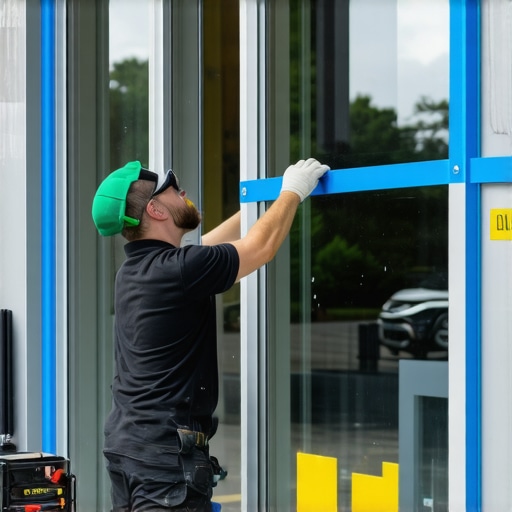
Whether you are getting a chip repair to save an expensive acoustic pane or a full same-day replacement, the technician must treat the rough opening of the vehicle with respect. I have seen installers skip the flashing tape-equivalent (the primer) on the pinchweld, leading to whistles that no amount of acoustic glass can fix. Ensure your mobile service provider uses high-modulus adhesives that match the OEM specifications. Without the proper shim or setting blocks, the glass can sit too low in the aperture, creating a lip that catches the wind and generates the very noise you paid to avoid. Even the glazing bead or the exterior molding must be seated perfectly to ensure a laminar flow of air over the glass surface. Don’t let a ‘caulk-and-walk’ artist touch your car; insist on a specialist who understands that water management and sound attenuation are sciences, not suggestions.