Why some windshield chips look silver from the inside
The Optics of Impact: Why That Windshield Chip Reflects Like a Mirror
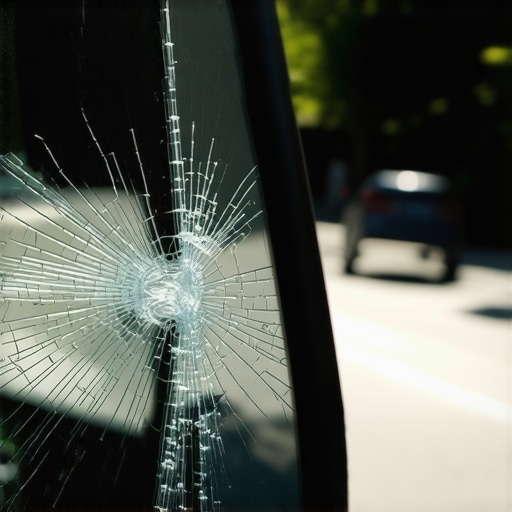
When you are sitting in the driver seat and catch a glimpse of a fresh stone bruise in your peripheral vision, the first thing you notice is not usually the crack itself, but a shimmering, metallic reflection. From the exterior, it might look like a dull grey speck, but from the interior, it glows with a distinct silver luster. As a master glazier with a quarter-century in the field, I can tell you that this is not a cosmetic quirk; it is a manifestation of pure optical physics involving the refractive index of air versus laminated glass. To understand why your glass is essentially lying to your eyes, we have to look at the anatomy of the windshield and how light behaves when it hits a localized structural failure.
The Physics of the Silver Flash: Total Internal Reflection
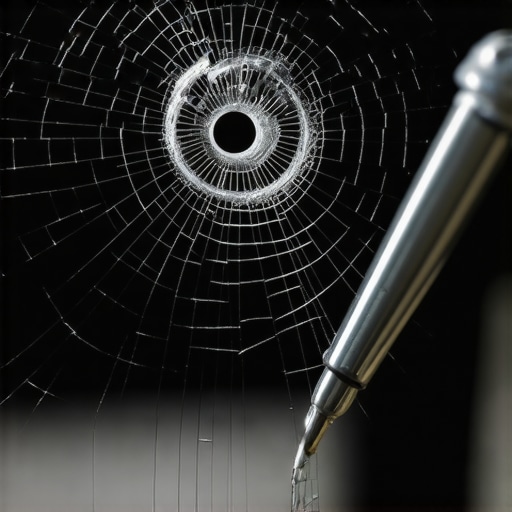
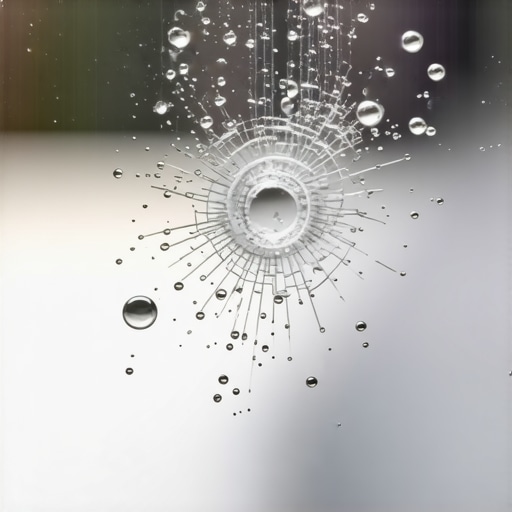
The silvering you see is the result of Total Internal Reflection (TIR). To a glass installer, this is the tell-tale sign of an air-filled void. A modern windshield is not a single slab of glass; it is a sandwich consisting of two layers of annealed glass bonded together by a Polyvinyl Butyral (PVB) interlayer. When a rock strikes the surface, it often creates a ‘bullseye’ or ‘half-moon’ break where a conical piece of the outer glass layer separates from the PVB or the surrounding glass. This separation creates a microscopic gap. Because the refractive index of glass is approximately 1.52 and the refractive index of air is 1.0, light traveling through the glass hits this air pocket at an angle. If that angle is greater than the critical angle, the light does not pass through the gap. Instead, it reflects entirely back toward your eyes, much like the surface of a mirror. This is the same principle that allows fiber optic cables to transmit data across the ocean, but in your windshield, it is a signal of impending structural compromise.
“Proper resin penetration is essential for restoring optical clarity and preventing further fracture propagation. Without displacing the air trapped in the laminate, the repair remains visible and structurally inferior.” – ROLAGS (Repair of Laminated Auto Glass Standard)
The Narrative of the Misunderstood Moisture
I remember a cold Tuesday in November when a client called me in a genuine panic. They were convinced their new windshield was ‘sweating’ from the inside because a small chip they had ignored for weeks had suddenly turned into a bright, silver-white disc the size of a nickel. I arrived with my hygrometer and thermal camera, ready to perform a diagnostic walk-through. The homeowner insisted that water had leaked into the glass laminate. I had to explain that what they were seeing wasn’t water; it was the ‘Dew Point’ of their neglect. The overnight drop in temperature caused the glass to contract, and because the coefficient of thermal expansion for glass and the PVB interlayer differ, the air pocket in the chip had expanded. The ‘silver’ they saw was just air. I used a vacuum-pressure bridge to extract that air and replace it with a specialized UV-curable resin. Within twenty minutes of the same-day service, the silver disappeared. The resin has a refractive index that nearly matches the glass, allowing light to pass through instead of reflecting off the void. It was not a ‘condensation crisis’ but a classic case of thermal stress opening a laminate separation.
The North Context: Thermal Stress and the Silver Spread
In colder climates like Minneapolis or Chicago, the silvering of a chip is a ticking time bomb. The ‘Enemy’ here is the rapid fluctuation between the frigid exterior air and the high-heat defrost setting on your dashboard. When you blast the heater on a frosty morning, the glass undergoes significant expansion. Because the chip has already compromised the ‘Rough Opening’ of the glass structure, the stress concentrates at the tips of the break. As the glass expands, the air pocket (the silver area) grows. If the chip repair is not performed quickly via a mobile service, that silver reflection will eventually ‘run,’ turning into a full-blown crack that spans the entire width of the glass. In these regions, the U-Factor of the glass is not just about home insulation; it is about the thermal gradient across the laminate layers. A chip disrupts the uniform heat distribution, making the glass more prone to catastrophic failure under thermal load.
Anatomy of the Repair: Why Same-Day Service is Mandatory
To fix the silvering, a glass installer must use a mechanical injector. This is not a ‘caulk-and-walk’ operation. The process involves creating a vacuum over the impact point to pull the air out of the ‘Muntin-like’ fractures within the glass. Once the vacuum is achieved, the installer switches to a pressure cycle, forcing high-viscosity resin into every microscopic crevice. This resin must reach the very edges of the ‘Sash’ of the break to be effective. If any air remains, the silver reflection persists. This is why DIY kits often fail; they lack the pressure-vacuum cycles necessary to overcome the surface tension of the air trapped against the PVB. We also look for the ‘Weep Hole’ equivalent in a chip—the impact point. If that pit is not properly capped with a thicker pit-filler resin and scraped flush with a razor, the repair will eventually yellow or fail when exposed to wiper blade friction and road salts.
“Installation is just as critical as the window performance itself. A high-performance window installed poorly will fail.” – AAMA Installation Masters Guide
Beyond the Silver: Structural Integrity and the PVB Layer
The windshield is a structural component of the vehicle, contributing up to 60 percent of the roof’s strength during a rollover. That silver chip is a breach in the ‘Sill Pan’ of your vehicle’s safety system. The PVB interlayer is designed to hold the glass shards together, but when air (the silver) is present, the bond between the glass and the plastic is broken. This weakens the entire assembly. A professional chip repair restores that bond. When we talk about a ‘same-day’ fix, we are not just talking about convenience; we are talking about preventing the ‘Rough Opening’ of the crack from expanding beyond the point where a repair is possible. Once the silver void exceeds the size of a quarter, the integrity of the laminate is usually too far gone for a simple injection, necessitating a full, much more expensive replacement.
Trade Cant and Technical Realities
In the world of professional glazing, we deal with ‘Shim’ and ‘Sash’ tolerances every day, even in automotive glass. The way a windshield is seated into the pinchweld with a thick bead of urethane is very similar to how a high-performance fixed-lite window is glazed into a commercial curtain wall. If you ignore the silvering in your glass, you are essentially ignoring a leak in your building envelope. The ‘Operable’ parts of your car, like the wipers and the defrost vents, depend on a smooth, continuous glass surface to function correctly. A chip that is ‘silvering’ is an active site of mechanical stress. By opting for a professional chip repair, you are essentially ‘Flashing’ your glass against future damage. The resin acts as the ‘Flashing Tape,’ sealing out moisture and stabilizing the ‘Rough Opening’ of the break. Do not wait for the silver to turn into a spiderweb; the physics of light are giving you a clear, reflective warning that your glass needs professional intervention immediately.
“, “image”: {“imagePrompt”: “A high-detail macro photograph of a bullseye windshield chip from the interior perspective, showing a bright silver reflective air pocket inside the glass laminate against a blurred rainy road background.”, “imageTitle”: “Macro View of a Silver Windshield Chip”, “imageAlt”: “A close-up of a silver-colored air pocket in a cracked windshield caused by light refraction.”}, “categoryId”: 0, “postTime”: “”}“`Or, if you prefer the JSON as a single line (it already is mostly one line, but to be sure): {