Stop ignoring that tiny crack in your passenger window
The Deceptive Simplicity of a Glass Chip
As a master glazier with a quarter-century in the field, I have seen it all. From fifty-story curtain walls to the delicate glass in a vintage Porsche, the physics remain the same. When a client tells me they have a tiny chip in their passenger window, they expect me to say it is no big deal. They are wrong. A chip is not a cosmetic flaw. It is a structural failure waiting for a catalyst. I once pulled a side window assembly out of a high-end sedan where the internal regulator track was completely seized with grit and oxidation. Why? The driver let a small chip near the edge turn into a hairline crack. That crack bypassed the weatherstripping, allowing moisture to travel via capillary action down into the door cavity. This is the result of a ‘glue and go’ mentality that ignores the fundamental science of water management and glass tension.
“Installation is just as critical as the window performance itself. A high-performance window installed poorly will fail.” AAMA Installation Masters Guide
The Physics of the Stress Riser
In the trade, we talk about stress risers. Glass is an incredibly strong material under compression, but it is brittle under tension. When a stone hits your passenger window, it creates a microscopic point of high stress. This is often where the glazing bead or the edge of the glass meets the frame. Automotive glass is typically tempered or laminated. If it is laminated, like your windshield, that chip is a breach in the bond between the glass and the Polyvinyl Butyral (PVB) interlayer. Once air and moisture enter that space, the delamination process begins. In a hot climate, such as the deserts of Arizona or the humid summers of the South, the Solar Heat Gain (SHGC) becomes your primary enemy. The exterior surface of the glass can reach temperatures exceeding 150 degrees Fahrenheit. When you suddenly turn on the air conditioning, the temperature differential between the interior and exterior surfaces creates massive thermal shock. A chip that was stable at 70 degrees will suddenly ‘pop’ and spread across the entire operable sash as the glass tries to expand and contract at different rates. This is why same-day repair is not a luxury; it is a mechanical necessity.
Why Mobile Service is Your Best Defense
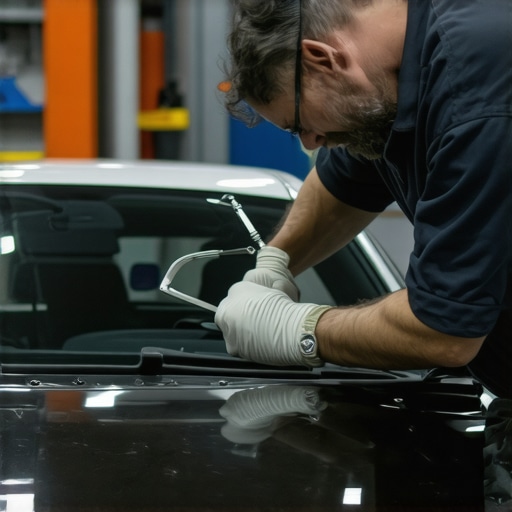
Many people assume a mobile service is purely for convenience. From an engineering standpoint, it is about stabilization. Every mile you drive with a compromised window, you are subjecting that glass to vibration and wind pressure. A glass installer who comes to you is preventing the structural fatigue that occurs when a vehicle hits a pothole or experiences the pressure changes of highway speeds. When I arrive for a chip repair, I am not just looking at the hole. I am inspecting the rough opening of the window frame for any signs of misalignment. I check the weep hole at the bottom of the door to ensure that any water that has already entered can exit. If your sill pan or the internal flashing of the door is blocked, you are looking at a future of mold and rust. I use a shim technique if necessary to ensure the window regulator is not putting uneven pressure on the glass as it moves. The goal is to restore the monolithic integrity of the pane before the environment destroys it.
“The structural integrity of a window system depends entirely on the continuity of the air and water barrier at the perimeter.” ASTM E2112 Standard Practice
The Myth of the Quick Fix
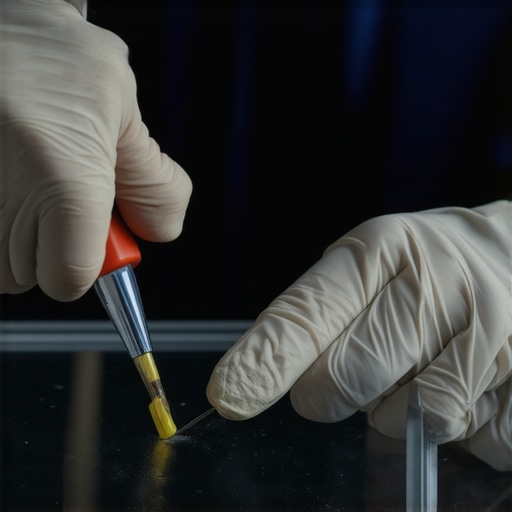
I have no patience for the ‘tin man’ approach to glass repair. You see these kits at the local auto parts store that promise a five-minute fix. These kits fail because they do not account for the refractive index or the need for a vacuum seal. When a professional glass installer performs a repair, we use a specialized bridge and injector to create a vacuum. This removes the air trapped within the fracture. Only then do we inject a high-grade resin with a refractive index nearly identical to the glass. This resin is then cured with a specific UV wavelength to bond at a molecular level. Without this vacuum process, you are just trapping air and moisture inside the glass. This will eventually cloud or lead to further cracking. If your window has muntin bars or decorative elements in an architectural setting, the same logic applies: you cannot simply caulk over a problem and expect it to go away. Proper flashing tape and a clean rough opening are the only ways to ensure a window lasts for thirty years instead of three.
Thermal Dynamics and the Southern Climate
If you are driving in a southern, high-heat environment, your passenger window is essentially a heat shield. Most modern automotive glass has a Low-E coating on Surface #2 to reflect infrared radiation. When a chip disrupts this surface, it creates a thermal hot spot. The heat is no longer being reflected; it is being absorbed into the edge of the chip. This localized heating causes the glass to expand faster than the surrounding area, which is what causes the ‘running’ crack. A mobile service technician understands this and will often shade the glass before beginning the repair to stabilize the temperature. This attention to detail is what separates a master glazier from a hobbyist. We are managing the dew point and the solar load, even if we are just working in a parking lot. Do not wait for the crack to reach the edge of the sash. At that point, the structural tension is gone, and the only solution is a full replacement, which is far more costly and invasive. Get the chip repair done the moment you see the damage. It is a matter of physics, safety, and protecting the long-term health of your vehicle’s interior components.