How a leaky windshield destroys your car’s electrical dash
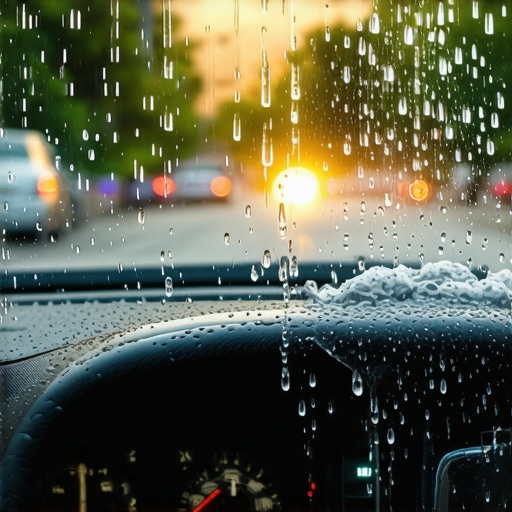
A window is never just a piece of glass; it is a critical component of a managed envelope. In the world of high-performance glazing, we treat every installation as a battle against the elements. When you translate that logic to your vehicle, the stakes become even higher. Your windshield is effectively a structural member of the car’s ‘Rough Opening,’ and when that seal fails, the consequences are not merely a wet floor mat. I once inspected a sedan in a coastal region where the owner complained of intermittent radio failure and a ‘haunted’ instrument cluster. Upon pulling the trim, I discovered the A-pillar was deeply corroded because a previous installer had scratched the paint and failed to apply a proper primer. The water had been tracking down the metal, using the wiring harness as a highway directly into the car’s brain. This was a classic case of ‘caulk-and-walk’ mentality destroying a $40,000 asset.
“Installation is just as critical as the window performance itself. A high-performance window installed poorly will fail.” – AAMA Installation Masters Guide
The Physics of the Pinchweld and Capillary Action
In the trade, we look at the ‘Rough Opening’ as the foundation of any glass install. In a car, this is the pinchweld. When a glass installer provides a mobile service, they are fighting against wind, dust, and temperature fluctuations that can compromise the urethane bond. If the bond is not perfect, capillary action takes over. This is the phenomenon where liquid is drawn into narrow spaces regardless of gravity. A microscopic gap in the sealant can pull rainwater from the roofline and deposit it behind the dashboard. Unlike a residential window that might have a ‘Sill Pan’ or ‘Flashing Tape’ to redirect moisture, a car’s dashboard is a graveyard of exposed copper and sensitive sensors. The moment moisture hits the junction block or the Body Control Module, you are dealing with electrolysis. This is not just water sitting on plastic; this is a chemical reaction that grows dendrites between circuits, causing permanent shorts that no amount of ‘same-day’ drying can fix.
Why Chip Repair is a Structural Necessity
Many drivers view a stone chip as a cosmetic nuisance, but a master glazier sees it as a structural fracture. A windshield is a laminated sandwich, two layers of glass held together by a polyvinyl butyral (PVB) interlayer. This interlayer is hygroscopic, meaning it can absorb moisture. If you ignore a chip, moisture enters the laminate. When the sun hits the glass, that moisture expands, causing the ‘Sash’ of the glass to delaminate. This is why a mobile service for chip repair is so critical. By injecting a specialized resin, you are not just hiding the mark; you are re-establishing the structural integrity of the glass. If the fracture spreads, the entire unit loses its ability to support the roof in a rollover or to provide the proper ‘Rough Opening’ stability for airbag deployment.
The Thermal Stress of Mobile Service
When we talk about ‘Solar Heat Gain,’ we are usually discussing how to keep a living room cool. In a vehicle, the windshield is the primary entry point for radiant energy. A quality glass installer knows that the temperature of the glass and the pinchweld during installation dictates the success of the seal. If you are in a cold climate like Chicago or Toronto, the U-Factor of the glass is less important than the temperature at which the urethane is applied. Most high-viscosity urethanes require a specific thermal window to achieve full ‘Shore A’ hardness. If it is too cold, the material stays ‘short,’ meaning it does not wet out the substrate properly. This leads to air whistles and, eventually, the very leaks that drown your dashboard electronics. You want a technician who understands that the ‘Weep Hole’ logic of a residential window does not apply here; there is no ‘Sill Pan’ to catch the failure. The seal must be absolute and ‘Operable’ only in its role as a structural bond.
“Adhesion failure in automotive glazing is most often attributed to improper substrate preparation or the presence of moisture during the curing process.” – ASTM E2112 (Adapted Principles)
The Anatomy of a Dashboard Failure
The modern dashboard is a dense pack of electronics, including the Engine Control Unit (ECU), infotainment systems, and airbag sensors. When a leak occurs at the top of the windshield, the water typically follows the interior A-pillar trim. From there, it drips onto the ‘Muntin’ of the dash structure and finds the lowest point. In many vehicles, the lowest point is the fuse box. This is where the damage becomes terminal. The minerals in the rainwater create conductive paths across the surface of the circuit boards. You might notice your lights flickering or your car failing to start. By the time you see the ‘check engine’ light, the ‘Glazing Bead’ of your windshield has likely been compromised for months. This is why immediate action on a chip or a suspect seal is the only way to avoid a total loss of the vehicle’s electrical system.