Why your phone feels hot when the screen stays dark
The Physics of Absorption: Why Glass Performance Matters
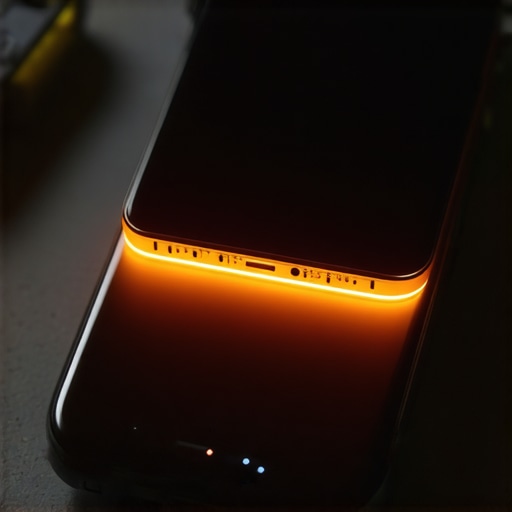
You have likely experienced the phenomenon: you leave your smartphone on a table in a sunlit room, and even though the screen is off and the processor is idle, the device becomes almost too hot to touch. This is not a battery malfunction; it is a masterclass in solar heat gain. Your phone screen is a piece of glass sitting over a black substrate. Short-wave infrared radiation from the sun passes through that glass with ease. Once it hits the dark internal components, the energy is absorbed and converted into long-wave infrared radiation, or heat. Because glass is opaque to long-wave radiation, that heat is trapped. This is the exact same mechanism that turns a poorly glazed living room into an oven. As a master glazier with a quarter-century in the field, I see this thermal failure in homes every single day.
The Narrative Matrix: A Case of Thermal Mismanagement
A homeowner in Miami called me in a panic because their brand-new windows were ‘sweating’ on the outside and the interior felt like a sauna despite the thermostat being set to 68 degrees. I walked in with my hygrometer and a thermal imaging camera. I had to show them that the humidity was actually within normal limits inside, but the glass temperature was hitting 115 degrees Fahrenheit. It was not a mechanical failure of the air conditioner; it was a fundamental misunderstanding of glass selection. They had installed clear, double-pane units with no Low-E coating in a high-solar-load environment. They essentially built a high-performance greenhouse when they wanted a sanctuary. I explained that without a spectrally selective coating on the correct surface, their glass was just a conduit for radiant energy. This is why immediate intervention from a professional glass installer is necessary when the thermal envelope is compromised.
“Installation is just as critical as the window performance itself. A high-performance window installed poorly will fail.” – AAMA Installation Masters Guide
Decoding the NFRC Label: SHGC vs. U-Factor
When we talk about heat in the South, we are talking about the Solar Heat Gain Coefficient (SHGC). While my colleagues in the North obsess over U-Factor (the rate of non-solar heat loss), a glazier in a hot climate looks at SHGC first. SHGC is a fraction between 0 and 1. If your window has an SHGC of 0.70, it is allowing 70 percent of the sun’s heat into your home. In a cooling-dominated climate, you want that number as low as possible, typically below 0.25. This is achieved through sputter-coated Low-E technology. In these assemblies, we place the microscopic silver layers on Surface #2. For those unfamiliar with trade terminology, Surface #1 is the exterior face of the glass, and Surface #2 is the inner face of the outboard lite. By placing the coating here, we reflect the solar radiation before it even crosses the insulating air space. If you put it on Surface #3, the heat has already entered the unit and will radiate into your home, much like the heat trapped under your phone screen.
The Role of Mobile Service and Rapid Repair
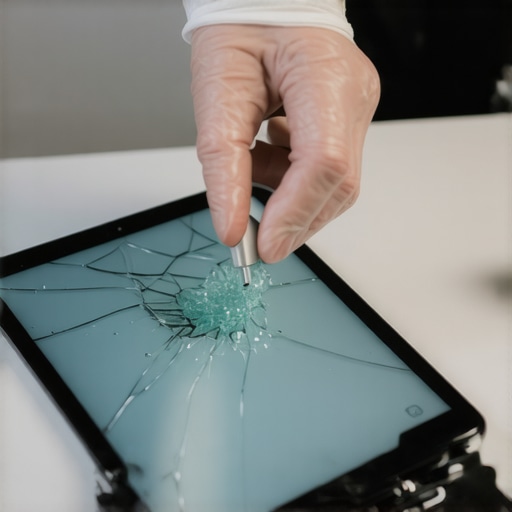
The integrity of the glazing system is fragile. A single rock chip or a hairline fracture can compromise the argon gas fill between the lites. This gas is heavier than air and slows down the convective transfer of heat. When the seal fails, the argon escapes and is replaced by moisture-laden air. This is why a mobile service for chip repair is not just about aesthetics; it is about preserving the insulating value of the window. A same-day glass installer can often bridge the gap between a minor crack and a total seal failure. When we perform a mobile glass repair, we are looking at the glazing bead and the weep hole system to ensure that moisture is being channeled away from the frame. If a chip is ignored, the constant expansion and contraction of the glass due to solar absorption will inevitably lead to a full-length crack, requiring a total sash replacement.
“The selection of glass should be based on a holistic analysis of the building envelope’s orientation and local climatic conditions.” – NFRC Performance Standards
Anatomy of a High-Performance Window
To prevent the ‘hot phone’ effect in your home, we look at the entire rough opening. It starts with the sill pan, a critical but often ignored component that ensures any water bypassing the primary seals is directed back outside. During a professional installation, we use shims to perfectly square the unit within the rough opening, ensuring that the operable sashes meet the weatherstripping with uniform pressure. We then apply flashing tape in a shingle-fashion to create a redundant barrier against air and water infiltration. For the glass itself, we might recommend a gray or bronze tint in extreme exposures. This is not just for privacy; it is a sacrificial layer that absorbs solar energy before it reaches the Low-E coating, further reducing the SHGC. However, you must be careful with thermal stress. A dark tint on a clear lite can lead to uneven heating, causing the glass to expand and snap if not properly heat-strengthened or tempered.
Why Material Science Matters
Whether you are choosing vinyl, fiberglass, or thermally broken aluminum, the frame must manage the heat as well as the glass. Aluminum is a fantastic conductor of heat, which is usually a negative attribute. However, modern high-end frames use a thermal break, a polyamide strip that separates the interior and exterior halves of the frame. This prevents the frame from becoming a heat bridge that bypasses the high-performance glass. When we perform a mobile service, we check these breaks. If the frame is hot to the touch on the inside while the AC is running, you have a bridge problem. This technical nuance is why a ‘caulk-and-walk’ installer is dangerous. They might get the window in the hole, but they won’t understand the thermodynamics of the installation. Proper glazing is a science of managing the invisible forces of the electromagnetic spectrum to ensure comfort and longevity.