Why some phone cases actually make screen cracks more likely
The Architect of Vulnerability: When Protection Becomes a Pressure Point
As a Master Glazier with over a quarter-century in the trade, I look at glass differently than most. Whether I am hanging a two-ton curtain wall lite or examining the chemically strengthened aluminosilicate glass on a smartphone, the physics of failure remain identical. We are dealing with a material that is incredibly strong under compression but notoriously weak under tension. Most people assume that a thick, rigid case is the ultimate insurance policy against a shattered screen, but from the perspective of a glass installer, many of these designs are fundamentally flawed. They ignore the basic principles of structural glazing and thermal expansion, often creating the very conditions that lead to catastrophic failure. When you call for a mobile service to handle a chip repair or a full glass replacement, you are often seeing the end result of a case that failed to manage energy transfer.
The Condensation Crisis: A Lesson in Environmental Stress
A homeowner once called me in a panic because their brand-new, high-performance windows were ‘sweating’ profusely in the dead of winter. I walked into that house with my hygrometer in hand and showed them that the interior humidity was hovering at 60 percent while the outside temperature was a brutal 5 degrees. It wasn’t a failure of the window seals; it was their lifestyle and the lack of air movement. Glass is a thermal bridge, and it reacts to the environment it is trapped in. This same logic applies to your handheld glass. I have seen cases that trap heat so effectively that the glass undergoes significant thermal expansion while the rigid frame of the case refuses to budge. This creates a localized stress concentration that can lead to a spontaneous crack. You might think your phone is safe, but you’ve essentially created a miniature greenhouse that is putting constant pressure on the glazing bead of your device.
“Installation is just as critical as the window performance itself. A high-performance window installed poorly will fail.” – AAMA Installation Masters Guide
The Mechanics of Point Loading and the Rough Opening
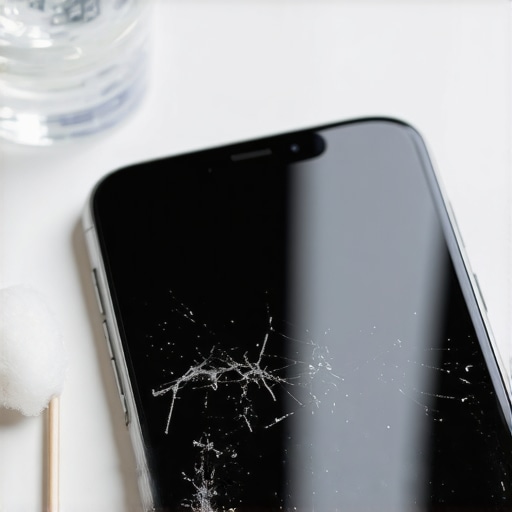
In the world of commercial glazing, we talk a lot about the ‘Rough Opening.’ This is the space where the window sits. If that opening is too tight and the building shifts, the glass breaks. Many phone cases provide a ‘Rough Opening’ that is too precise and lacks the necessary shim space for energy dissipation. When a device is dropped, a rigid case often fails to deform. Instead, it translates the kinetic energy directly into the edge of the glass. In the trade, we know that the edge is the most vulnerable part of any lite. Even a microscopic nick during the glass installer process can become a failure point if the case exerts pressure on that specific coordinate. A same-day repair technician sees this constantly: the case is pristine, but the glass beneath it is a spiderweb. This is because the case acted as a conduit for the impact rather than a buffer.
The Dirty Secret: Grit, Scribing, and the Shingle Principle
One of the most critical concepts in water management is the ‘Shingle Principle’ where every layer overlaps the one below it to shed water. In window installation, we use flashing tape and a sill pan to ensure that even if water gets past the primary seal, it has a way out through a weep hole. Most phone cases violate this principle. They have a small lip that overlaps the glass, which seems protective, but it actually acts as a collection point for silica-based dust and pocket sand. These tiny particles are harder than the glass itself. As your phone moves inside the case, these particles act like a diamond-tipped scribe used by a glazier to cut a lite. They create thousands of microscopic surface scratches. These scratches significantly lower the modulus of rupture for the glass. By the time you drop the phone, the structural integrity has already been compromised by the very case designed to protect it.
“The flashing system must be integrated with the water-resistive barrier to ensure long-term durability of the wall assembly.” – ASTM E2112 Standard Practice
Thermal Shock and the Dew Point of Mobile Electronics
In colder climates like Chicago or Minneapolis, the U-Factor of your glass is king. We use argon or krypton gas fills and warm-edge spacers to prevent the glass edge from becoming a thermal bridge. Your phone lacks these luxuries. When you take a phone out of a warm pocket into a sub-zero environment, the glass wants to contract. If you are using a heavy, insulating case, the center of the glass cools at a different rate than the edges. This creates thermal stress. A mobile service professional will tell you that they see a spike in screen failures during seasonal transitions. This isn’t a coincidence. It is the result of the glass fighting against the constraints of its housing. A case that is too tight does not allow for this natural movement, leading to what we call ‘Edge Bite’ in the glazing industry, where the frame literally pinches the glass until it fails.
The Glazier’s Verdict: What to Look For
If you want to avoid a same-day trip to a glass installer, you need to rethink your approach to protection. Look for cases that incorporate internal ‘shims’ or air pockets that allow for energy dissipation. Avoid cases that require extreme force to install, as this indicates a lack of proper tolerances. Most importantly, clean the interior of your case weekly to prevent the ‘Scribe Effect.’ Remember, glass is a dynamic material that requires a managed environment. Whether it is a sash in a wood window or the screen in your hand, if you don’t respect the physics of the material, the material will eventually fail. The next time you see a chip repair specialist, ask them about the cases they see on the most frequently broken phones. You might be surprised to find that the ‘industrial strength’ options are often the primary culprits in the breakdown of structural glass integrity.