Why your windshield crack spreads at night
The Midnight Creep: Why That Tiny Chip Just Became a Crisis
You parked your vehicle at dusk with a minor stone chip, barely the size of a nickel, tucked away near the edge of the glass. By 7:00 AM, a jagged, lightning-bolt fracture has bifurcated your field of vision. This is not bad luck. It is the predictable result of thermal dynamics and the inherent tension of laminated safety glass. As a master glazier with over two decades in the trade, I have seen this scenario play out thousands of times. Whether we are talking about a high-rise curtain wall or a curved windshield, glass behaves according to rigid laws of physics that do not care about your schedule or your insurance deductible.
A homeowner once called me in a panic because their new high-performance windows were ‘sweating’ and eventually one cracked with a loud pop in the dead of winter. I walked in with my hygrometer and thermal camera and showed them that the humidity was nearly 60% while the outside air was a biting -10 degrees Fahrenheit. It was not a manufacturing defect; it was a failure to manage the dew point and the thermal gradient. In the world of automotive glass, the same principles apply. Your windshield is a stressed member of your vehicle’s structural integrity, and when you introduce a chip, you are creating a point of catastrophic stress concentration.
“Installation is just as critical as the window performance itself. A high-performance window installed poorly will fail.” – AAMA Installation Masters Guide
The Molecular Struggle: Tension and Compression
To understand why cracks spread at night, you have to understand what your windshield actually is. It is a sandwich. Specifically, it consists of two layers of soda-lime glass bonded together by a polyvinyl butyral (PVB) interlayer. This construction is designed to keep the glass from shattering into lethal shards during an impact, but it also creates a complex internal stress environment. During the day, the sun beats down on the glass. The outer layer expands as it absorbs solar radiation. If you have a dark-colored dashboard, the heat radiating back up can further increase the temperature of the inner layer.
When the sun sets, the temperature drops. Glass has a specific coefficient of thermal expansion. As the glass cools, it attempts to contract. However, the glass is bonded to that PVB interlayer and is firmly seated within the pinchweld of your vehicle’s frame. Because the glass cannot move freely, the contraction creates tensile stress. A chip is essentially a structural weak point where the molecular bonds of the glass have already been severed. When the rest of the glass starts pulling away as it cools, all that tension focuses on the tip of the chip. This is the ‘stress riser’ effect. The crack spreads because the energy of the thermal contraction exceeds the remaining strength of the glass at that specific point.
The Role of the Glass Installer and Mobile Service
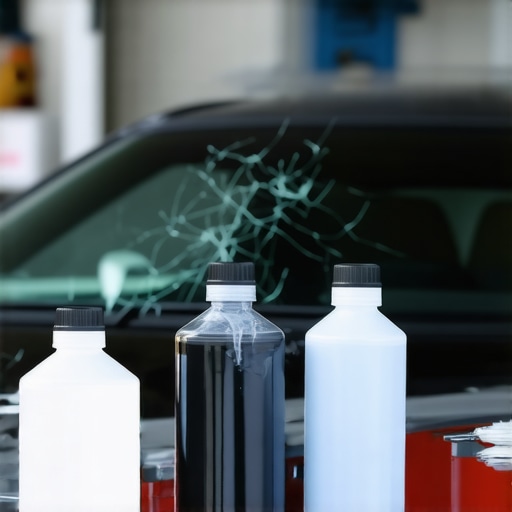
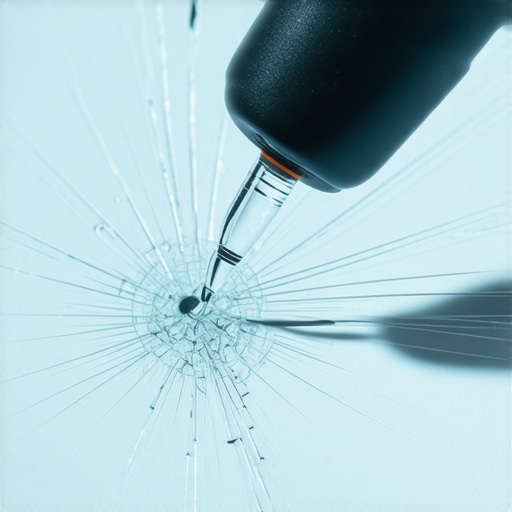
This is why a professional glass installer emphasizes the urgency of same-day chip repair. When a rock hits your glass, it often creates a ‘bullseye’ or a ‘star break.’ These are not just aesthetic flaws; they are open wounds in the glass structure. If you wait, moisture from evening dew or rain can seep into the crack. Water is nearly incompressible. When that water undergoes even minor temperature shifts, or worse, freezes, it acts like a wedge, physically forcing the glass layers apart from the inside. A mobile service technician can intervene by injecting a specialized resin into the rough opening of the chip under vacuum. This resin has a refractive index nearly identical to glass, but more importantly, it restores the structural continuity of the surface, preventing the thermal ‘creep’ that happens overnight.
Climate Logic: Why the North Suffers More
In colder climates like Chicago or Minneapolis, the U-Factor of the glass becomes the defining metric of its survival. The U-Factor measures the rate of heat loss. At night, the temperature differential between the warm interior of a car (perhaps recently parked) and the frigid exterior air creates a massive thermal gradient. This gradient causes uneven contraction. The outer layer of glass cools and shrinks much faster than the inner layer. This differential stress is often the final straw that sends a crack racing across the laminate. Unlike an operable window in a home where we use a sash and shims to allow for some movement, a windshield is glued into place with high-modulus urethane. There is no room for the glass to ‘breathe.’ If it cannot expand or contract, it will break.
“The thermal stress in glass is proportional to the temperature difference across the surface. Once the breaking strength is exceeded, propagation is inevitable.” – NFRC Technical Manual
Beyond the Chip: The Anatomy of the Repair
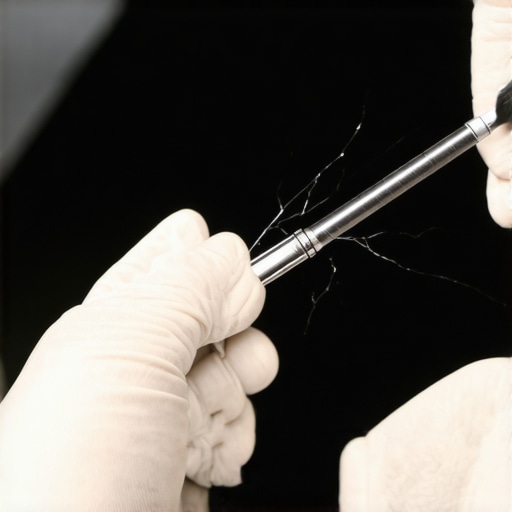
When we perform a chip repair, we aren’t just ‘filling a hole.’ We are performing a micro-scale glazing operation. First, the glass installer must clean the area to ensure no oils or road grime interfere with the bond. If the chip has already begun to sprout tiny legs, we may use a drill to create a tiny ‘stop-hole’ at the end of each fracture to dissipate the stress. We look at the glazing bead of the resin to ensure it has fully penetrated the PVB interface. This is why ‘same-day’ is not a marketing gimmick—it is a technical necessity. Every hour the chip remains open, it collects contaminants and is subjected to the vibration of driving and the relentless cycle of thermal expansion and contraction.
Why DIY Kits Often Fail
I have seen many ‘save-a-buck’ owners try the store-bought kits. The problem is pressure. Without a professional vacuum tool, you are likely trapping air inside the crack. Air expands and contracts significantly more than glass or resin. By ‘sealing’ a crack with trapped air, you might actually be accelerating the failure when the sun hits the glass the next day. A professional mobile service uses a bridge and injector system that pulls a vacuum to remove all air and moisture before forcing the resin in at high pressure. This ensures a monolithic repair that can withstand the rigors of the road.
The Importance of the Pinchweld and Sill Pan Logic
While we don’t use a traditional sill pan in a car, the pinchweld—the metal ledge where the glass sits—serves a similar purpose. It must be pristine. If a previous installer scratched the paint on the pinchweld and rust has formed, that rust (iron oxide) expands. This expansion creates ‘rust heave,’ which puts localized pressure on the edge of the glass. A windshield that is already under pressure from rust is ten times more likely to have a chip turn into a full-length crack overnight. A master glass installer will always treat any nicks in the pinchweld paint with a primer to prevent this hidden killer of glass integrity.
The Bottom Line on Glass Maintenance
If you see a chip, you are looking at a ticking time bomb governed by the laws of thermodynamics. The cost of a same-day chip repair is a fraction of the cost of a full windshield replacement, especially on modern vehicles equipped with ADAS (Advanced Driver Assistance Systems) cameras that require recalibration after the glass is swapped. Don’t wait for the night-time cooling to ruin your glass. Call a specialist who understands that glass isn’t just a transparent barrier, but a complex material that requires respect and technical precision. Water management, thermal stress, and structural integrity are the three pillars of glazing, and they apply just as much to your commute as they do to a skyscraper. Fix the chip today, or buy the whole windshield tomorrow. The physics of the night will not wait for you.