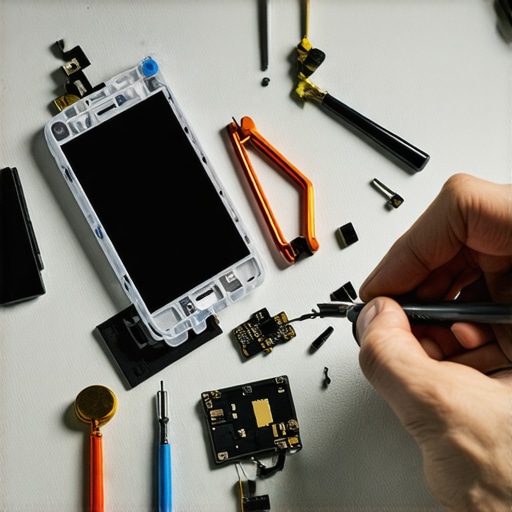
The secret to a bubble-free screen protector install
Beyond the Plastic: Why Precision Glazing Dictates Performance
When most people think of a bubble-free install, they picture a small plastic film on a smartphone. But in the world of a Master Glazier with a quarter-century in the field, a bubble is not just an aesthetic nuisance; it is a sign of atmospheric failure and a precursor to structural degradation. Whether we are talking about a mobile service chip repair on a high-performance windshield or the application of a solar-control film to a storefront, the physics remain identical. A bubble represents a pocket of trapped air, moisture, or outgassed volatiles that compromises the bond between the substrate and the protective layer. If you want to understand how to achieve a perfect finish, you have to stop thinking about the film and start thinking about the molecular topography of the glass itself.
A homeowner called me in a panic because their new windows were ‘sweating.’ I walked in with my hygrometer and showed them the humidity was 60%. It wasn’t the windows; it was their lifestyle. They had dozens of tropical plants and a humidifier running in a sealed room. This story illustrates a fundamental truth in the glass industry: the environment dictates the outcome. Just as internal humidity causes condensation on a window, ambient moisture and particulates are the sworn enemies of a clean glass installation. When I perform a same-day mobile service, I am not just looking at the crack or the chip; I am assessing the dew point and the wind speed. If you try to apply a protective layer when the glass temperature is below the dew point, you are effectively trapping a microscopic layer of water under your seal. That is where your bubbles come from.
“Installation is just as critical as the window performance itself. A high-performance window installed poorly will fail.” AAMA Installation Masters Guide
The Physics of the Surface: Why Chips and Bubbles Occur
To achieve a bubble-free result, one must understand the ‘Tin Side’ versus the ‘Air Side’ of float glass. During manufacturing, glass is floated on a bed of molten tin. This leaves microscopic trace amounts of tin on one side, which can affect how adhesives and resins bond. When a glass installer approaches a chip repair, they aren’t just filling a hole with glue. They are injecting a high-refractive-index resin that must displace every single nitrogen and oxygen molecule within that Rough Opening of the damage. If the resin’s viscosity does not match the ambient temperature, or if the technician fails to create a proper vacuum, air remains trapped, manifesting as a silver reflection or a bubble.
In a Southern climate, where the Solar Heat Gain Coefficient (SHGC) is the primary metric of concern, the stakes are even higher. We often apply Low-E coatings on Surface #2 (the inner face of the outer pane) to reflect radiant heat back toward the sun. If you are applying a secondary protective film or a screen protector in this environment, the glass is often roasting. High heat causes rapid outgassing. If you lay down a film too quickly, the heat trapped in the glass will push gases out of the adhesive, creating those frustrating bubbles an hour after you thought the job was finished.
The Technical Protocol for a Flawless Bond
The secret is not in the ‘squeegee’ technique; it is in the chemical preparation. Most DIYers use ammonia-based cleaners, which is a cardinal sin. Ammonia can react with the Glazing Bead or the adhesive layer of a film, causing it to turn yellow and brittle over time. A professional glass installer uses a deionized water solution or a specific isopropyl alcohol blend that leaves zero residue. We look for the ‘break’ in the water on the glass surface; if the water beads, the glass is still contaminated with oils or silicones. Only when the water sheets off in a single, flat curtain is the glass truly clean enough for a bubble-free application.
“NFRC ratings provide the only reliable way to compare the energy performance of windows, doors, and skylights.” NFRC Performance Standards
Once the surface is chemically inert, the focus shifts to the mechanics. In a mobile service context, we often deal with ‘Weep Hole’ management and ‘Sill Pan’ integrity, but for the glass surface itself, it is all about the ‘wet-out.’ This is the process where the adhesive flows into the microscopic valleys of the glass. Using a shim to maintain even pressure is sometimes necessary for larger architectural panels, but for a chip repair, we use a bridge and injector tool to force the resin into the ‘legs’ of the crack. This ensures that the repair is not just a surface fix but a structural restoration of the glass’s integrity.
Thermal Stress and the Longevity of the Install
Why do some installs fail after a week? It comes down to the expansion coefficient. Glass, vinyl frames, and polyester films all expand and contract at different rates. In a hot climate like Texas or Arizona, a window can reach 150 degrees Fahrenheit easily. If a film is applied with too much tension, the thermal expansion will pull the edges away from the Glazing Bead, allowing air to be sucked back under the film. This is why we leave a microscopic gap at the edge of the film—not because we can’t cut straight, but to allow for the natural ‘breathing’ of the materials. A same-day mobile service technician who doesn’t account for this is just giving you a temporary fix. You need a specialist who understands that water management and thermal logic are the only ways to prevent rot and delamination in the long run.