The truth about liquid glass screen protectors
The Molecular Illusion of Liquid Protection
As a master glazier with a quarter-century in the trade, I have seen every gimmick from self-cleaning glass that doesn’t work to vacuum-sealed units that fail in three years. When the tech industry started pushing liquid glass screen protectors, my phone started ringing with questions about same-day chip repair and mobile service for cracked devices. People wanted to know if a wipe-on chemical could really replace the structural integrity of a factory-tempered pane. To understand the truth, we have to look past the marketing and examine the microscopic topography of the glass surface.
A homeowner called me in a panic because their new windows were ‘sweating’ and their expensive tablets, which they had treated with liquid glass, were still showing scratches. I walked in with my hygrometer and showed them the humidity was 60 percent. It wasn’t the windows or the screen coatings; it was their misunderstanding of how moisture and friction interact with a surface. They expected a liquid coating to act like an invisible shield of armor, but glass physics does not work that way. The reality of liquid glass is far more subtle and, frankly, less impressive than the salesmen claim.
The Science of Silicon Dioxide Coatings
Liquid glass is essentially a solution of Silicon Dioxide (SiO2) suspended in an alcohol or water-based solvent. When you apply it to a smartphone or a window sash, the solvent evaporates, leaving behind a layer of glass molecules that are supposed to fill in the microscopic valleys of the surface. In the glazing trade, we deal with the ‘Rough Opening’ of a building, but at the molecular level, even the smoothest glass has its own rough opening. The liquid glass fills these voids to create a flatter surface, which technically makes the glass harder to scratch by reducing the surface area available for an object to catch on.
“Installation is just as critical as the window performance itself. A high-performance window installed poorly will fail.” AAMA Installation Masters Guide
This principle applies to liquid coatings as well. If the surface is not perfectly decontaminated, the SiO2 molecules cannot bond to the substrate. Even with a perfect bond, the layer is only nanometers thick. For context, a standard piece of residential window glass is about 3 millimeters thick. A liquid screen protector is roughly 500 times thinner than a human hair. While it may improve the Mohs scale rating of the surface slightly, it does nothing to improve the impact resistance or structural stability of the glass.
Why Mobile Service Chip Repair is Different
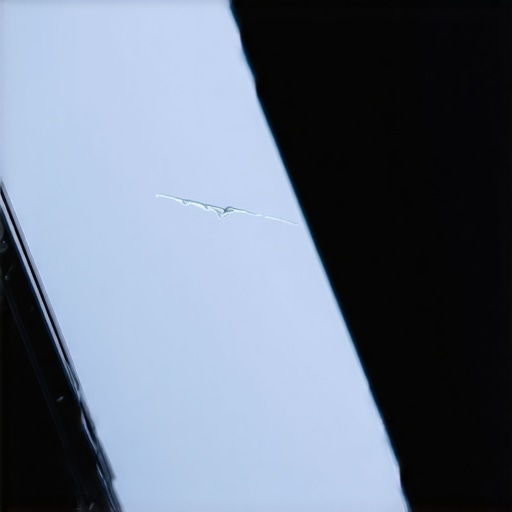
When you call a mobile service for a same-day chip repair on a windshield or a storefront, the glass installer is not just wiping a liquid on the surface. We use a high-viscosity resin that is injected under pressure into the break. We are looking for the ‘legs’ of the crack to ensure the resin reaches the very end of the fracture. This is a structural fix. Liquid glass screen protectors are merely cosmetic. They cannot stop a crack from spreading because they do not have the tensile strength to hold the glass together under stress. If your device has a chip, a wipe-on coating is like putting a coat of paint over a rotted wood muntin; it looks better for a day, but the underlying failure remains.
“The performance of any fenestration product is dependent on the orientation, the climate zone, and the specific spectral properties of the coatings applied to the glass.” NFRC Performance Standards
In hot climates, like those in Texas or Florida, the Solar Heat Gain Coefficient (SHGC) is the number we live by. Some liquid glass manufacturers claim their products reflect UV rays or reduce heat. In the glazing lab, we measure this by looking at Surface #2 (the inner face of the outer pane). A nanometer-thick layer of SiO2 has virtually zero impact on the SHGC. If you want real thermal protection, you need a factory-applied Low-E coating that uses silver layers to reflect long-wave infrared radiation. A wipe-on liquid is simply too thin to interact with the physics of light in a meaningful way.
The Myth of the 9H Hardness Rating
The biggest deception in the liquid glass market is the ‘9H’ hardness claim. In the world of a glass installer, we use the Mohs scale, where a diamond is a 10 and regular glass is about a 5.5. The ‘9H’ rating used by screen protector companies refers to a pencil hardness test, not the Mohs scale. A 9H pencil is significantly softer than even a cheap glazing bead. When people see ‘9H’, they think it is nearly as hard as a diamond, but in reality, your keys or a grain of sand can still scratch through that liquid layer with ease. It is a marketing tactic that preys on the consumer’s lack of technical glazing knowledge.
The Glazier’s Verdict on Liquid Coatings
If you are looking for a same-day solution to protect a new device, a tempered glass physical protector is always superior. It adds a sacrificial layer of tempered glass that can absorb the energy of an impact and shatter to save the primary screen. The liquid glass is merely a surface tension modifier. It makes the glass feel smoother to the touch and helps shed fingerprints, much like a high-quality wax on a car. But do not mistake smoothness for strength. A window without a proper shim and a screen without a physical barrier are both vulnerable to the same laws of physics.
Ultimately, water management and impact resistance are sciences, not magic. Whether you are dealing with a skyscraper’s curtain wall or a handheld device, the principles of glazing remain the same. You cannot skip the structural requirements and expect a liquid to do the work of a solid. For real damage, you need a professional glass installer who understands the chemistry of resins and the physics of glass tension. Stop buying into the liquid hype and start looking at the actual NFRC and AAMA data for what really protects a surface.