Why your mobile tech needs a shaded spot for resin
In the world of professional glazing, precision is not a suggestion; it is a thermal requirement. Whether I am setting a two-hundred-pound IGU into a commercial Rough Opening or performing a delicate chip repair on a laminated windshield, the laws of thermodynamics do not take a day off. A homeowner called me in a panic because their windshield crack ran across the whole view while they were waiting for a chip repair. I walked up to the vehicle, placed my infrared thermometer on the glass, and it read one hundred and forty-five degrees. I told them the sun did more damage than the rock did. Their lifestyle demanded a same-day fix in the driveway, but their lack of a shaded spot turned a thirty-minute repair into a full replacement. This is why a professional glass installer insists on shade when using high-performance resins.
The Chemistry of the Cure: Why UV Control Matters
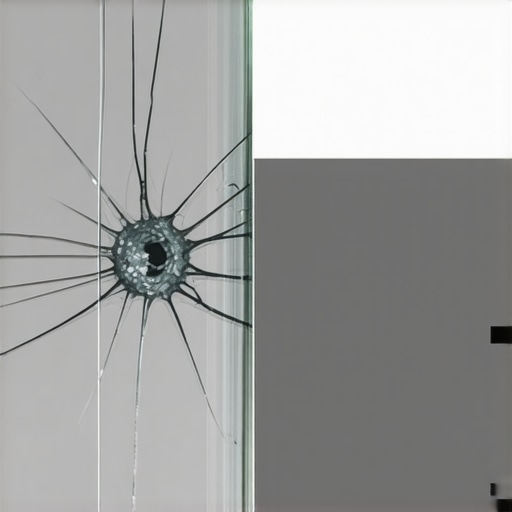
The resins we use in modern mobile service operations are sophisticated anaerobic adhesives and UV-curing polymers. These are not simple glues. They are engineered to match the refractive index of soda-lime glass, typically around 1.51. When a glass installer injects resin into a star-break or a bullseye, they are initiating a molecular bond. This bonding process is triggered by specific wavelengths of light, primarily in the UVA spectrum between 315 and 400 nanometers. If the vehicle is sitting in direct sunlight, the photo-initiators within the resin react instantaneously. This is known in the trade as a flash cure. A flash cure is a failure. It prevents the resin from achieving full capillary action into the microscopic legs of the crack, leaving voids that will eventually lead to structural failure of the repair. Shade allows the technician to control the timing of the polymerization. We need the resin to remain in a liquid state while we cycle the vacuum and pressure phases of the injector tool. Without shade, the sun wins the race before we even start the pump.
“Installation is just as critical as the window performance itself. A high-performance window installed poorly will fail.” – AAMA Installation Masters Guide
Thermal Expansion and Substrate Stability
In hot climates, specifically across the southern states, the Solar Heat Gain Coefficient isn’t just a number on an NFRC label; it is a daily obstacle. Glass is a poor conductor of heat, which means it develops significant thermal gradients. The surface temperature of a windshield in the sun can be fifty degrees hotter than the interior air temperature. When a glass installer applies a repair bridge to the glass, that tool exerts mechanical pressure. If the glass is heat-stressed, the molecules are already in a state of high-energy vibration and expansion. Adding pressure to an expanded, hot substrate is a recipe for the crack to bloom. We call this running the crack. By moving the vehicle to a shaded spot, or by providing a canopy, the mobile service technician allows the glass to reach a state of thermal equilibrium. We are looking for a surface temperature between sixty and eighty degrees Fahrenheit. This range ensures the resin viscosity is optimal. If the resin is too hot, its surface tension drops too low and it becomes watery, failing to provide the structural integrity needed to prevent further damage. If we were discussing a residential Sash replacement, we would talk about the importance of the Glazing Bead and the Sill Pan, but in mobile glass, the shade is our most critical piece of site prep.
The Physics of Refraction and Visibility
The goal of a chip repair is two-fold: structural restoration and optical clarity. A same-day mobile service tech is essentially performing surgery on a laminated sheet. Windshields are comprised of two layers of glass with a Polyvinyl Butyral interlayer. When a rock hits, it creates an air pocket between these layers. To fix it, we must evacuate the air and replace it with resin. Direct sunlight creates glare and internal reflections within the glass that mask the tiny legs of the crack. A master glass installer uses the shade to see the true extent of the damage. In the shade, we can use a probe to verify if the resin has reached the very tip of every fissure. If the tech is squinting against the sun, they are missing the details. This is the difference between a repair that disappears and one that looks like a smeared bug. Even a perfectly placed Shim in a door frame won’t help if the foundation is sinking; similarly, the best resin in the world won’t save a windshield if the technician cannot see the air pockets they are trying to remove.
“Properly managed installation environments are the only way to ensure that the chemical properties of adhesives and sealants meet their laboratory-tested potential.” – ASTM E2112 Standard Practice
Why Same-Day Service Demands Preparation
We provide mobile service because your time is valuable, but physics does not care about your schedule. When you book a glass installer for a chip repair, providing a garage or a shaded carport is not about the technician’s comfort; it is about the integrity of the glass. In southern environments where SHGC is king, the heat soak in a vehicle can be immense. If the glass is too hot, the resin may boil at a molecular level, creating micro-bubbles that weaken the repair. We use specific tools to bridge the gap between the Rough Opening of the chip and the solid glass, but those tools require a stable, cool surface to suction correctly. If the suction cup on a repair bridge fails because the glass is off-gassing heat, the bridge can slip and scratch the glass or, worse, break the seal and introduce more air into the repair. Whether you are dealing with an Operable window in a home or a stationary windshield, water management and thermal management are the twin pillars of longevity. A professional technician will always choose a shaded spot to ensure the resin cures from the bottom up, rather than the top down, creating a permanent, clear bond that stands up to the stress of the road. Don’t buy the hype of a five-minute sun-cure; buy the science of a controlled, shaded application.