How to tell if your glass tech used generic resin
The Illusion of the Quick Fix in Modern Glazing
In the world of professional glass restoration, the phrase same-day chip repair has become a staple of mobile service marketing. However, for a master glazier with a quarter-century in the field, those words often signal a looming disaster. I have spent decades analyzing the structural integrity of everything from massive storefront lites to delicate residential sash windows, and the most common failure point I see isn’t the glass itself, it is the polymer used to ‘fix’ it. When a glass installer arrives at your driveway, they are not just performing a cosmetic touch-up; they are attempting to restore the structural tension of a compromised substrate. If they reach for a generic, off-the-shelf resin, they are essentially plugging a high-pressure leak with chewing gum. The chemistry of the resin must match the refractive index of the soda-lime glass precisely, or you will be left with a visible scar that eventually spider-webs across the entire pane.
“Installation is just as critical as the window performance itself. A high-performance window installed poorly will fail.” – AAMA Installation Masters Guide
A few months ago, I was called to a commercial site where a mobile tech had performed a same-day chip repair on a series of tempered glass panels. The homeowner was frantic because, under the harsh afternoon sun, the repairs were turning an ugly shade of amber. I pulled out my hygrometer and a UV spectrometer. It turned out the humidity was spiking near the glazing bead, and the cheap resin used by the previous tech was already hydrolyzing. It wasn’t a glass failure; it was a chemistry failure. The installer had relied on a generic resin that lacked the stabilizers required to survive high UV exposure. This is the ‘Condensation Crisis’ of the repair world: moisture and heat attacking a weak chemical bond until the repair vanishes, leaving a jagged hole in your ROI.
The Physics of Refractive Index and Light Transmission
To understand why generic resin fails, we have to look at the physics of light. Glass typically has a refractive index of approximately 1.52. When light hits a chip, it bounces off the air-to-glass interface, which is why the damage looks white or silver to your eye. A professional glass installer uses a resin specifically engineered to mimic that 1.52 index. Generic resins, often sold in bulk to low-cost mobile service providers, frequently sit at a 1.48 or 1.55 index. This may seem like a negligible difference, but in the world of optics, it is a canyon. When the refractive indices don’t match, the light bends incorrectly as it passes through the repair, creating a ‘ghost’ or a shimmer that is visible from every angle. This is the first sign your tech cut corners.
Furthermore, we must consider the Solar Heat Gain Coefficient (SHGC). In hotter climates, particularly in the South, the glass surface can reach temperatures exceeding 150 degrees Fahrenheit. A high-quality resin must have a thermal expansion coefficient that aligns with the glass. If the resin expands faster than the glass when the sun hits Surface #2, it exerts outward pressure on the rough opening of the chip. This is how a minor pit becomes a full-blown crack during a summer heatwave. The generic stuff simply cannot handle the oscillation between the cool interior air and the radiant heat of the exterior.
Surface Tension and the Role of the Glazing Bead
A true professional understands that the glass is part of a larger system. Whether it is an operable sash or a fixed picture window, the glass is under constant tension from the shims and the weight of the frame. When a chip occurs near the edge, close to the glazing bead, the stress is magnified. Generic resins lack the shear strength to hold the glass together under these conditions. I often see ‘tailgate techs’ who ignore the weep hole placement and the sill pan integrity, focusing only on the center of the glass. But a chip repair is a structural weld. If the resin doesn’t have the tensility to bridge the gap, the first time a heavy wind hits the building and creates negative pressure, the repair will pop.
“The integrity of the fenestration unit depends entirely on the chemical compatibility of all repair materials used within the glazing pocket.” – NFRC Performance Standards
When evaluating a mobile service, ask about the viscosity of their resin, measured in centipoise (CPS). A master glazier uses different resins for different types of damage. A thin, low-viscosity resin (around 20 CPS) is required to penetrate the microscopic fissures of a star-break, while a thicker resin (up to 300 CPS) is used for the pit fill to ensure it stays flush with the surface. Generic kits usually provide one ‘all-purpose’ resin that is too thick to penetrate and too thin to stay put. This is the ‘caulk-and-walk’ mentality that I have fought against my entire career.
How to Spot the Generic Resin Trap
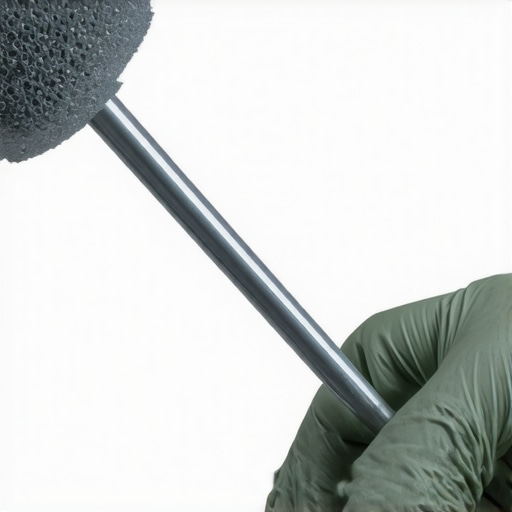
There are three immediate ways to tell if your glass installer is using inferior product. First, look at the curing lamp. Professional UV resins require a specific nanometer wavelength to reach full cross-linking. If the tech is using a battery-powered light that looks like a toy, the resin will never fully cure, leading to premature yellowing. Second, check the ‘flick test.’ Once the repair is dry, a high-quality resin should be indistinguishable in hardness from the glass itself. If it feels slightly tacky or can be indented with a fingernail, it is a generic acrylate that will fail within a year. Finally, observe the polishing process. A professional repair requires a cerium oxide polish to restore the luster. Generic installers skip this step, leaving a dull spot on the pane.
In conclusion, do not be fooled by the convenience of a same-day chip repair without vetting the materials. A window is a managed hole in your thermal envelope. Whether you are dealing with a wood muntin or a modern aluminum frame, the glass repair must be treated with the same precision as the original installation. Demand to see the NFRC or ASTM ratings of the resins being used. If the tech cannot explain the difference between anaerobic and UV-cured polymers, they should not be touching your glass. In this industry, you don’t buy the hype; you buy the numbers. Anything less is just a temporary bandage on a permanent problem.