How to spot a bad windshield seal before it leaks
The Invisible Defense: Why Your Windshield Seal Matters
In my twenty-five years as a master glazier, I have seen every type of glass failure imaginable, from high-rise curtain walls buckling under wind loads to residential sashes rotted out by poor flashing. But some of the most critical failures I encounter are not in buildings at all; they are in the vehicles we drive every day. A windshield is not just a piece of glass you look through. In modern engineering, it is a structural component that contributes up to sixty percent of the cabin’s structural integrity during a rollover accident. When that seal fails, you aren’t just looking at a puddle on your floor mat; you are looking at a compromised safety system.
A homeowner called me in a panic because their new windows were ‘sweating’ and they suspected the glass was defective. I walked in with my hygrometer and showed them the humidity was 60%. It wasn’t the windows; it was their lifestyle. I often see the same misunderstanding with vehicle glass. Drivers see a bit of fog or hear a slight whistle and assume it is just ‘part of the car aging.’ I am here to tell you that in the world of professional glazing, there is no such thing as a ‘small’ leak. By the time you see water, the damage to the pinchweld and the underlying substrate is often already done. If you are looking for a mobile service or a same-day glass installer, you need to know exactly what to look for before the technician arrives and, more importantly, after they leave.
The Physics of the Bond: Urethane vs. The Elements
To understand a bad seal, you must understand the chemistry of the installation. We don’t use ‘caulk’ in windshields. We use high-modulus, professional-grade urethane. This is a moisture-cured adhesive that creates a molecular bond between the glass frit (that black ceramic band around the edge) and the pinchweld of the vehicle frame. In cold climates like Minneapolis or Chicago, the U-Factor of the glass matters, but the shore A hardness of the cured urethane is what keeps the glass in place when the temperature drops to minus twenty. If the installer skips the primer step, you get ‘bridging’ where the urethane sticks to the glass but pulls away from the metal, creating a microscopic path for water.
“Installation is just as critical as the window performance itself. A high-performance window installed poorly will fail.” – AAMA Installation Masters Guide
Symptom 1: The High-Pitch Whistle (The Bernoulli Effect)
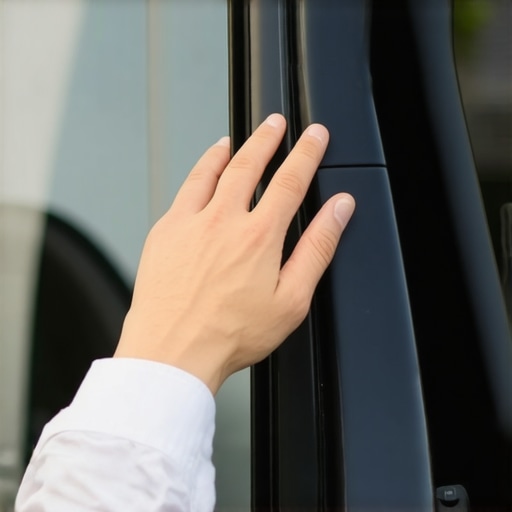
If you are driving at highway speeds and hear a sound like a distant flute or a high-pitched tea kettle, you are likely experiencing a seal gap. This occurs when a small section of the urethane bead is missing or has detached. As air moves rapidly over the A-pillar, it creates a low-pressure zone. If there is a hole in the seal, air is sucked out of the cabin, creating that whistle. This isn’t just an annoyance; it is a sign that the ‘rough opening’ of your car frame and the glass are no longer a unified unit. A chip repair specialist can fix a stone hit, but a whistle usually requires a full reseal.
Symptom 2: Interior Fogging and Dew Point Management
In cold climates, we worry about the dew point. If the seal is compromised, moisture-laden air from the outside enters the gap and hits the cool surface of the glass or the dashboard. If you find that your windshield is fogging up on the inside more than usual, or if there is a persistent ‘musty’ smell in the cabin, the seal is the primary suspect. Unlike a window sash in a home that has a weep hole system to drain moisture, a car’s pinchweld is designed to be a dry zone. Water trapped here will eventually lead to rust, which expands and ‘heaves’ the glass, further breaking the seal.
Symptom 3: The Visual Inspection of the Frit and Moldings
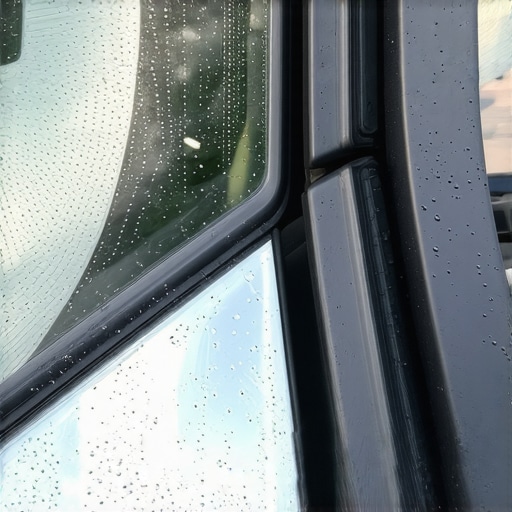
Take a close look at the exterior molding. Is it wavy? Is it lifting at the corners? While the molding is often cosmetic, its displacement usually indicates that the technician who did the last same-day install was rushing. I look for ‘squeeze-out’ of the urethane. If I see black goo oozing into the interior or visible gaps between the glass and the frame, the bead was not laid with a consistent V-cut. A master glazier knows that a consistent bead height is the only way to ensure the glass sits at the correct depth within the frame. If the glass is too low, it hits the frame; if it is too high, the seal is thin and weak.
The Anatomy of a Professional Installation
When you hire a mobile service, you are essentially bringing a glazing lab to your driveway. A proper installation follows a strict protocol that mirrors ASTM E2112 standards for architectural openings. First, the old glass is removed with a wire or a power tool, taking care not to scratch the paint on the pinchweld. If the paint is scratched, a professional glass installer must apply a specialized primer to prevent corrosion. Failure to do this is the number one cause of seal failure. Next, the glass is cleaned with a decontaminant. Even the oils from a technician’s fingers can prevent the urethane from bonding to the frit.
“The integrity of the fenestration system is dependent upon the continuity of the air and water barrier across the rough opening.” – ASTM E2112 Standard Practice
In southern or hot climates, the enemy is Solar Heat Gain and UV degradation. The urethane must be UV-stable, and the glass often features a Low-E coating on surface number two to reflect radiant heat. If an installer uses a cheap, sub-standard adhesive to save money on a same-day job, the heat of a Texas or Florida summer will cause the adhesive to soften and lose its structural bond. This is why I always check the expiration date on the urethane tubes. Yes, they have expiration dates, and a professional will never use ‘skunky’ material.
How to Test Your Seal at Home
If you suspect a leak but can’t see it, there is a simple glazier’s trick. Take a bottle of soapy water and spray it around the exterior perimeter of the windshield. Then, turn your car’s blower motor to the highest setting on the ‘fresh air’ mode (not recirculate) and close all doors and windows. This creates a slight positive pressure inside the cabin. If you see bubbles forming in the soapy water on the outside, you have found your leak. This is the same principle we use to test for air infiltration in high-end commercial glazing. It is a definitive test that no high-pressure salesman can argue with.
The Reality of Same-Day Service
We live in a world of convenience, and the mobile service industry has adapted to that. However, ‘same-day’ should not mean ‘drive-away-immediately.’ Every urethane has a Minimum Drive-Away Time (MDAT). This is the time required for the adhesive to cure enough to hold the glass in place during an airbag deployment. Depending on the humidity and temperature, this can be anywhere from thirty minutes to several hours. If an installer tells you it is safe to drive before the MDAT has passed, they are putting your life at risk. A master glazier respects the chemistry of the cure.
Conclusion: Water Management is a Science
Whether it is a muntin on a historic window or the encapsulation on a modern windshield, water management follows the ‘shingle principle.’ Everything must be layered so that water flows down and away from the interior. A bad windshield seal is a failure of this basic science. If you see signs of failure, don’t wait. A small chip repair is easy; a rusted-out pinchweld requires a body shop and thousands of dollars in repairs. Demand a technician who understands the technical nuances of the bond, uses the right primers, and respects the cure times. In the end, the glass is only as good as the man or woman who installs it.”, “image”: {“imagePrompt”: “A technical, close-up shot of a professional glazier applying a thick, consistent V-bead of black urethane adhesive to the edge of a windshield with a manual caulking gun. The focus is on the texture of the adhesive and the clean metal frame of the car.”, “imageTitle”: “Professional Urethane Bead Application”, “imageAlt”: “Close-up of a master glazier applying structural adhesive to a windshield frame”}, “categoryId”: 1, “postTime”: “2023-10-27T10:00:00Z”}