The best way to carry a cracked phone without cutting your hands
The Anatomy of a Shattered Surface: Why Your Phone is a Failed Glazing Unit
As a Master Glazier with over a quarter-century in the field, I have seen every type of glass failure imaginable. From high-velocity impact on curtain walls to the slow, silent creep of stress fractures in a poorly shimmed sash, the physics of glass remain constant. When you look at your cracked smartphone, you aren’t just looking at a broken gadget; you are looking at a structural failure of a chemically strengthened glass panel. Most people treat a cracked screen with a ‘caulk-and-walk’ attitude, slapping on a piece of office tape and hoping for the best. This is a mistake that ignores the fundamental mechanics of glass integrity and the risks of micro-lacerations. In the world of commercial glazing, a cracked lite is a liability that requires immediate containment and professional mobile service for a full-frame replacement.
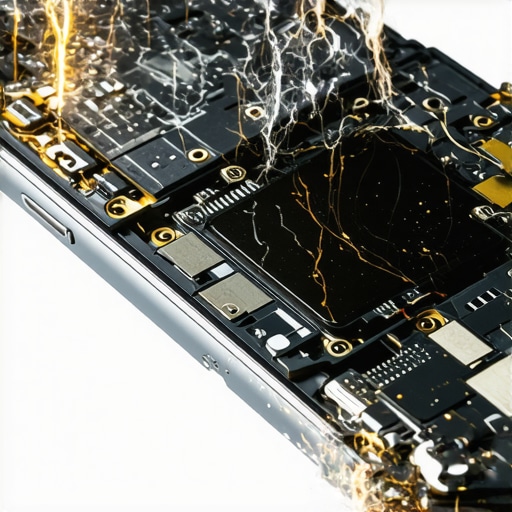
I remember pulling a vinyl window out of a house in a rainy coastal town where the header was completely black with rot. Why? The previous installer relied on the nailing fin instead of proper flashing tape, thinking a little bit of sealant would bridge the gap. That same principle of failed moisture management applies to your cracked phone. Once that glass seal is breached, the ‘rough opening’ of your phone’s internal chassis is exposed to atmospheric humidity. Just as a window with a blown seal loses its insulating argon gas and begins to fog, a phone with a cracked screen allows capillary action to pull oils from your skin and moisture from the air directly into the sensitive digitizer and OLED layers. This isn’t just about aesthetics; it is about preventing a total system failure caused by the same environmental forces that rot out a window sill.
“Installation is just as critical as the window performance itself. A high-performance window installed poorly will fail.” – AAMA Installation Masters Guide
The Science of the Shard: Why Mobile Glass Cuts
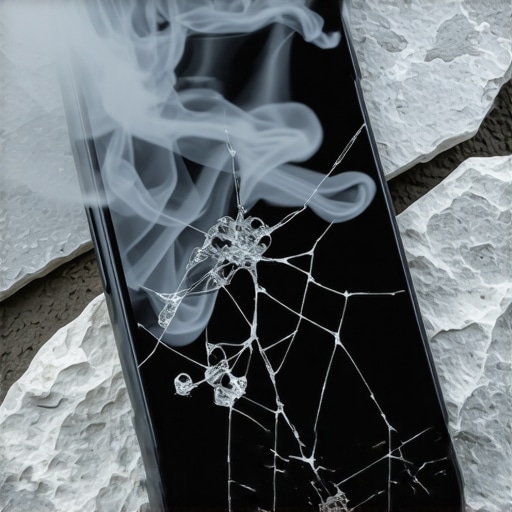
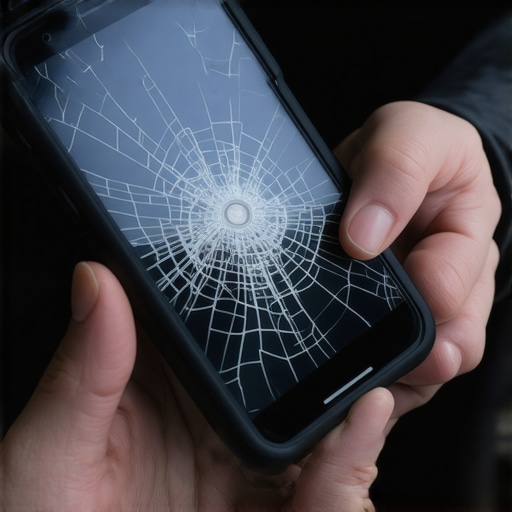
To understand how to carry a cracked phone without cutting your hands, you have to understand the ‘Glazing Zooming’ perspective of glass tension. Most modern mobile devices use an alkali-aluminosilicate thin-sheet glass. During manufacturing, this glass undergoes an ion-exchange process where larger potassium ions are stuffed into the glass surface, replacing smaller sodium ions. This creates a state of high deep-compressive stress. When the glass breaks, that stored energy is released, creating edges that are often thinner than a surgical scalpel. These are not clean breaks; they are jagged landscapes of microscopic glass needles. If you rub your thumb across a ‘spiderweb’ crack, you are effectively applying pressure to a thousand tiny levers that are designed by physics to penetrate human tissue.
When we talk about chip repair in the glazing industry, we focus on the refractive index. A professional glass installer knows that a crack is visible because the air trapped inside the fracture has a different refractive index than the glass itself. In mobile service applications, same-day repairs often involve injecting a clear resin that matches the optical properties of the glass. But before the professional arrives, you are the temporary custodian of a hazardous material. You must manage the ‘weep hole’ effect where moisture might enter the device while ensuring your hands remain protected from the razor-sharp edges of the compromised sash.
The Installation Autopsy: Blueprint for Safe Transport
The first step in managing a cracked phone is to treat it like a failed pocket replacement. In my decades of experience, the biggest mistake people make is applying too much pressure to the center of the crack. This is equivalent to pushing on a window pane that has lost its glazing bead; the structural support is gone. If the glass is shedding small fragments, you have a high-risk situation. I recommend using a temporary flashing tape strategy. Find a high-clarity, low-tack adhesive film. This acts as a sacrificial layer, much like the laminated interlayer in a hurricane-rated window. It doesn’t fix the glass, but it stabilizes the shards and prevents them from migrating into your skin or the internal components of the device.
“The primary purpose of any glazing system is the management of environmental loads and the safe containment of the glass in the event of breakage.” – ASTM E2112 Standard Practice
Consider the rough opening of your phone. Every corner is a stress concentrator. If your crack originates from a corner, the structural integrity of the entire panel is compromised. When carrying the device, avoid placing it in a pocket where it will be subjected to torsional forces. In the glazing trade, we use shims to ensure a window stays plumb and level, preventing the frame from twisting and cracking the glass. When you put a cracked phone in your back pocket and sit down, you are applying a bending moment that will cause those cracks to propagate faster than a thermal fracture on a hot July afternoon. Instead, place the device in a rigid case or a dedicated compartment in a bag where it remains flat.
Thermal Dynamics and Moisture Ingress
In cold climates, we worry about the dew point. If you take a cracked phone from a warm house into the freezing winter air, the air inside the phone contracts, creating a slight vacuum. This vacuum can pull moisture-laden air through the cracks. This is the same reason why we use warm-edge spacers in insulated glass units; we want to keep the edge of the glass warm to prevent condensation. Since your phone lacks a thermal break, the cracked glass is a direct thermal bridge. If you see ‘sweating’ under the glass, you have reached the dew point inside your device, and internal corrosion is imminent. This is why same-day mobile service is not a luxury but a technical necessity to save the hardware.
A professional glass installer will tell you that the ‘shingle principle’ applies even at this micro-scale. Water flows down. If you must use the phone while it is cracked, hold it at an angle where any potential moisture, such as sweat or light rain, will run away from the fractures rather than into them. Never use a liquid cleaner on a cracked screen. The capillary action will draw the liquid deep into the display assembly, causing permanent ‘blooming’ or dead pixels. This is the digital equivalent of water damage to a wood muntin; once the moisture is in, the damage is often irreversible without a full-frame tear-out.
The Professional Path: Why Same-Day Mobile Service Matters
When you call for a professional glass installer for a same-day repair, you are paying for more than just a new piece of glass. You are paying for the precision of the ‘glazing bead’ application. In a mobile device, this is the specialized adhesive that bonds the display to the frame, ensuring an airtight and watertight seal. A DIY repair often fails because the ‘rough opening’ was not cleaned of old adhesive and glass dust, leading to a ‘sash’ that sits proud of the frame and eventually leaks or cracks again. A master glazier ensures that the new glass is perfectly seated, shimmed for alignment, and sealed against the elements.
Do not be fooled by ‘Tin Man’ salesmen offering cheap glass replacements that lack the oleophobic coatings or the structural hardness of the original equipment. Much like choosing between a high-performance fiberglass frame and a cheap, flimsy vinyl, the material science of the replacement glass determines the longevity of the repair. If the U-factor and SHGC matter for your home windows, the optical clarity and touch sensitivity matter for your mobile glass. You want a repair that restores the device to its original engineering specifications, not just a quick fix that leaves you with a ‘drafty’ interface and poor touch response.