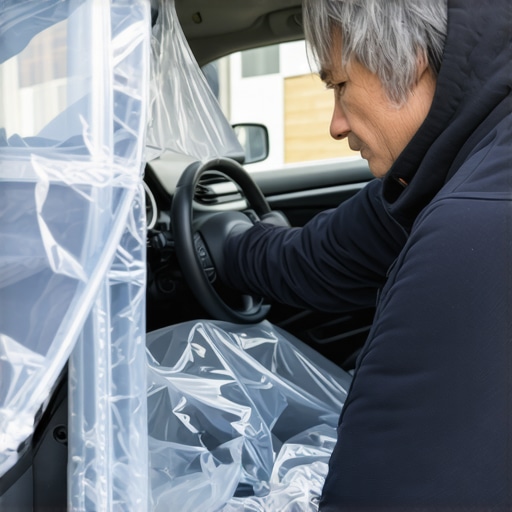
Why your office parking lot is the best place for a fix
The Engineering Reality of Mobile Glass Restoration
In twenty-five years of handling everything from structural glazing to high-performance residential fenestration, I have seen thousands of homeowners and fleet managers ignore a minor chip until it becomes a structural failure. Most people view a glass crack as an aesthetic nuisance. As a master glazier, I see it as a breach in a pressurized system. Your glass is a structural component of your vehicle or building envelope, and when that surface tension is compromised, the clock starts ticking. The decision to call a mobile service for a same-day fix in your office parking lot isn’t just about saving time; it is about the physics of glass stabilization before the day’s peak thermal load hits.
“Installation and repair conditions are just as critical as the glass performance itself. A high-performance glazing unit that is compromised structurally will fail under standard environmental loading if not addressed by a certified technician.” – AAMA Installation Masters Guide
The Condensation Crisis: A Narrative of Thermal Stress
I recall a specific instance where a facility manager at a corporate campus in the city called me in a panic. Their lobby’s high-performance glass was ‘sweating’ and one pane had developed a massive spider-web fracture during a heatwave. I walked in with my hygrometer and thermal camera. I showed them that the interior humidity was hovering at 65% while the glass surface temperature was dropping below the dew point because of the HVAC placement. But the crack? That started as a tiny stone chip from a lawnmower three weeks earlier. Because they waited, the daily cycle of solar heat gain followed by rapid cooling from the air conditioning created a localized thermal stress that the glass could no longer bridge. If a glass installer had performed a chip repair when it first happened in that parking lot, the structural integrity of the laminated glass would have been preserved. They lost a four-thousand-dollar panel because they ignored a fifty-dollar repair.
Why the Parking Lot is a Controlled Environment
People assume a garage or a shop is the only place for a technical repair. They are wrong. When you are dealing with a mobile service, the parking lot provides the exact environment where the glass ‘lives.’ For same-day service, we are catching the glass in its natural state of expansion. When a stone hits your glass, it creates a ‘break’ which is actually a series of microscopic fractures radiating from the point of impact. In the glazier trade, we look at the ‘Rough Opening’ of the damage. If dirt, moisture, or car wax enters those micro-fractures, the refractive index of the repair resin will never perfectly match the glass. By having a glass installer meet you at your office, you are sealing the wound before contaminants can compromise the bond.
The Science of the Chip: More Than Just Glue
A professional chip repair involves a sophisticated vacuum and injection sequence. We don’t just ‘fill’ a hole. We use a bridge and injector tool to create a vacuum over the impact point. This pulls the air out of the ‘legs’ of the crack. If you leave air in there, the repair will be visible and the structural bond will be weak. We then inject a specialized UV-curable resin with a specific centipoise (viscosity) that matches the refractive index of soda-lime glass. This resin must flow into every microscopic ‘Sash’ of the fracture. Once the resin is injected, we use a curing light to trigger polymerization, turning the liquid resin into a solid that is chemically bonded to the glass molecules. This is why a same-day response is vital; the longer that fracture is exposed to the wind and road vibration, the more the ‘legs’ spread, making a clean vacuum seal impossible.
“The standard practice for the installation and repair of exterior glass emphasizes that the maintenance of the water-resistant barrier and the structural integrity of the glazing are paramount to the longevity of the structure.” – ASTM E2112 Standard Practice
Thermal Dynamics: Why Heat Kills Glass
If you are parked in an asphalt lot during a July afternoon, your glass is subjected to intense Solar Heat Gain. The glass expands. If you have a chip, that expansion puts immense pressure on the point of the break. At the same time, you likely have your AC blasting on the inside. This creates a massive thermal gradient across the thickness of the glass. In the trade, we call this thermal shock. This is when a tiny bullseye turns into a ‘long crack’ that spans the entire width of the glass. Once the crack exceeds the size of a dollar bill, the structural ‘Glazing Bead’ of the repair is no longer an option, and you are looking at a full replacement. A mobile service technician can intervene during your morning meeting, stabilized the glass while it is still in the shade, and prevent that thermal expansion from ruining the pane.
Technical Anatomy of a Professional Repair
When I arrive for a chip repair, I’m looking at the ‘Frit’ (the black ceramic paint around the edges) and the ‘PVB Interlayer’ (the plastic sheet between the two layers of glass). If the chip is too close to the edge, the stress is higher because the glass is clamped into the frame. We use Shims or specialized suction leveling to ensure the glass is not under torsion during the cure. Most ‘caulk-and-walk’ amateurs will just drop resin in and scrape it flat. A master glass installer understands that the surface must be polished with a pit resin that is harder than the filler resin to withstand the friction of wipers or cleaning chemicals. We ensure the ‘Weep Hole’ of the repair—the tiny exit point for air—is perfectly sealed. This technical precision is what differentiates a permanent fix from a temporary patch that will yellow and fail in six months. By utilizing mobile service, you are ensuring that the repair happens in the window of time before environmental factors turn a minor fix into a major liability.