Why your phone signal is weak after a screen repair
The Ghost in the Machine: Why Your Signal Vanished After a Screen Swap
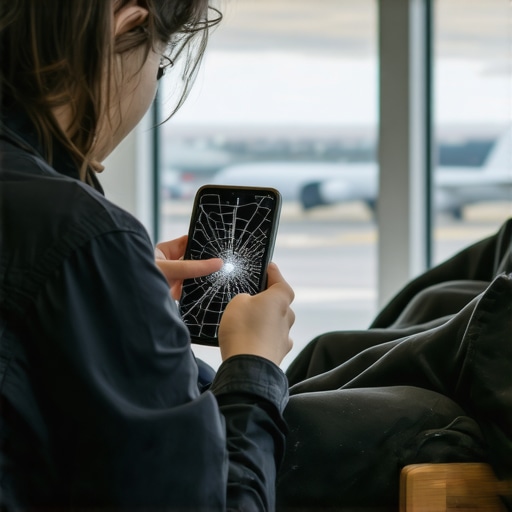
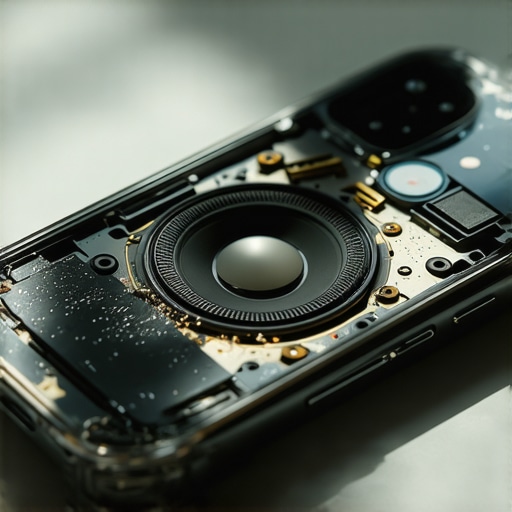
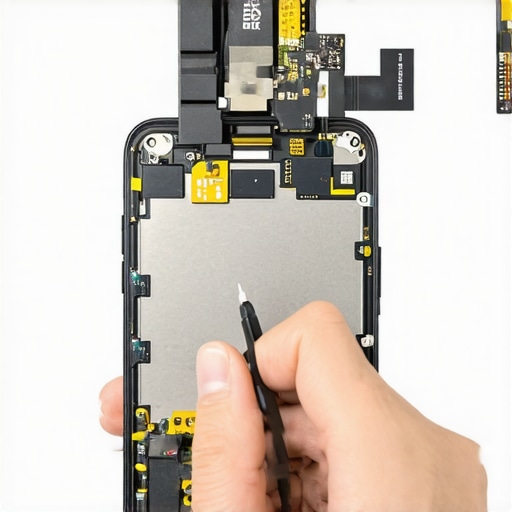
I recently encountered a situation that perfectly illustrates the intersection of high-end glazing and mobile electronics. A client came to me with a top-tier smartphone that had just undergone a same-day glass replacement at a local mall kiosk. The glass looked fine, but the device was essentially a paperweight for calls. I opened the casing and immediately identified the culprit. The installer had used a generic, high-carbon adhesive that bridged the gap between the internal antenna and the frame. This was not a mobile service; it was a technical failure. In my twenty-five years as a glass installer, I have seen the same mistakes made on a larger scale with architectural glazing where the installer treats the opening as a simple hole rather than a complex thermal and electronic barrier. When you replace a screen, you are not just swapping glass; you are manipulating a delicate balance of RF transparency and structural integrity. A window, whether it is on a skyscraper or in your pocket, must be treated with the precision of a rough opening in a high-performance building.
“Installation is just as critical as the window performance itself. A high-performance window installed poorly will fail.” – AAMA Installation Masters Guide
The Science of RF Attenuation in Modern Glass
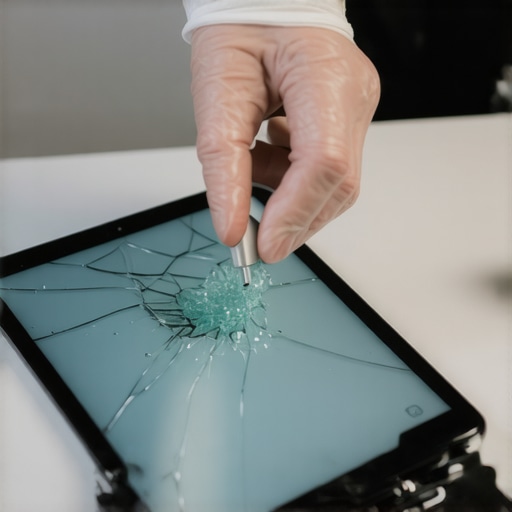
In the world of professional glazing, we talk about Visible Transmittance (VT) and Solar Heat Gain Coefficient (SHGC). In the mobile service world, we must talk about RF attenuation. Modern phone glass is not just soda-lime glass. It is often aluminosilicate glass that has been chemically strengthened through an ion-exchange process. When a chip repair or a full screen replacement is performed, the replacement part often lacks the specific metallic-oxide coatings found on the original equipment manufacturer (OEM) part. These coatings are the mobile equivalent of a Low-E coating on Surface #2 of a double-pane window. If the replacement glass is too thick or contains a higher iron content, it acts as a literal shield, blocking the very signal your phone needs to function. This is what we call the Faraday Cage effect on a micro-scale. You want the glass to allow visible light and radio waves to pass through while reflecting long-wave infrared radiation. If the glazier or technician does not understand the refractive index and the metallic composition of the glass, they are essentially boarding up your connection to the world.
Climate Logic: Why Heat and Adhesives Kill Your Connection
For those living in hot climates like Phoenix or Miami, the enemy is Solar Heat Gain. In architectural glass, we place the Low-E coating on Surface #2 to reflect heat outside. In a mobile device, the heat is generated internally by the processor and battery. If a same-day glass installer uses an inferior adhesive that does not account for thermal expansion, the glass will eventually lift. This lifting creates a gap in the sill pan equivalent of the phone’s frame. This gap allows moisture and dust to enter, which can corrode the delicate chip repair points and the antenna contacts. When the temperature spikes, the frame expands. If the screen is not properly seated with the correct tolerances, it puts pressure on the internal components. This is why we use a shim in window installation to ensure everything remains level and plumb. In a phone, if the screen is not perfectly aligned within the rough opening of the chassis, the signal suffers due to mechanical stress on the RF connectors.
“The integrity of the building envelope depends on the proper management of water and air at every penetration.” – ASTM E2112 Standard Practice
The Blueprint of a Failed Installation
When you look at a window, you see the sash and the muntin. When I look at a phone repair, I see the glazing bead and the flashing tape equivalent. Most signal issues after a repair stem from three main areas. First is the grounding. Just as we use flashing tape to ensure a window is integrated into the house’s weather barrier, a phone screen has specific grounding points that must touch the frame. If the technician leaves a plastic film over these points, the signal cannot ground. Second is the adhesive thickness. If the glazing bead of adhesive is too thick, it increases the distance between the antenna and the exterior, leading to dropped calls. Third is the lack of a proper seal. Without a functional weep hole or a sealed perimeter, the device’s internal humidity rises. High humidity inside a device is like condensation between two panes of glass. It is a sign of total system failure. A true glass installer knows that the seal is the most important part of the job. Whether it is a chip repair on a windshield or a mobile service for a smartphone, if the seal is compromised, the performance is gone.
Performance Ratings: Decoding the Technical Specs
We need to look at the numbers. In the fenestration industry, the NFRC label tells you the U-Factor. In mobile glass, you should be looking for the dielectric constant of the material. Cheap replacement glass often has a high dielectric constant, which interferes with the capacitive touch and the signal reception. This is why a same-day fix can feel like a downgrade. You might have saved fifty dollars, but you have increased your signal loss by 10 decibels. That is the difference between five bars and no service. Always ask your installer about the glass composition. Is it tempered? Is it aluminosilicate? Does it have an oleophobic coating? These are not just buzzwords; they are the technical requirements for a functional device. Just as I would never install a single-pane window in a Minneapolis winter, you should never put low-quality glass on a high-performance mobile device. The ROI on cheap glass is always negative when you factor in the frustration of a broken signal and the potential for internal component damage due to heat buildup. Do not buy the hype of the quick fix; buy the numbers and the expertise of a professional who understands the science of glass.