Why your front camera looks foggy after a screen swap
The Vapor Trap: A Diagnostic Autopsy
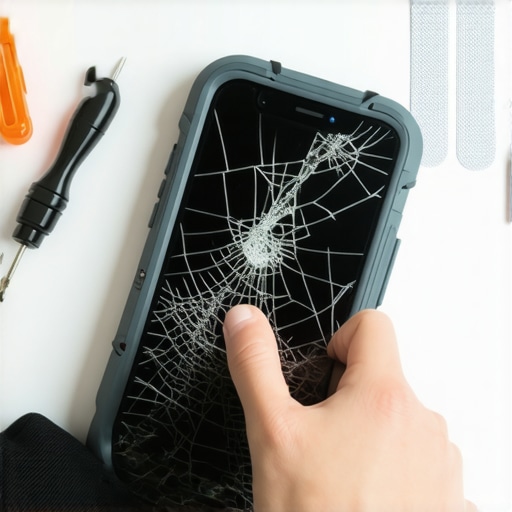
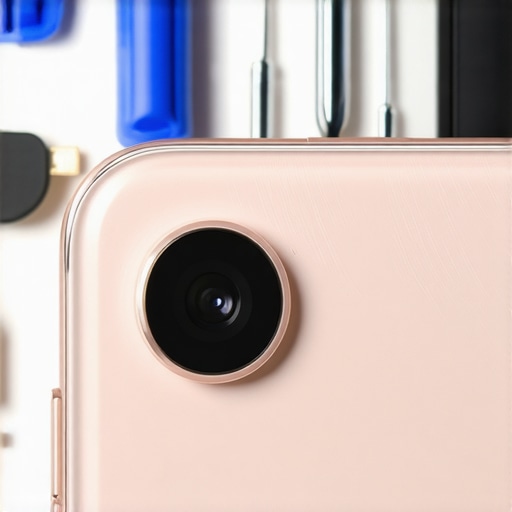
I once took a call from a client who had just utilized a mobile service for a same-day glass repair. They were ecstatic about the price until the first cold morning hit. I looked at the device, and the front-facing camera was completely obscured by a milky haze. This was not a hardware failure in the electronic sense; it was a fundamental failure of the building envelope on a micro-scale. I told the owner exactly what I tell homeowners when I see moisture between IGU (Insulated Glass Unit) panes: you did not just buy a repair; you bought a pocket of trapped atmosphere. The previous glass installer had performed the swap in a high-humidity environment, likely a service van or an open-air parking lot, effectively sealing a micro-liter of humid air inside the chassis. When the exterior temperature dropped, that air reached its dew point, and the water vapor condensed on the coldest surface available: the camera lens. This is the same reason a poorly flashed window in a humid climate like Houston or Miami will rot a header from the inside out before you ever see a drip on the floor.
“Installation is just as critical as the window performance itself. A high-performance window installed poorly will fail.” – AAMA Installation Masters Guide
The Physics of the Micro-Envelope
To understand why your camera looks like a foggy morning in the Pacific Northwest, we have to look at the Dew Point and Vapor Pressure. When a glass installer performs a screen swap, they are essentially acting as a master glazier for a very small, very expensive window. The gap between the camera lens and the new glass cover is the Rough Opening. In a factory setting, these components are often assembled in a clean room with controlled humidity, or even a vacuum, to ensure that the air trapped inside has a negligible moisture content. When a mobile service technician opens that seal in the field, they are introducing ambient air into the assembly. If the Relative Humidity is high, that air is saturated. Once the new glass is pressed onto the adhesive Glazing Bead, that moisture is locked in. There is no Weep Hole in a smartphone to allow for pressure equalization or moisture egress. In the world of commercial glazing, we use desiccants—those little silica packets you find in shoe boxes—hidden inside the aluminum Sash or spacer bars to soak up this residual moisture. Your phone doesn’t have that luxury. The U-Factor of the glass, which measures the rate of heat transfer, ensures that the glass cools down much faster than the internal components of the phone. As the glass temperature falls below the dew point of the trapped air, condensation is inevitable.
The Sealant Science: Why ‘Same-Day’ Often Means ‘Same-Mistake’
The integrity of any glass installation relies on the Flashing Tape or sealant used to marry the glass to the frame. In the window industry, we talk about the Shingle Principle, which dictates that every layer must shed water to the layer below it and eventually to the exterior. In a mobile service screen swap, the technician often relies on pre-cut adhesive gaskets. If the technician does not meticulously clean the Rough Opening of the phone’s chassis, removing every microscopic shard of the old glass and every trace of old adhesive, the new seal will have gaps. These gaps allow for Capillary Action, where liquid water is actually sucked into the device by surface tension. More commonly, they allow for Vapor Migration. Even if the initial installation was dry, a compromised perimeter seal allows the device to ‘breathe’ in humid air every time the temperature cycles. This is why a chip repair on a windshield or a screen swap on a device must be done with Structural Adhesive that creates a hermetic barrier. If the installer ‘caulks and walks,’ using low-grade acrylic tapes instead of high-grade polymers, the seal will expand and contract at a different rate than the glass and the metal, leading to Seal Failure within weeks.
“Standard Practice for Installation of Exterior Windows, Doors and Skylights requires that the installation must maintain the integrity of the water-resistive barrier.” – ASTM E2112
Thermal Dynamics and the SHGC of Mobile Glass
We also have to consider the Solar Heat Gain Coefficient (SHGC). While we don’t typically think about SHGC for a phone, the principle remains: the glass is designed to manage how much solar radiation enters the device. Many high-end replacement screens lack the specialized Low-E (Low-Emissivity) coatings found on OEM (Original Equipment Manufacturer) parts. These coatings are designed to reflect certain wavelengths of light. Without them, the internal temperature of the camera housing can spike when exposed to direct sunlight, causing any trapped moisture to evaporate rapidly. Then, as soon as you move into an air-conditioned room, that vapor hits the cool underside of the glass and fogs up instantly. A professional glass installer understands that the glass is a dynamic filter, not a static barrier. When you opt for a cheap screen, you are often losing the thermal management properties that prevent the ‘greenhouse effect’ inside your camera module.
The Solution: Beyond the Chip Repair Mentality
Fixing a foggy camera requires more than just a chip repair mentality; it requires a full Sill Pan level of attention to detail. The only way to truly rectify the issue is to break the seal, clean the surfaces with 99% isopropyl alcohol to strip away moisture, and re-seal the unit in a dry-box environment. For those seeking mobile service, ensure the technician uses a heat gun to gently warm the chassis and the glass before sealing. This lowers the relative humidity of the air trapped inside by increasing its capacity to hold moisture without it condensing, though it is a temporary fix compared to a true vacuum seal. As a glazier, I refuse to install an operable window without checking the Rough Opening for level and square; similarly, a screen repair should never be finalized until the Glazing Bead is inspected for 100% continuity. Don’t let a ‘same-day’ promise turn into a long-term visibility problem. Insist on high-quality adhesives and a controlled installation environment, because once the fog sets in, the only way out is to start over and do it right.