The truth about refurbished phone screens
The Micro-Glazing Standard: Why Your Screen Repair Is Failing
I have spent over twenty-five years managing the structural integrity of glass, from massive tempered panels in skyscrapers to the delicate wood sash replacements of historic brownstones. To the average consumer, a window is just a transparent barrier. To me, it is a complex managed opening. When I look at a smartphone, I do not see a gadget; I see a micro-scale glazing project. The principles of thermal expansion, refractive indices, and structural bonding do not change just because the glass fits in your pocket rather than a rough opening in a suburban home.
A homeowner called me in a panic because their new windows were ‘sweating’ on the interior surface. I walked in with my hygrometer and showed them the humidity was 60 percent. It was not the windows; it was their lifestyle choices and lack of ventilation. I see the same thing in the mobile service industry. People complain about a refurbished screen failing, blaming the glass installer, when the real culprit is a fundamental misunderstanding of how materials interact under thermal stress. If you are opting for a same-day chip repair or a full screen replacement, you are entering a world where tolerances are measured in microns, and the ‘caulk-and-walk’ mentality of cheap technicians will leave you with a bricked device.
“Installation is just as critical as the window performance itself. A high-performance window installed poorly will fail.” AAMA Installation Masters Guide
The Anatomy of the Refurbished Assembly
When we talk about a refurbished phone screen, we are discussing a multi-layer glazing system. In the window world, we look at the IGU (Insulated Glass Unit). In a phone, we look at the fused stack of the digitizer, the LCD or OLED panel, and the cover glass. A high-quality mobile service must respect the original manufacturer’s specifications for the glazing bead equivalent: the adhesive frame. Most same-day shops use a cold-press frame that lacks the structural rigidity of the original. Over time, as the device heats up, the Solar Heat Gain from the internal battery and processor causes the cheap plastic to expand at a different rate than the aluminosilicate glass. This is where you get ‘ghost touches’ and delamination.
The glass itself in a refurbished unit is often soda-lime glass rather than the high-ion-exchange chemically strengthened glass found in OEM parts. Think of it like putting single-pane float glass into a high-impact coastal zone. It might look the same, but the moment it faces wind pressure or, in this case, a drop onto a sidewalk, it shatters because it lacks the compressive stress layer required for durability. In my years of experience, if the glass installer is not talking about the chemical composition of the replacement pane, they are just selling you a temporary fix.
Thermal Dynamics and the South/Hot Logic
For those living in hot climates like Phoenix or Texas, the enemy of your phone screen is the same as the enemy of your home windows: Solar Heat Gain. A smartphone is essentially a small greenhouse. If you use a refurbished screen with a low-quality oleophobic coating, you are not just dealing with fingerprints. These coatings also serve a minor role in managing visible transmittance and infrared radiation. A cheap screen lacks the thermal resistance of a properly coated surface. When the sun hits Surface #2 of the glass stack, the heat is trapped. Without a thermally broken frame (the chassis of the phone), that heat begins to degrade the OCA (Optically Clear Adhesive) used to bond the layers.
I have seen mobile service technicians ignore the need for a proper sill pan equivalent, which in a phone is the internal shielding that prevents heat from the logic board from baking the screen adhesive. When these adhesives reach their transition temperature, they soften. This is why you see refurbished screens lifting at the corners. The technician didn’t shim the internal components correctly, or they used a generic adhesive tape that cannot handle the 120-degree internal temperatures a phone reaches during a heavy charging cycle. In the glazing trade, we call this a failure of the sealant system, and it is the fastest way to ruin a high-performance installation.
The Science of the Chip Repair
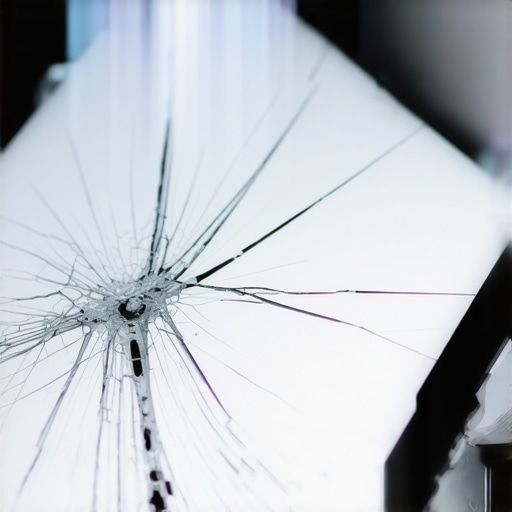
If you are seeking a chip repair, you are essentially asking for a resin-based structural patch. In the world of auto glass or architectural glazing, we know that a chip is a focal point for stress concentration. A mobile service that claims to ‘fix’ a crack with a same-day resin cure is often just hiding the aesthetic flaw without addressing the structural integrity. To properly repair glass, the resin must have a refractive index that perfectly matches the glass substrate. If it doesn’t, you get light bleed and distortion. Furthermore, the resin must be cured under specific UV wavelengths to ensure it bonds to the microscopic rough opening of the crack. If the technician rushes this, the first time you take the phone from a cool air-conditioned room into the summer heat, the differential expansion will cause that chip to spider-web across the entire surface.
“The selection of the proper sealant and the method of its application are as important as the design of the joint.” ASTM E2112 Standard Practice
Choosing Your Installer Wisely
You must treat your mobile service provider with the same scrutiny you would use for a master glazier. Ask about their materials. Are they using cold-pressed or hot-pressed frames? Is the glass aluminosilicate or soda-lime? Do they replace the weep hole filters (the speaker meshes) during the process? A professional glass installer knows that the peripherals are just as important as the glass itself. If they are just slapping a new screen onto a bent chassis without straightening the frame to within a 0.5mm tolerance, that glass is under constant tension. It won’t take a drop to break it; it will break itself just sitting on a table through a process called spontaneous fracture due to edge stress.
Ultimately, the truth about refurbished phone screens is that you get what you pay for in terms of material science. The ‘Tin Man’ of the phone repair world will tell you that all screens are the same. They are not. Between the U-factor of the thermal stack and the SHGC of the glass coatings, there is a mountain of physics that determines whether your phone lasts two years or two weeks. Don’t buy the marketing hype. Look at the numbers, look at the technical specs of the glass, and ensure your installer isn’t just someone who can turn a screwdriver, but someone who understands the science of the opening.