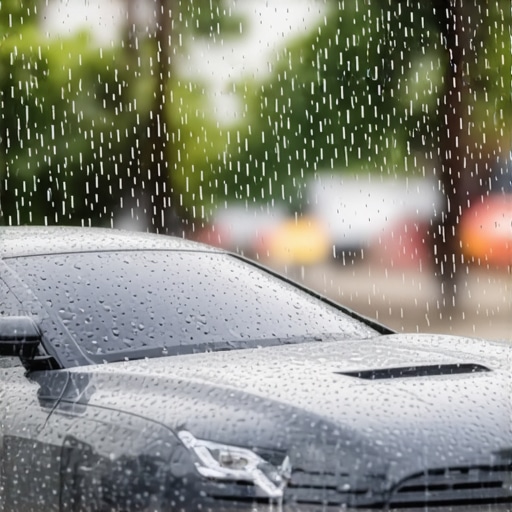
Why your car sensors fail after a rainy glass install
The Hidden Physics of the Rainy Day Install
In twenty-five years of handling everything from high-performance commercial glazing to precision automotive glass, I have seen it all. Most people think a window is just a piece of clear material. They are wrong. A window is a complex thermal and optical barrier. When you call a mobile service for a same-day chip repair or full windshield replacement, you are fighting a battle against physics, particularly if it is raining. Modern vehicles are no longer just metal and rubber; they are rolling sensor platforms. When a glass installer tells you they can swap a windshield in a downpour under a pop-up tent, they are often ignoring the fundamental chemistry of the bond and the optical requirements of the Advanced Driver Assistance Systems (ADAS).
The Narrative Matrix: The Condensation Crisis on Wheels
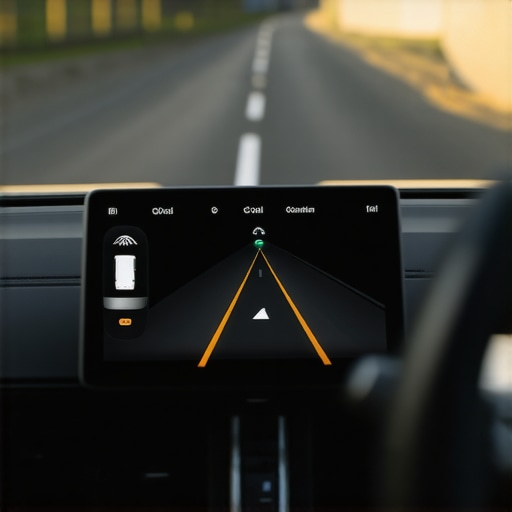
A homeowner called me in a panic because their new windows were ‘sweating.’ I walked in with my hygrometer and showed them the humidity was 60%. It wasn’t the windows; it was their lifestyle. I see this same logic applied to cars. I recently inspected a high-end SUV where the lane-keep assist and emergency braking systems had completely failed 48 hours after a rainy mobile install. The glass was top-tier, but the environment was wrong. Moisture had been trapped between the bracket and the glass, creating a micro-climate of condensation that the ADAS camera could not see through. It was not a hardware failure; it was a failure to respect the dew point during the installation process.
“Installation is just as critical as the window performance itself. A high-performance window installed poorly will fail.” – AAMA Installation Masters Guide
The Chemistry of the Failure: Urethane and Humidity
To understand why car sensors fail, we have to look at the urethane bead. In the trade, we talk about the Rough Opening in a building, but in a car, the frame is your rough opening. The urethane is the bridge. Most high-speed urethanes used by same-day installers are moisture-cured. This sounds like rain would be a good thing, but excessive moisture causes the urethane to ‘gas off’ too quickly, leading to bubbles in the seal. If that seal is not perfect around the sensor bracket, you get air infiltration. In cold climates like Chicago or Minneapolis, that moist air hits the cold glass and reaches its dew point instantly. This creates a fog inside the camera’s field of vision that the defrost system cannot reach. This is not just a nuisance; it is a safety critical failure of the glazing system.
Optical Refraction and the Refractive Index of Water
When rain is present during a glass install, the risk of contamination is 100 percent. A single drop of water on the interior surface of the glass where the sensor bracket sits changes the refractive index of the medium. The ADAS camera is calibrated to see through a specific thickness of glass with a specific Visible Transmittance (VT). Water has a different refractive index than glass or air. If moisture is trapped in the frit (the black ceramic paint around the edges), it can cause the camera to perceive ‘ghost’ obstacles. This is why a professional glass installer will insist on a controlled environment. We are not just sticking glass to a frame; we are managing light paths.
“The integrity of the building envelope depends on the seamless integration of all glazing components.” – ASTM E2112 Standard Practice
The Mechanics of the Rough Opening and Proper Shimming
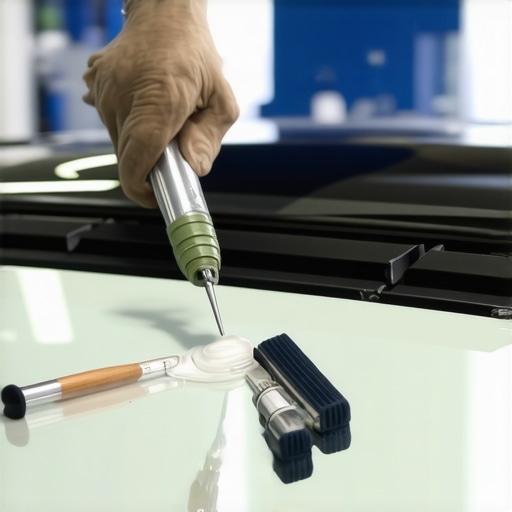
In a house, we use a Sill Pan and Flashing Tape to manage water. In a car, the cowl and the urethane bead perform this job. If a mobile service technician rushes the job in the rain, they often skip the critical step of cleaning the pinchweld with a specialized activator. Any moisture left on the metal frame prevents the primer from biting. This leads to a ‘cold bond’ failure. Even if the glass stays in the car, it can shift by a fraction of a millimeter. In the world of sensors, a shift of one millimeter at the glass can translate to a three-foot error on the road at sixty miles per hour. We don’t use a physical Shim in car glass like we do in a window Sash, but the urethane height acts as our shim. Rain makes that height inconsistent.
Why Same-Day Mobile Service Can Be a Trap
The marketing for same-day mobile service is seductive. However, a master glazier knows that environmental control is non-negotiable. If the ambient temperature is below the dew point, or if the relative humidity is too high, the ‘open time’ of the adhesives is compromised. A chip repair done in the rain is even worse. The resin used in chip repair is hydrophobic to a point, but if water is already in the break, the resin cannot displace it. You end up with a repair that looks okay for a week but fails the first time the temperature drops and the trapped water expands.
Thermal Stress and the Modern Windshield
In the North, heat loss is the enemy. In the South, Solar Heat Gain Coefficient (SHGC) is what matters. Modern windshields are often laminated with specialized interlayers that reflect infrared radiation while allowing visible light through. This is essentially a Low-E coating for your car. When this glass is installed in a rainy or high-humidity environment without proper curing time, the thermal stress on the glass can be immense. The interior of the car is warm, the exterior is cold and wet, and the urethane is trying to cure. This creates localized stress points near the muntin-like structures of the window frame, which is often where sensors are mounted. This stress can actually cause the glass to bow slightly, throwing off the camera’s alignment.
The Solution: Demanding Professional Standards
If you want your car’s safety systems to work, you must treat the glass like the precision instrument it is. This means ensuring the installer uses a proper Sill Pan equivalent strategy for water runoff and verify that they are checking the glass for any Glazing Bead defects before it is set. If it is raining, the car must be in a shop, period. There is no such thing as a professional rainy-day driveway install when ADAS calibration is on the line. The Weep Hole in a window frame exists because we know water will get in; a car windshield has no weep hole because it is a total seal. If that seal is compromised by moisture during the install, the technology behind it is useless. Do not settle for ‘caulk-and-walk’ installers who prioritize speed over the physics of a proper bond. Your sensors, your safety, and the structural integrity of your vehicle depend on a dry, precise environment. Anything less is just a hole in your car’s defense against the elements.