Why some chips are impossible to fix even for the pros
The Myth of the Universal Quick Fix
In my twenty-five years as a Master Glazier, I have seen every type of glass trauma imaginable, from stress cracks in high-rise curtain walls to stone chips on tempered storefronts. There is a common misconception perpetuated by high-pressure mobile service advertisements that every nick, star, or bullseye can be erased with a simple same-day injection of resin. This is a fallacy. While modern glass installer techniques have advanced, the laws of physics and material science remain stubborn. Some chips are simply beyond the reach of a resin bridge, and understanding why requires a deep look into the structural integrity of the pane itself.
The Moisture Contamination Crisis
I recall a specific incident that perfectly illustrates the limits of our craft. I was called out to a residential property in a humid coastal region. A homeowner had a small, seemingly benign star-break in a large laminated window. They had waited two weeks to call for a chip repair. When I arrived with my hygrometer and inspection lamp, I showed them that the humidity in the air had already migrated into the Polyvinyl Butyral (PVB) interlayer. The moisture had reacted with the plasticizer in the laminate, creating a milky haze that no amount of vacuum pressure could extract. It was not a failure of the window; it was a failure of timing. Once the glazing bead is bypassed by moisture, the repair is no longer about aesthetics; it is about a compromised structure that will eventually delaminate.
“Installation is just as critical as the window performance itself. A high-performance window installed poorly will fail.” – AAMA Installation Masters Guide
The Physics of Edge Stress and Rough Openings
When we talk about chip repair, we are usually discussing laminated safety glass. This glass consists of two layers of soda-lime glass bonded by a plastic interlayer. The reason some chips are impossible to fix often comes down to their proximity to the Rough Opening or the edge of the glass. If a chip is located within two inches of the perimeter, it sits in the ‘edge stress’ zone. Glass is naturally under more tension at its edges due to the heat-strengthening or tempering process. When a stone hits this zone, the fracture often extends into the hidden portion of the glass tucked behind the shim and frame. A glass installer cannot safely inject resin into a crack that they cannot see or reach with a UV curing lamp. Any attempt to ‘fix’ a chip in this high-tension zone usually results in the crack ‘running’ the moment pressure is applied to the injector bridge.
The Cold Climate Factor: U-Factor and Thermal Shock
In Northern climates like Chicago or Minneapolis, the U-Factor—the rate of heat loss—plays a massive role in whether a chip is salvageable. During the winter, the temperature differential between the interior and exterior surfaces of the glass is extreme. If you have a chip on the exterior surface (Surface #1), and you apply a warm resin or use a heat torch to clear moisture, the thermal shock can cause an instantaneous fracture across the entire lite. We call this ‘flowering.’ The internal stress caused by the cold exterior and the heated interior creates a situation where the glass is essentially a loaded spring. One small tap from a repair tool and the structural integrity collapses. In these regions, a same-day mobile service is often hindered by the environment itself. If we cannot stabilize the temperature of the glass to a consistent 70 degrees Fahrenheit, the resin will not flow into the microscopic fissures of the break, leaving behind an air pocket that will expand and contract until the glass fails.
“The success of a field-applied repair is dependent upon the environmental conditions at the time of application and the degree of contamination within the fracture.” – ASTM E2112 Standard Practice
The Anatomy of the Impossible Break
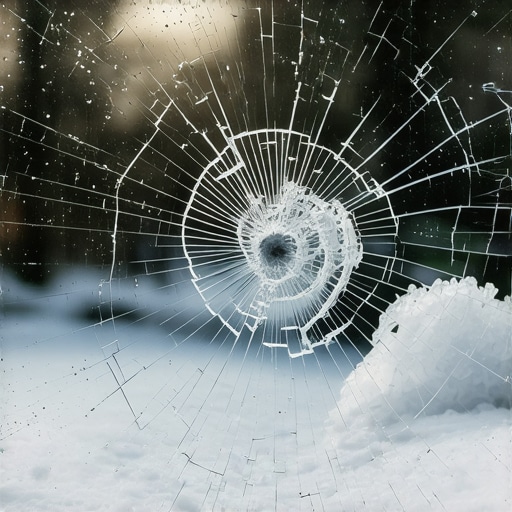
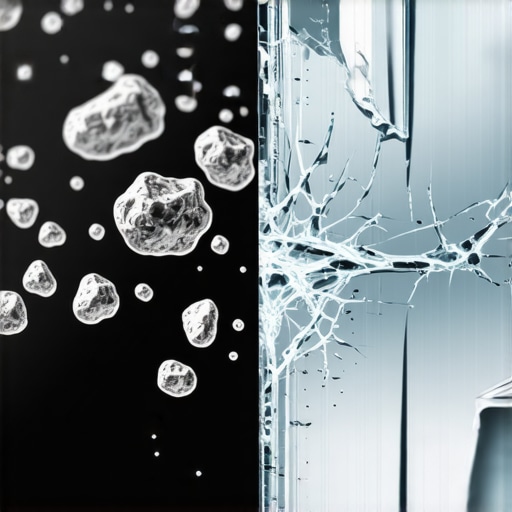
Not all fractures are created equal. We categorize them into bullseyes, stars, and cloverleafs. The most difficult to repair is the ‘complex’ or ‘crushed’ break where the impact was so violent it pulverized the glass into a fine powder at the point of contact. [IMAGE_PLACEHOLDER] This dust blocks the path of the resin. Even a professional glass installer using a high-vacuum pump cannot always clear this debris. Furthermore, we must consider the refractive index. Glass has a refractive index of approximately 1.52. For a chip repair to be invisible, the resin must match this number exactly. However, as resin cures, it shrinks. If the chip is too large—typically anything bigger than a fifty-cent piece—the cumulative shrinkage of the resin creates a ‘shimmer’ or distortion that can be more distracting than the original chip. In these cases, the only honest solution is a full replacement of the sash or the insulated glass unit (IGU).
Why Material Science Limits Mobile Service
The mobile service industry relies on speed, but glass chemistry requires patience. When a chip occurs, the ‘legs’ of the crack are often held shut by the natural compression of the glass. To get resin to the tip of those legs, we have to use a process called ‘flexing.’ This involves applying slight pressure from the inside of the glass while the vacuum is running on the outside. In many modern high-efficiency windows, especially those with Low-E coatings on Surface #2 or #3, this flexing can actually damage the microscopic metallic layers that provide the thermal barrier. If we scratch or disrupt that coating, we have effectively ruined the window’s energy performance. It is a delicate balance between fixing a cosmetic blemish and maintaining the technical specifications of a high-performance glazing system. If the chip is too deep and has reached the coating, a repair is physically impossible because the resin cannot bond to the silver or tin oxides used in the Low-E process. You are no longer looking at a hole in the glass; you are looking at a hole in your home’s thermal envelope.