Why your windshield crack grew overnight
The Anatomy of a Morning Surprise
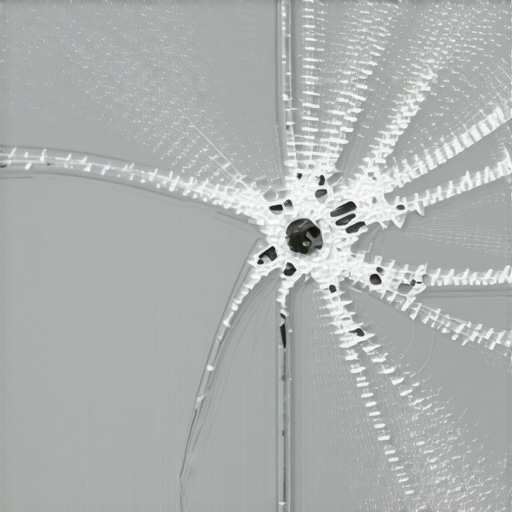
You parked your vehicle last night with a minor pit in the glass, a tiny star-shaped blemish hardly larger than a pea. By 7:00 AM, a jagged, foot-long silver line bisects your field of vision. This phenomenon is not an act of vandalism or bad luck; it is a predictable outcome of glazing physics and thermal dynamics. As a specialist with over two decades in the glazing industry, I have seen this thousands of times. A windshield is not a static piece of glass; it is a structural component of your vehicle subjected to immense tension and compression. When a stone chip disrupts the surface tension, you are no longer dealing with a solid piece of material, but a ticking clock of structural failure. Understanding the coefficient of linear thermal expansion is the first step in realizing why same-day attention is the only way to save a piece of laminated glass from the landfill.
The Narrative: A Case of Thermal Shock
A homeowner called me in a panic because their new windows were sweating, but the real crisis was in their driveway. I walked out with my hygrometer and an infrared thermometer to show them that the humidity in their house was pushing 60 percent, but then I looked at their car. A massive crack had migrated across the glass. I showed them that the surface temperature of the glass near the defroster vents was already 110 degrees, while the edges of the glass, tucked under the black frit and the metal A-pillar, were still sitting at 40 degrees. I had to explain that the glass was literally trying to grow and shrink at two different speeds. This thermal gradient is the primary killer of glass integrity. It was not a manufacturing defect; it was a physics-induced failure that started with a single untreated chip.
Installation is just as critical as the window performance itself. A high-performance window installed poorly will fail. – AAMA Installation Masters Guide
This principle applies equally to your vehicle. If the glass is already compromised by a chip, the environmental stressors will finish what the stone started.
The Physics of Laminated Glass
To understand the overnight growth of a crack, one must understand that a windshield is a sandwich. It consists of two layers of soda-lime glass bonded by a Polyvinyl Butyral (PVB) interlayer. This PVB layer is what keeps the glass from shattering into your face during an impact, but it also creates a complex internal stress environment. When the sun hits your dashboard, the air inside the vehicle heats up rapidly. The interior pane of glass begins to expand. However, if it is a cold night, the exterior pane is contracting. Under normal circumstances, the PVB manages this delta. But when a chip repair is neglected, that pit acts as a stress concentrator. All the force of that expansion and contraction is funneled into that one microscopic point of weakness.
The Role of the Frit and the Frame
Notice the black dots around the edge of your windshield? That is the frit. Its purpose is twofold: it provides a textured surface for the urethane adhesive to bond the glass to the rough opening of the vehicle frame, and it serves as a thermal transition zone. Without the frit, the sharp temperature difference between the clear glass and the dark metal frame would cause the glass to crack at the edges. However, even with a frit, the edges of the glass are often under more stress than the center. If a crack reaches the edge of the glass, it enters a zone of high tension. This is why a glass installer will tell you that a crack near the edge is significantly more dangerous than one in the center. The glass is actually part of the vehicle’s structural rigidity. In many modern cars, the windshield provides up to 60 percent of the roof’s structural integrity during a rollover. A crack is not just a cosmetic issue; it is a structural compromise.
Why Mobile Service is a Safety Requirement
The mobile service model is not just about convenience for the busy professional; it is about stopping the migration of glass stress before it becomes a total loss. Driving a car with a compromised windshield further stresses the glass through chassis flex. Every time you hit a pothole or take a sharp turn, the rough opening of the car frame twists slightly. If you have a chip, that twist is the final push needed to turn a repairable pit into a mandatory replacement. A same-day technician can often stabilize the glass using a vacuum-injection process. They remove the air from the break and replace it with a clear, UV-curable resin that has a refractive index nearly identical to the glass itself.
The integrity of the glazing system depends on the immediate mitigation of surface damage to prevent moisture ingress and crack propagation. – ASTM E2112 Standard Practice
Once moisture enters a chip, it brings in dirt and road salt. If that moisture freezes overnight, it expands, acting like a wedge that drives the crack deeper into the laminate.
The Myth of the ‘Quick Fix’
I have a deep intolerance for the caulk-and-walk mentality. Some installers use low-quality resins or fail to properly clean the rough opening before a replacement. When dealing with a chip repair, the technician must ensure the weep hole areas are clear if they are working on architectural glass, or that the urethane bead is continuous if they are working on a vehicle. For a windshield, the bond between the glass and the car is life-saving. If that urethane bond is not perfect, the airbag may not deploy correctly, as it uses the windshield as a backstop. This is why you need a certified glass installer who understands the molecular bond of the materials, not just someone who can squeeze a caulking gun.
Decoding the Thermal Delta
In cold climates, we see the most overnight growth. This is because of the defrost cycle. You get in your car, it is 10 degrees outside, and you blast the heater. The glass at the bottom of the windshield expands while the top remains frozen. This creates a shear force within the glass. In hot climates, like Arizona or Texas, the opposite happens. The glass sits in 120-degree heat all day, expanding to its limit. When the sun goes down and the temperature drops 40 degrees in three hours, the glass must contract. If a chip is present, the glass cannot contract uniformly. The stress becomes too much, and the molecular bonds snap. This is why same-day service is critical. The longer a chip remains open to the elements, the higher the probability of a stress fracture.
Final Verdict: Don’t Wait for the Spiderweb
If you see a chip, you are looking at a localized failure of a high-tension system. The cost of a chip repair is a fraction of the cost of a full replacement. More importantly, it preserves the factory seal of your windshield. Once that factory seal is broken during a replacement, you are at the mercy of the installer’s skill to prevent leaks and wind noise. By utilizing a mobile service as soon as the damage occurs, you are employing the ‘shingle principle’ of maintenance: addressing the smallest point of failure before it compromises the entire system. Glass is a beautiful, transparent engineering marvel, but it is also a brittle material that follows the laws of thermodynamics without mercy. Do not let a 50-cent stone chip turn into a 500-dollar headache because you ignored the physics of thermal expansion.