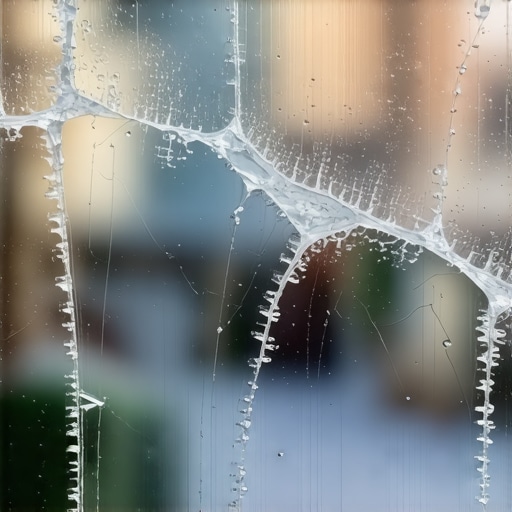
The subtle difference between a stress crack and a rock chip
The Mystery of the Spontaneous Fracture
As a master glazier who has spent nearly three decades analyzing the structural integrity of residential and commercial glass, I have seen it all. Homeowners often walk into their living room to find a jagged line creeping across their window and immediately look for a neighborhood kid with a slingshot. But glass is a fickle material. It is a supercooled liquid that behaves like a solid, and it reacts to environmental pressures in ways that are often invisible to the naked eye. When you hire a professional glass installer, you are not just paying for someone to put a pane in a hole; you are paying for an forensic analysis of why the previous glass failed. Understanding the difference between an impact-related rock chip and a thermal stress crack is the first step in ensuring your same-day repair actually lasts longer than a week.
The Narrative of the Mystery Crack
A homeowner called me in a panic because their new windows were ‘sweating’ and one had developed a massive crack overnight. I walked in with my hygrometer and showed them the humidity was 60 percent. It wasn’t the windows; it was their lifestyle. They were running a humidifier in a sealed room during a Minneapolis winter. That excess moisture was settling on the bottom glazing bead, and the resulting temperature differential between the center of the glass and the edge, which was chilled by the dampness, created a classic thermal stress crack. They thought a rock had hit it, but there was no point of impact. The glass had literally pulled itself apart because the physics of the room were working against it.
“Installation is just as critical as the window performance itself. A high-performance window installed poorly will fail.” AAMA Installation Masters Guide
The Anatomy of an Impact: The Rock Chip
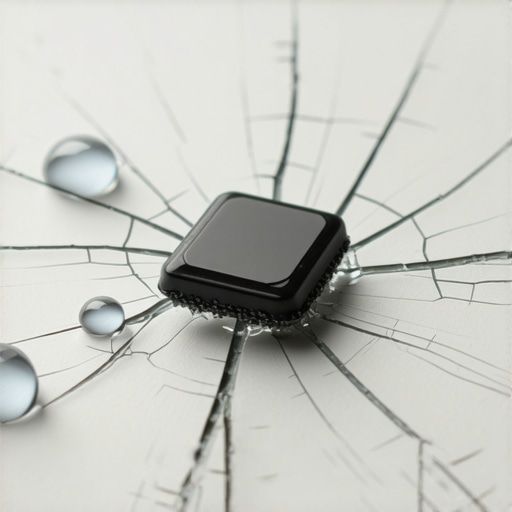
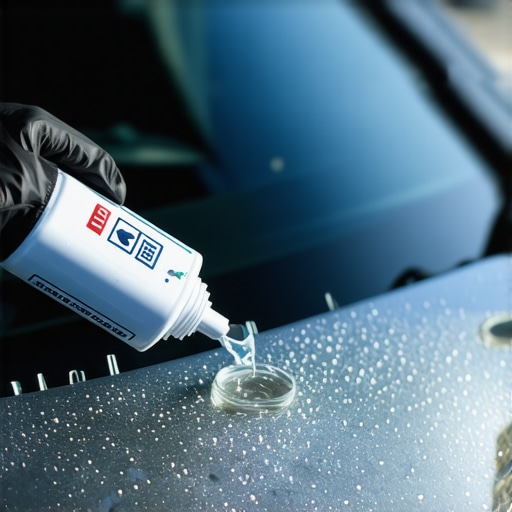
A rock chip is the result of kinetic energy being transferred to the glass surface. When a pebble or debris hits the exterior surface, it creates a point of impact. If you look closely with a jeweler’s loupe, you will see a crushing of the glass molecules at the center. This is often referred to as a ‘bullseye’ or a ‘star’ fracture. The physics here involve the ‘cone of fracture,’ where the energy moves through the glass and blows out a small section on the opposite side or within the laminate layer. This is where a mobile service specialized in chip repair becomes invaluable. By injecting a clear, UV-curable resin into that void, a technician can restore the structural integrity of the pane before the crack propagates. However, this only works if the damage is localized. If that chip has already begun to ‘spider’ across the sash, the internal tension of the glass has been permanently compromised.
The Hidden Enemy: Thermal Stress Cracks
In cold climates like Chicago or Toronto, the U-Factor is king. We focus on keeping the heat inside, which means we often use Low-E coatings on Surface #3. This keeps the inner pane of glass much warmer than the outer pane. A stress crack occurs when there is a significant temperature gradient across a single pane of glass. Imagine the sun hitting the center of a window while the edges are buried deep within a cold, shaded rough opening. The center of the glass expands as it warms, while the edges stay cool and contracted. This creates tensile stress at the edges. If the glass has any tiny microscopic nicks from when it was cut at the factory, that stress will find that weak point and tear it open. A stress crack almost always starts at the very edge of the glass, under the glazing bead, and it usually takes a wandering, perpendicular path across the pane. It does not have a central point of impact or crushed glass.
Why the Edge Matters
The rough opening of a window must be perfectly square and the shim placement must be precise. If an installer forces a window into a space that is too small, or if the house settles and puts pressure on the sash, that mechanical pressure mimics thermal stress. This is why I have no patience for ‘caulk-and-walk’ installers who ignore the tolerances of the frame. If the glass is ‘binding’ against the frame, it cannot expand and contract with the weather. Eventually, it will snap. In the industry, we look at the ‘break pattern.’ A perpendicular break that starts at the edge and turns 90 degrees is a hallmark of a stress crack. An impact break will always radiate outward from the point of contact like a sunburst.
“Standard practice for installation of exterior windows requires that the flashing system must be integrated with the water-resistive barrier to prevent moisture-related structural failure.” ASTM E2112
The Role of the Mobile Service Technician
When you call for same-day service, the technician needs to identify the failure mode immediately. If it is a rock chip in a car windshield or a non-tempered residential window, a chip repair kit can save the glass. The resin mimics the refractive index of the glass, making the flaw nearly invisible. But if the technician identifies a stress crack, repair is impossible. You cannot ‘glue’ a stress crack back together because the thermal forces that created it are still present. The entire unit must be replaced, and more importantly, the root cause must be addressed. Is there a heater vent blowing directly on the glass? Is there a heavy thermal curtain trapping heat against the pane? Is the weep hole clogged, allowing cold water to sit against the bottom edge of the glass? A true professional looks beyond the crack.
The NFRC Rating and Climate Logic
In the North, we want a low U-Factor to prevent heat loss. This involves argon gas fills and warm-edge spacers that reduce the ‘cold edge’ effect. By keeping the edge of the glass warmer, we reduce the likelihood of those thermal stress cracks. If you are in a climate with extreme temperature swings, choosing a window with a high-quality spacer system is non-negotiable. The spacer is the piece that holds the two panes of glass apart; if it is made of highly conductive metal, it will chill the glass edges and invite cracks. Modern composite spacers are much more forgiving. When we perform a mobile service replacement, we often upgrade the customer to a better spacer to prevent a repeat of the failure.
Structural Integrity and the Operable Window
Whether a window is operable or fixed also changes the stress profile. An operable sash has more movement and therefore more opportunities for mechanical stress. If the muntins or the sash frame are not rigid enough, the glass will flex every time the window is opened or closed. Over time, this fatigue leads to failure. This is why I advocate for fiberglass or high-quality vinyl over cheap, thin-walled frames. You want a frame that stays still while the glass does the work of managing the light and heat. If you see a crack that seems to follow the line of the glazing bead, it is almost certainly a mechanical stress crack caused by frame deflection.
Final Verdict on Glass Health
Don’t let a salesman tell you that all glass is the same. The difference between a lasting installation and a recurring headache lies in the technician’s ability to read the glass. If you have a rock chip, get it fixed immediately before the thermal cycles of the day turn it into a full-blown fracture. If you have a stress crack, don’t waste money on a quick fix. Replace the glass, check your sill pan and flashing tape, and make sure your home’s humidity and temperature are balanced. A window is a complex thermal barrier, not just a transparent sheet. Treat it with the scientific respect it deserves.