Why your touch screen ignores your fingers in the corner
The Frustration of the Dead Zone
We have all experienced the irritation of a mobile device that stops responding to touch in one specific corner. You press, you swipe, you tap, but the hardware remains indifferent. In the world of high-end fenestration and glazing, windows exhibit a similar stubbornness, though instead of ignoring a finger, they ignore the laws of comfort and efficiency. When a client asks why the bottom corner of their new sash is perpetually cold or why a chip repair seems impossible near the glazing bead, they are hitting on a fundamental truth of glass science: the edge is where the battle for performance is won or lost.
As a master glazier with a quarter-century in the field, I look at a window differently than most. While a homeowner sees a view, I see a thermal bridge. I see a complex assembly of glass, spacers, and sealants that must withstand thousands of pounds of wind pressure while maintaining a vacuum-tight seal against the atmosphere. When your touch screen fails in the corner, it is often due to a micro-fracture or delamination that interrupts the capacitive field. When your window fails in the corner, it is because the edge-of-glass temperature has dropped below the dew point, leading to a cascade of moisture and structural degradation.
The Condensation Crisis: A Master Glazier Narrative
A homeowner in a northern climate called me in a panic last winter because their premium, expensive windows were ‘sweating’ at the bottom corners. They were convinced the units were defective. I walked into the home with my hygrometer and a thermal imaging camera. I showed them that the relative humidity in their master bedroom was sitting at 58 percent while it was ten degrees below zero outside. It was not a window defect; it was a physics problem. The cold was radiating through the aluminum spacer at the edge of the glass, cooling the internal pane down to 45 degrees. I had to explain that their lifestyle—specifically the lack of localized air circulation and high indoor humidity—was clashing with the thermal limitations of their specific glazing package.
“Installation is just as critical as the window performance itself. A high-performance window installed poorly will fail.” AAMA Installation Masters Guide
The Science of the Edge: Why the Corner is Vulnerable
In a standard Insulated Glass Unit (IGU), the center-of-glass performance is usually excellent. However, the edge-of-glass performance is dictated by the spacer system. For decades, the industry used aluminum box spacers. Aluminum is a fantastic conductor of heat, which is exactly what you do not want in a window. In cold climates, that aluminum spacer acts as a thermal bridge, dragging heat out of the room and cooling the glass perimeter. This is why you see condensation starting in the corners and creeping upward. It is the architectural equivalent of that unresponsive touch screen corner—the area where the system’s integrity is under the most stress.
To combat this, we use ‘warm-edge’ spacers made of stainless steel or structural foam. These materials have a much lower thermal conductivity. When a mobile service glass installer arrives for a chip repair, they are often wary of chips located within two inches of the edge. Why? Because the stress concentration is highest there. If we apply pressure to inject resin into a chip near the corner, the risk of ‘flowering’ or spreading the crack is significantly higher than in the center of the pane. The glass is held rigidly by the glazing bead and the sash frame, leaving no room for the material to flex under the pressure of the repair tools.
Understanding U-Factor and Thermal Conductivity
In the North, we live and die by the U-Factor. Unlike the R-value used for insulation, where higher is better, the U-Factor measures the rate of heat loss. The lower the number, the better the window. But here is the catch: a window’s NFRC label gives you a total unit U-Factor, which averages the center-of-glass, the edge-of-glass, and the frame performance. A window can have a spectacular center-of-glass rating thanks to a Low-E coating on Surface #3 and an Argon gas fill, but if the frame isn’t thermally broken or the spacer is a cheap metal, the corners will still be a liability.
Low-E (Low-Emissivity) coatings are microscopically thin layers of metallic oxides. In cold climates, we place this coating on the third surface (the inner face of the inner pane). This reflects long-wave infrared radiation—otherwise known as your furnace’s heat—back into the room. If that coating is damaged or if the inert gas between the panes leaks out through a failed seal at the corner, the window loses its thermal shield. This is similar to how a cracked screen on a phone disrupts the sensors beneath the glass.
“Standard practice for installation of exterior windows requires that the rough opening be prepared to manage water penetration through the use of a flashing system that follows the shingle principle.” ASTM E2112 Standard
Mobile Service and the Urgency of Chip Repair
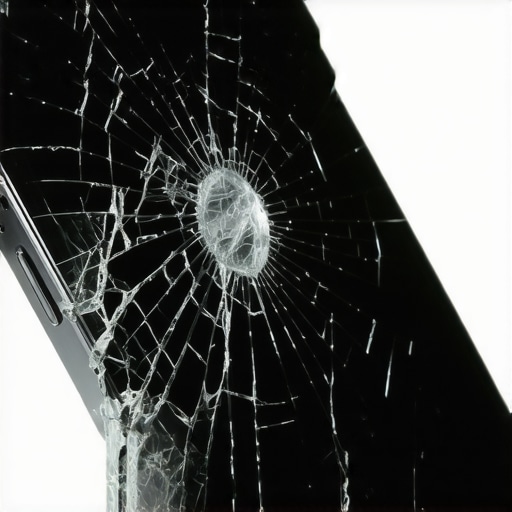
When you see a small starburst or bullseye crack in your glass, time is of the essence. Our mobile service teams emphasize same-day response because glass is a dynamic material. It expands and contracts with temperature shifts. A chip that is stable at noon can become a six-inch crack by midnight as the temperature drops. This is especially true near the edges where the glass is shimmaged tightly into the rough opening or the sash. A professional glass installer knows that a shim placed too tightly can create a pressure point. When the glass expands in the sun, that pressure point becomes a fracture point.
The process of chip repair involves vacuuming out the air from the fracture and injecting a clear, UV-curable resin that matches the refractive index of the glass. If the chip is in the ‘dead zone’ near the corner, the glazier must be incredibly precise. The resin must bridge the gap perfectly to restore structural integrity, much like how a technician might attempt to bypass a dead trace on a circuit board. If the repair isn’t done correctly, the crack will inevitably migrate toward the center of the pane, necessitating a full replacement of the IGU.
The Trade Secret: Weep Holes and Water Management
Many homeowners wonder why their window frames have small slots on the exterior. These are weep holes. In a high-quality installation, we assume that water will eventually get past the glazing bead. The window is designed to collect that water in a sill pan and direct it out through these holes. If an amateur ‘caulk-and-walk’ installer plugs these holes with silicone, they have just signed the window’s death warrant. The water will back up, saturate the seal of the IGU, and lead to premature seal failure. This results in the ‘foggy window’ look where calcium deposits build up between the panes, rendering the glass permanent obscured.
Properly shimming the window in the rough opening is also vital. We use shims to ensure the sash remains square and operable. If the frame is bowed because the installer drove a screw too tight without a shim behind it, the glass will be under constant torsional stress. This stress often manifests as a crack originating from a corner—again, that vulnerable area where the glass meets the frame.
The Bottom Line on Performance
Whether you are dealing with a phone screen that won’t respond or a window that lets in a draft, the problem is usually a failure of the edge-to-edge system. High-performance glazing is not just about the glass itself; it is about the spacers, the gas fills, the coatings, and the precision of the installation. Do not be swayed by high-pressure sales pitches for exotic gas fills that provide diminishing returns. Focus on the fundamentals: a low U-Factor, a warm-edge spacer, and an installer who understands the importance of a properly flashed rough opening and a clear weep system. If you take care of the edges, the center of the glass will take care of itself. If you ignore a chip or a draft in the corner today, you will be replacing the entire unit tomorrow.