Why your phone’s flashlight might stop working after a back glass crack
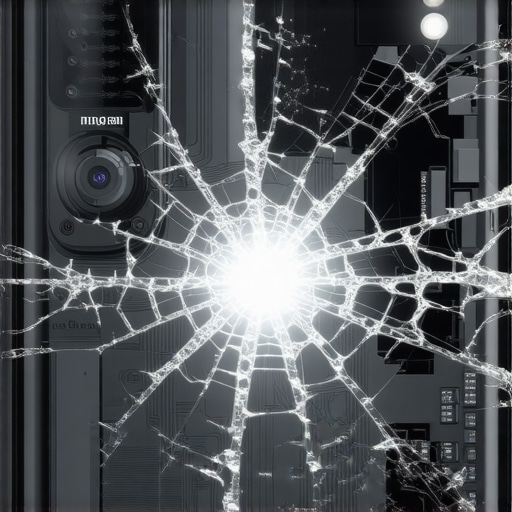
When you have spent over two decades as a master glazier, you stop seeing objects and start seeing systems of thermal management and structural integrity. A window is not just a piece of glass: it is a complex assembly designed to keep the outside out and the inside in. The same logic applies to the glass on the back of your smartphone. When that glass develops a fracture, it is not merely an aesthetic grievance. It is a catastrophic failure of the building envelope of your device. Many people call me for a chip repair or a mobile service estimate because they are tired of the jagged edges, but they are often surprised when I tell them that their failing flashlight is actually a symptom of a much deeper glazing crisis. It is not just about the crack: it is about the breach of the internal environment.
The Condensation Crisis: A Master Glazier’s Perspective
I remember a homeowner in Houston who called me in a panic because their new high-efficiency windows were sweating on the inside. I walked in with my hygrometer and showed them the humidity was 60 percent. It was not the windows: it was their lifestyle and a complete lack of understanding regarding the dew point. I see the same thing with mobile glass. A customer with a cracked back panel walks into a humid environment or experiences a rapid temperature shift, and suddenly, the flashlight stops working. They think it is a software glitch, but it is basic physics. That crack has shifted the dew point inside the phone. When the exterior glass is compromised, the seal is gone. Moisture enters the rough opening of the phone’s chassis and settles on the most sensitive components, which, in many modern designs, includes the flash and microphone flex cable assembly located directly beneath the glazing bead of the rear panel.
“Installation is just as critical as the window performance itself. A high-performance window installed poorly will fail.” – AAMA Installation Masters Guide
The Physics of the Breach: Why the Flashlight Fails
In the world of commercial glazing, we talk about the shingle principle: the idea that every layer of a building should shed water to the layer below it and eventually to the exterior. Your phone is designed with this same tiered logic. The back glass serves as the primary flashing system. When a crack occurs near the camera housing or the LED array, you have essentially removed the drip cap from the top of a window. Water does not just sit on the surface: it is pulled in by capillary action. Once moisture reaches the internal flex cable, it begins a process of oxidation. This is particularly prevalent in southern climates where high humidity and high solar heat gain (SHGC) create a pressurized environment. Heat causes the air inside the phone to expand: when it cools, it sucks in moist air through the cracks. This is why a same-day mobile service is not just a convenience: it is a necessity to prevent the complete corrosion of the internal circuitry.
Surface Management and Thermal Logic
For those of us working in hot climates like Texas or Florida, the enemy is always the sun. We use Low-E coatings on Surface #2 to reflect heat back outside before it can even enter the building. In a phone, the back glass often has its own specialized coatings to manage radiant heat from the battery. If that glass is shattered, the thermal conductivity changes. The LED used for your flashlight is incredibly heat-sensitive. Without the structural integrity of the glass to help dissipate heat and the seal to keep out contaminants, the LED can overheat or short-circuit. When you hire a professional glass installer for a phone repair, we are looking at more than just the glass: we are looking at the adhesive gaskets, which are the equivalent of sill pans in a window installation. If those gaskets are not replaced or reseated correctly during the repair, your flashlight will eventually fail anyway because the water management system is still broken.
“A window is a hole in the wall that must be managed for heat, light, and water. Failure to do so results in structural decay.” – ASTM E2112 Standard Practice
The Difference Between a Patch and a Professional Installation
There is a massive difference between a pocket replacement and a full-frame tear-out in the window world. A pocket replacement leaves the old, rotting frame in place. Many cheap repair shops do the same with phone glass: they scrape off the old shards and slap on a new piece of glass with some generic adhesive. They ignore the rough opening. They ignore the shim requirements for the internal components. A true glass specialist understands that the back glass is an integral part of the phone’s rigidity. If the frame is bent (the rough opening is out of square), the new glass will be under constant stress and will likely crack again, or worse, continue to allow moisture to bypass the seal and kill your flashlight or camera sensors. This is why a professional glass installer will always check the tolerances of the frame before proceeding with a same-day mobile service.
The Math of Modern Glazing
People often ask about the ROI of a high-end glass repair. In the window industry, we tell people that the energy savings might take decades, but the comfort and structural protection are immediate. With your phone, the ROI of a proper glass replacement is the survival of the device. If you ignore a crack because it is small, you are essentially leaving a window open during a rainstorm. The flashlight is usually the first thing to go because it sits on a thin, vulnerable ribbon cable that is often the first point of contact for intruding moisture. By the time the screen starts flickering or the phone won’t charge, the internal rot has spread. Do not rely on a caulk-and-walk technician who just wants to glue a new panel over a dirty frame. Insist on a repair that respects the science of glazing, ensuring that the weep holes of the device (the speaker and charging ports) remain clear while the rest of the envelope is hermetically sealed.