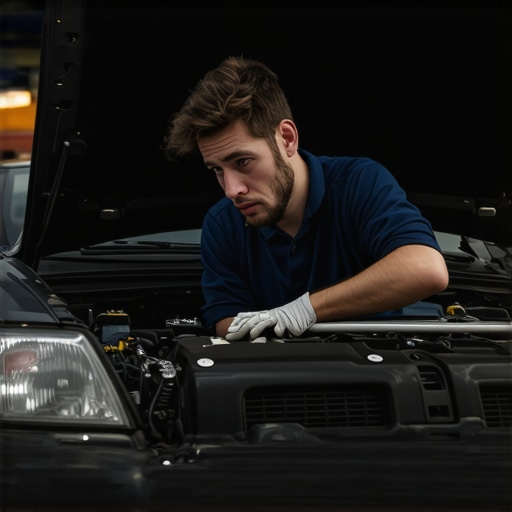
Why That Check Engine Light Won’t Clear After Your Oil Change
Why That Check Engine Light Won’t Clear After Your Oil Change
There is a specific, sinking feeling that every driver knows. You’ve just finished a routine maintenance task – perhaps a quick stop for a carmax oil change or a visit to a local lube shop – and you pull out of the service bay feeling productive. Your engine has fresh lifeblood, and you’re ready for the road. Then, it happens. That amber glow illuminates on your dashboard: the Check Engine Light (CEL). Your heart drops. Did they do something wrong? Is your car suddenly failing? Why is the light on now, of all times?
My name is Yony Turcios, and as the Owner and President of Auto Lab in Libertyville, IL, I have spent nearly two decades helping drivers navigate these exact frustrations. Since 2005, our team at AutoLab Libertyville has specialized in precision diagnostics and high-quality repairs. We understand that an oil change should be the simplest part of your car’s maintenance schedule, but modern vehicles are incredibly complex “sealed” ecosystems. When that ecosystem is opened for service, even a minor oversight can trigger a sensitive sensor. If you are searching for auto repair libertyville il because your dashboard is glowing after a recent service, you are not alone.
In this comprehensive guide, we will explore exactly why your Check Engine Light might appear or refuse to clear after an oil change, the technical nuances of the evaporative emission system repair, and why choosing a precision shop over a high-volume carmax repair shop can make all the difference for your vehicle’s longevity.
The “Simple Fixes”: Why the Light Triggered Immediately
When a CEL appears immediately after an oil change carmax or another high-volume provider performs, it is often due to human error rather than a catastrophic mechanical failure. Modern engines are designed to operate under specific internal pressures. When those pressures are compromised, the Engine Control Unit (ECU) detects a “leak” and throws a code.
The Oil Filler Cap
This is perhaps the most common culprit. If the technician was in a hurry and didn’t tighten the oil filler cap correctly, or if the gasket on the cap is cracked, it creates a vacuum leak. In many modern vehicles, particularly those you might take to libertyville vw for specialized care, the crankcase is part of the sealed emissions system. A loose cap allows unmetered air into the system, causing a lean condition that triggers the light.
The Dipstick
Believe it or not, a dipstick that isn’t fully seated can cause the same issue. Much like the filler cap, the dipstick tube provides a path for air to enter the engine. If it’s left pulled out slightly after the technician checks the oil level, the pressure sensors will detect the discrepancy. This is especially common in European luxury brands where tolerances are incredibly tight.
The Loose Gas Cap and Courtesy Checks
While a gas cap isn’t touched during a standard oil change, many “big box” centers like the carmax service department perform a multi-point “courtesy check.” During this process, they may check your tire pressure, fluids, and sometimes even ensure your gas cap is tight. If they bumped the cap or if it was already failing and the vibration of the car being on a hydraulic lift shifted it, an evap system leak detected message might be triggered. Research from Rohnert Park Transmission suggest that a loose gas cap or poorly sealed oil cap accounts for 30-40% of post-service CELs.
Why That Check Engine Light Keeps Coming Back After a Shop Visit is a question we answer daily at Auto Lab, and often, it comes down to these foundational sealing components.
Understanding the EVAP System Connection
If the light doesn’t go away after tightening your caps, you are likely dealing with the Evaporative Emission (EVAP) system. This system’s job is to trap gasoline vapors before they escape into the atmosphere. It is a complex web of hoses, canisters, and valves that are highly sensitive to pressure changes.
When you see a code like P0442 (small leak detected) or P0455 (large leak detected), it means the system has failed its self-test. Why would this happen right after an oil change? Sometimes, it is purely coincidental timing. However, in many cases, a technician might accidentally bump a vacuum line or a sensor connector while reaching for the oil filter. This is common in cramped engine bays where the oil filter is located near the charcoal canister or the purge valve.
An evaporative emission system repair is not something you want to leave to guesswork. At Auto Lab, we use advanced smoke machines to find the exact source of an evap system leak detected, ensuring we aren’t just throwing parts at the problem. Whether it’s a cracked hose or a faulty solenoid, precision is key to keeping that light off for good.
Big Box vs. Precision Shops: The CarMax & Dealership Experience
Many drivers in the Libertyville area choose carmax servicing because they purchased their vehicle there or have a MaxCare extended warranty. While the carmax car service model is built for volume and convenience, it often lacks the specialized attention to detail found in a dedicated local shop.
The Volume vs. Quality Dilemma
A high-volume carmax repair shop or a “quick lube” center is designed to move cars through as fast as possible. Technicians are often incentivized by speed. In this environment, the nuances of a specific engine – such as the exact torque specs for an oil pan repair or the specific synthetic requirements for a high-performance BMW – can be overlooked.
At AutoLab Libertyville, we take a different approach. We understand that your vehicle is an investment. If you have a MaxCare warranty or use Synchrony Car Care, you don’t have to settle for “fast food” style auto repair. We work with these providers to ensure your car receives dealership-level precision with small-town service. We often see vehicles come to us after a carmax service department visit because a light stayed on or a new oil leak repair was needed due to a stripped drain plug – a classic sign of rushed work.
Furthermore, if your vehicle features advanced safety tech, you might find that simple physical disturbances during service require more than just a mechanical fix. For instance, why your car’s lane-keep assist needs a recalibration after a rock hit is a testament to how integrated modern vehicle systems have become. The same level of technological integration applies to your engine’s sensors.
When the Light Means Something More Serious
While we hope the CEL is just a loose cap, there are times when the light indicates a legitimate problem caused by the service itself. This is where technical expertise becomes vital.
Wrong Oil Viscosity
Modern engines utilize Variable Valve Timing (VVT). This system uses oil as a hydraulic fluid to move camshaft phasers, allowing the engine to adjust timing on the fly for better fuel economy and power. These systems are incredibly sensitive to oil thickness (viscosity). If a shop puts 10W-30 into an engine that requires 0W-20, the oil won’t flow through the small VVT passages at the correct rate. This often triggers a P0011 or P0012 code. If your light is on after an oil change, check your receipt to ensure the correct grade was used.
Oil Level Issues: Overfilling and Aeration
More is not always better. If a technician overfills your crankcase, the rotating crankshaft can whip the oil into a froth, a process called aeration. Air bubbles do not lubricate like liquid oil, and they do not hold pressure. This can trigger low oil pressure warnings or CEL codes related to oil-pressure-controlled components. Conversely, an underfilled engine is a recipe for disaster, leading to oil leak repair needs or even total engine seizure.
The Transmission Connection
In some vehicles, the oil filter is located very close to transmission cooling lines. A slip of a wrench can lead to a transmission leak repair fluid issue. If you notice red or pink fluid on your driveway after an oil change, or if your car is shifting strangely along with a CEL, the transmission system may have been compromised during the “simple” oil service.
Specific Vehicle Focus: Jeeps and BMWs in Libertyville
Libertyville is home to a wide variety of vehicles, from rugged off-roaders to precision German engineering. Each has its own quirks when it comes to the Check Engine Light.
Jeep Service and EVAP Woes
If you are looking for the best jeep service near me, you likely already know that Jeeps are notorious for EVAP system issues. The plastic lines used in Jeep EVAP systems can become brittle over time. A technician simply moving a line to access the oil filter on a Wrangler or Grand Cherokee can cause a hairline crack, leading to that dreaded evap system leak detected code. At Auto Lab, we know these systems inside and out, ensuring your Jeep stays trail-ready.
BMW Precision and Oil Leaks
BMW owners face a different set of challenges. BMW engines are famous for their performance but also for their tendency to develop leaks at the valve cover, oil filter housing, or oil pan. A bmw oil leak repair is often a complex job involving several hours of labor. If you’ve recently had an oil change and now see a light, it could be that the fresh, high-detergent oil has finally pushed through a failing gasket.
It is important to recognize the specific signs your BMW oil leak is more than just a worn gasket. Sometimes, an oil pan repair is necessary because the aluminum bolts used by BMW are one-time-use only. If a budget shop reuses these bolts during an oil change, they can snap, leading to a massive leak and a CEL for oil pressure.
What to Do If the Light Stays On
If you’ve checked your gas cap and oil cap and the light remains, it is time for a professional diagnosis. Driving with a CEL might seem like a minor annoyance, but if the light is flashing, it indicates a catalyst-damaging misfire. Even a steady light means your car is not operating at peak efficiency and likely won’t pass an emissions test.
When you bring your vehicle to libertyville car repair experts like us, we don’t just “clear the code.” We perform a deep-dive scan to see the “freeze frame data” – a snapshot of exactly what the engine was doing the moment the light triggered. This allows us to see if the issue is related to the oil change or if it’s an unrelated component that chose that exact moment to fail.
We also listen to your car. Sometimes a light is accompanied by a sound. For example, understanding what that grinding sound in your wheels actually means for your brakes can help you distinguish between an engine issue and a chassis issue that might have been noticed during a multi-point inspection.
Conclusion: The Auto Lab Promise
At Auto Lab in Libertyville, we believe that transparency is the key to great auto repair. Whether you are coming to us for a routine service or a complex evaporative emission system repair, our goal is to provide you with the data you need to make the best decision for your vehicle. We have been a staple of the Libertyville community since 2005, located conveniently near libertyville vw and other major hubs, providing an alternative to the impersonal experience of a carmax service department.
If your Check Engine Light is on after an oil change, don’t panic. It could be as simple as a loose cap or as specific as a VVT reaction to the wrong oil grade. Regardless of the cause, our team is equipped with the tools and the 18+ years of experience to get you back on the road safely. We proudly accept Synchrony Car Care and work seamlessly with MaxCare warranties to ensure your repair is as stress-free as possible.
Don’t let a dashboard light ruin your day. Contact AutoLab Libertyville today for the precision care your vehicle deserves. Let us show you why we are the trusted choice for auto repair libertyville il.