The truth about using a hair dryer on a wet smartphone
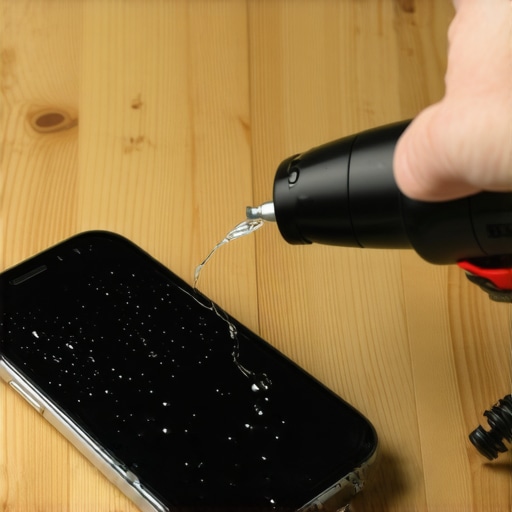
The impulse to grab a hair dryer when your smartphone hits the water is a classic example of human intuition failing against basic physics. As a Master Glazier with 25 years in the field, I have seen this exact same logic applied to fogged windows and cracked windshields, and the result is always the same: catastrophic failure. When you apply localized heat to a cold substrate like glass, you are not just drying it; you are inducing a thermal gradient that the material cannot handle. Soda-lime glass, commonly used in residential windows, and the aluminosilicate glass found in high-end mobile devices, both have specific coefficients of thermal expansion. In my career, I have seen homeowners try to melt ice off a sash or dry out a chip repair using a heat gun, only to hear that sickening crack as the stress exceeds the glass’s tensile strength. This is why professional mobile service and same-day glass installer expertise are not just conveniences; they are technical necessities.
The Condensation Crisis: A Master Glazier’s Perspective
A homeowner called me in a panic because their new windows were sweating. I walked in with my hygrometer and showed them the humidity was 60 percent. It wasn’t the windows; it was their lifestyle. They had been trying to fix a small seal leak in their double-pane unit by blowing a hair dryer into the glazing bead area. They thought they could bake the moisture out. Instead, they warped the vinyl frame and caused the argon gas to expand so rapidly that it blew the primary seal. This is the danger of DIY moisture management. Whether it is a smartphone or a high-performance window, moisture behaves according to the laws of thermodynamics, not your convenience. In a cold climate like ours, the dew point is a moving target. When warm, moist air hits a cold surface, it condenses. If that moisture is trapped inside a device or between glass panes, applying high heat from a hair dryer doesn’t remove it; it merely pushes it deeper into the assembly or creates enough pressure to cause a structural failure.
“Installation is just as critical as the window performance itself. A high-performance window installed poorly will fail.” : AAMA Installation Masters Guide
The Science of Thermal Stress and Chip Repair
Let’s talk about chip repair and the physics of glass. When you have a small chip in your glass, whether it is a window or a screen, you have a point of concentrated stress. Glass is an amorphous solid. It doesn’t have a crystalline structure that can absorb impact gracefully. Instead, it shatters or cracks along stress lines. A professional glass installer uses a mobile service to reach you quickly because they know that temperature fluctuations are the enemy of a repairable chip. If you take a hair dryer to a glass surface that has a chip, you are essentially performing a laboratory experiment in thermal shock. The area directly under the heat expands, while the surrounding cold glass remains static. The resulting tension causes the chip to blossom into a full-blown crack. A same-day professional repair involves injecting a specialized resin with a refractive index nearly identical to the glass itself. This resin must be cured using specific UV wavelengths, not heat. The viscosity of the resin is tuned to the ambient temperature, ensuring it penetrates the micro-fissures of the rough opening of the crack through capillary action.
Water Management: The Shingle Principle
In the world of professional glazing, we live by the Shingle Principle. This means that every layer of an installation must overlap the one below it so that water is always directed downward and outward. When water enters a smartphone, it bypasses the exterior seals. When water enters a window frame, it should be directed to the sill pan and out through the weep hole. A hair dryer fix for a wet device is the opposite of water management. You are using forced air to push liquid into areas it was never intended to reach. In window terms, this is like taking a pressure washer to your flashing tape. You are forcing moisture past the primary barriers and into the wooden framing or the sensitive electronics of the device. This is where rot begins. I have pulled windows out of houses where the header was black with rot because an installer relied on caulk instead of proper flashing. The same thing happens to a phone: the internal components begin to corrode long after the surface appears dry.
“The presence of moisture within the inter-space of an insulating glass unit is a sign of seal failure, often exacerbated by improper pressure equalization.” : NFRC Technical Manual
The North/Cold Reality: Why U-Factor Matters
In northern climates, our biggest enemy is heat loss and the resulting condensation. We focus on the U-Factor, which measures the rate of heat transfer. A lower U-Factor means the window is a better insulator. We use triple-pane glass with argon or krypton gas fills and Low-E coatings on Surface 3 to reflect heat back into the room. When you have a high-performance unit, the interior glass surface stays warmer, which prevents the air from reaching its dew point and condensing. If you are using a hair dryer to clear frost from your windows, you are admitting that your thermal envelope has failed. A professional glass installer would look at the spacers. We use warm-edge spacers made of structural foam or stainless steel to reduce thermal bridging. This prevents the cold from traveling from the exterior glass to the interior glazing bead. If your windows are failing, a pocket replacement or a full-frame tear-out is the only way to restore the thermal integrity of your home. Using a DIY fix on a complex glass assembly is like trying to perform heart surgery with a butter knife.
The Professional Path: Mobile Service and Same-Day Solutions
When a chip occurs, the clock is ticking. Dirt, moisture, and chemical contaminants from the road or the atmosphere begin to fill the void. This makes a clean repair nearly impossible if you wait too long. A mobile service professional can arrive and stabilize the glass before the damage spreads. They will use a vacuum-pressure tool to extract the air from the break and replace it with high-grade polymer. This is why same-day service is critical. The same logic applies to your home windows. If a seal fails, the desiccant inside the spacer bar will eventually become saturated. Once that happens, the window will become permanently foggy as minerals in the moisture etch the glass from the inside out. There is no hair dryer in the world that can fix a saturated desiccant or an etched glass surface. You need a glazier who understands the mechanics of the sash and the importance of an operable, well-sealed unit. Don’t let a salesman talk you into a quick fix. Look for the NFRC label, check the ASTM E2112 installation standards, and remember: glass is a precision material that requires precision care.