The fastest way to fix a rock chip at your desk
The sound is unmistakable: a sharp, metallic ‘clink’ followed by the visual emergence of a small, jagged starburst in your field of vision. Most people ignore it for weeks, thinking it is a cosmetic nuisance. As a master glazier with a quarter-century in the trade, I can tell you that the tiny chip is actually a structural failure waiting for a temperature swing to become a total loss. When you are sitting at your desk, buried in emails, the last thing you want to do is drive to a shop and wait in a stale lobby for two hours. The fastest way to handle this is not a DIY kit from a gas station; it is a specialized mobile service that treats glass repair with the same precision we use for high-rise curtain wall installations.
The Sales Pitch Takedown: Why Cheap Resin Fails
I once sat across from a regional fleet manager who was being courted by a high-pressure salesman peddling ‘miracle’ retail repair kits. This ‘Tin Man’ was claiming that a ten-dollar tube of liquid plastic was a permanent fix. I had to step in and explain the physics of the ROI. A professional glass installer does not just ‘fill’ a hole. We use a vacuum-pressure cycles to evacuate air from the microscopic fissures within the laminate. If you leave air inside, that air expands when the sun hits the glass, eventually forcing the crack to spread regardless of the glue you smeared on top. The professional grade resin we use has a refractive index that matches the glass perfectly, meaning the repair is nearly invisible because the light waves pass through the repair at the same speed they pass through the surrounding silica. Choosing a cheap fix over a professional mobile service is a gamble where the house always wins.
“Installation is just as critical as the window performance itself. A high-performance window installed poorly will fail.” – AAMA Installation Masters Guide
The Anatomy of a Chip: Why Speed Matters
When a rock hits your glass, it creates a ‘pit’ and often a ‘bullseye’ or ‘star break.’ This is not just a surface scratch. In laminated glass, you have two layers of annealed glass bonded by a Polyvinyl Butyral (PVB) interlayer. The impact creates a void where the glass has delaminated from that plastic core. The ‘fastest way’ to fix this while you are at your desk is to call for a mobile service because of the thermal stress factor. If your office air conditioning is cranking at 68 degrees while the external temperature is climbing toward 90, the glass is under immense tension. The interior layer is contracting while the exterior is expanding. This shear force will eventually find the weakest point—the chip—and ‘run’ the crack across the entire surface. By the time you finish your afternoon meeting, that five-millimeter chip could be a two-foot fracture. A same-day mobile service technician arrives, sets up a bridge and injector, and stabilizes the glass before the thermal load reaches a breaking point.
The Mobile Service Mechanics: Precision at the Curb
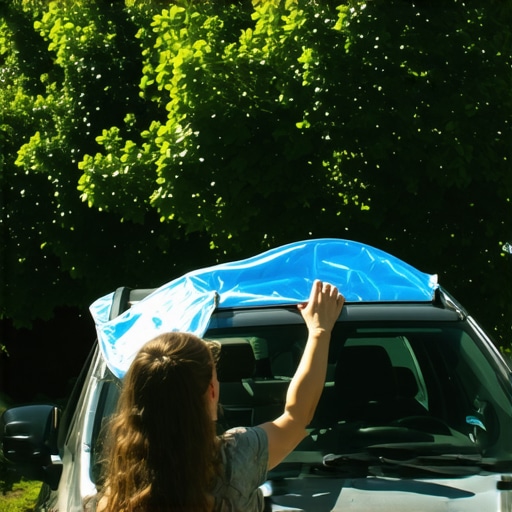
A true mobile glass installer treats your parking spot like a clean-room environment. The process starts with cleaning the ‘Rough Opening’ of the chip using a carbide scribe to remove loose glass shards that could block the resin flow. This is similar to how we prep a window frame; if the substrate is dirty, the seal fails. We then apply a bridge and injector assembly. This tool creates a seal over the impact zone, allowing us to alternate between vacuum and pressure. The vacuum pulls the air out of the ‘legs’ of the crack, and the pressure pushes the high-viscosity anaerobic resin in. We do not use ‘shims’ or ‘muntins’ here, but the level of leveling and alignment is just as precise as setting a heavy sash into a new construction frame. Once the resin is fully permeated, we use a UV curing light to trigger the polymerization. In fifteen minutes, the resin transforms from a liquid to a solid with a tensile strength that rivals the original glass. This is all happening while you are on a conference call.
“The purpose of a glass repair is to restore structural integrity and improve optical clarity.” – ASTM ROLAGS Standard
Moisture: The Silent Killer of Repairs
One reason you need a professional glass installer rather than a quick-fix kit is moisture management. Just as a ‘Sill Pan’ or ‘Flashing Tape’ protects a building from water infiltration, the resin must protect the PVB interlayer. If it rains or you go through a car wash before the chip is sealed, water gets into the break. If that water is not fully evaporated before the resin is injected, the repair will look cloudy and will eventually fail. A mobile technician uses a moisture evaporator or a specialized heating element to ensure the site is bone-dry. We look for ‘weep hole’ equivalents in the glass structure to ensure no trapped vapors remain. If you are in a cold climate like Minneapolis, this is even more critical; any moisture trapped in that chip will freeze, expand, and shatter the laminate from the inside out. This is why a mobile service with a climate-controlled approach is the only logical choice for someone who values their time and their vehicle’s safety.
Conclusion: Don’t Buy the Hype, Buy the Science
Fixing a rock chip is not about aesthetics; it is about managing a hole in a structural component. Whether it is an ‘operable’ window sash or a laminated windshield, the principles of glazing remain the same. You need a technician who understands the ‘Glazing Bead’ of the resin and the physics of light refraction. The fastest way to handle a chip is to delegate it to a mobile service professional who can perform the repair in the parking lot while you focus on your work. It saves the cost of a full replacement, maintains the factory seal of your glass, and keeps you off the road in a compromised vehicle. Stop looking at the crack and start looking for a professional installer who knows the difference between a temporary patch and a structural restoration.