The danger of micro-glass shards in your thumb
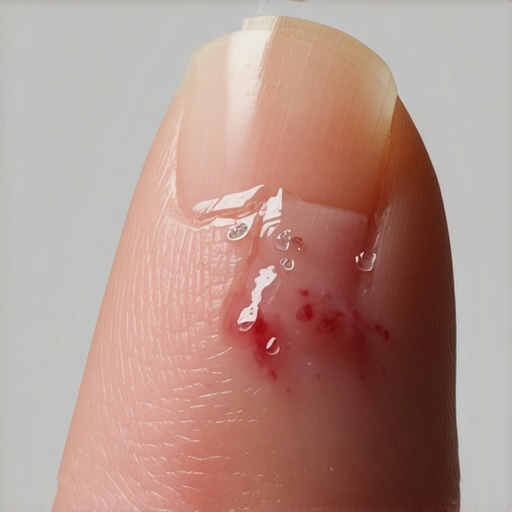
There is a specific kind of silence that follows the sound of a window cracking in the dead of winter. It is not the loud crash of a baseball through a pane, but the high-pitched, crystalline ping of a thermal stress fracture. For most homeowners, the immediate instinct is to run a finger along the crack to gauge its depth. This is a critical mistake. As a master glazier with over two decades in the trade, I have seen the consequences of this reflex more times than I care to count. A homeowner called me in a panic because their new windows were sweating. I walked in with my hygrometer and showed them the humidity was 60 percent. It was not the windows; it was their lifestyle, but as I pointed to the condensation, I noticed the husband had a thick bandage on his thumb. He had tried to wipe away a small frost bloom on a cracked lite and ended up with a micro-shard of glass embedded so deep it required a surgical consult. It was not just the humidity that was out of control; it was a fundamental lack of respect for the physics of glass.
The Anatomy of a Micro-Shard: More Than a Splinter
When glass fails, it does not always shatter into obvious, visible pieces. In an annealed glass lite, which is common in older residential windows, a break creates microscopic slivers called micro-shards. These fragments are often smaller than a human hair and are virtually invisible to the naked eye. Unlike a wooden splinter, which the body can eventually break down or push out through an inflammatory response, a glass shard is chemically inert. This means your body cannot dissolve it. Instead, the tissue around it may form a granuloma, a hard knot of chronic inflammation that persists for years. Because glass is an amorphous solid, it breaks with conchoidal fractures, creating edges that are sharper than a surgical scalpel. When you attempt a DIY repair without the proper equipment, you are effectively handling hundreds of microscopic blades. A mobile service professional does not just show up to fix the glass; they come to decontaminate the area. Same-day chip repair is not about aesthetics; it is about mitigating a biological hazard before those shards migrate into your carpets, your furniture, and eventually, your skin.
“Installation is just as critical as the window performance itself. A high-performance window installed poorly will fail.” AAMA Installation Masters Guide
Thermal Stress and the Cold Climate Context
In regions like Chicago or Minneapolis, the delta between the interior temperature and the exterior atmosphere can exceed eighty degrees. This creates massive thermal gradients across the glass surface. The center of the glass warms up from your furnace, while the edges, tucked into the sash and held by the glazing bead, remain freezing. This expansion in the center against the contraction at the edges creates tension. If your window has even a minor chip at the edge, that tension will find it. This is where the Griffith Criterion for crack propagation comes into play: the stress required to propagate a crack is inversely proportional to the square root of the flaw size. A microscopic chip repair performed early can save the entire Insulated Glass Unit (IGU). In these cold climates, U-factor is the metric that matters most. When a seal fails or a crack develops, you lose your Argon gas fill, and your U-factor skyrockets. The cold glass then becomes a magnet for condensation, which rots the wooden sash or corrodes the hardware. A professional glass installer understands that a crack is not just a cosmetic flaw; it is a thermal bridge that is actively sucking heat out of your home.
The Professional Process: Beyond the Caulk Gun
A true glass installer does not just slap a new piece of glass into a hole and call it a day. We look at the rough opening. We check to see if the house has settled, putting uneven pressure on the frame. If the window is not shimmed correctly, the frame will bow, putting the glass under permanent mechanical stress. This is why many DIY glass replacements fail within the first year. They focus on the glass but ignore the sill pan and the flashing tape.
“Standard practice for installation requires that all water must be directed to the exterior of the building envelope.” ASTM E2112
If your installer does not talk about the weep hole system or the importance of a backer rod and high-quality sealant, you are looking at a future leak. Water management is a science. When we perform a mobile service for a chip repair, we use high-viscosity resins that are vacuum-injected into the break. This resin has the same refractive index as the glass, making the repair nearly invisible, but more importantly, it restores the structural integrity of the lite, preventing the micro-shards from shedding.
The Fallacy of the Same-Day DIY
The internet is full of tutorials on how to use clear nail polish or superglue to fix a window chip. These are the equivalent of putting a band-aid on a gunshot wound. These substances do not have the same thermal expansion coefficient as glass. When the sun hits the window the next day, the glass will expand, but the glue will not, often causing the crack to spider-web further. A professional glass installer uses an ultraviolet curing process that bonds the glass at a molecular level. We also ensure that the glazing bead is seated properly. The glazing bead is the strip of vinyl or wood that holds the glass in the sash. If this is damaged during a botched DIY attempt, the window will never be airtight again. You will hear the wind whistling through the sash, and your energy bills will reflect that lost air. Furthermore, an operable window must be perfectly balanced. If you add the wrong weight of glass or fail to align the sash within the frame, you will burn out the constant force balances or the tackle system, leading to a window that will not stay open or, worse, one that crashes down unexpectedly.
Why Mobile Service and Professional Expertise Win
When you call for a professional, you are paying for their liability insurance, their specialized tools, and their eyes. I can look at a crack and tell you if it was caused by a projectile, a manufacturing defect in the spacer bar, or a building settlement issue. I can tell you if your Low-E coating is on Surface #2 or Surface #3 and why that matters for your heating bill. A mobile service glazier carries the vacuum cups, the glass cutters, and the safety gear necessary to handle the material without leaving a trail of micro-glass in your living room. Do not risk a trip to the emergency room or a permanent granuloma in your thumb. Glass is a beautiful, high-performance material, but it is also a dangerous amorphous solid that requires respect. If you see a crack, step away, do not touch it, and call a specialist who understands the physics of the aperture. The cost of a professional repair is a fraction of the cost of a medical procedure or a full frame replacement necessitated by rot and neglect.