How to spot a technician who isn’t wearing proper gloves
The High Cost of Bare-Handed Glass Repair: A Glazier’s Technical Guide
In my twenty-five years of working with fenestration systems, I have seen every shortcut in the book. There is a specific kind of frustration that builds when you watch a so-called glass installer roll up for a same-day mobile service call, pop the trunk, and start handling raw glass or resin without a pair of high-performance gloves. It is not just about the technician’s skin; it is about the integrity of the glass and the safety of your home or vehicle. I recall a specific instance where a homeowner in a high-humidity coastal region called me in a panic. Their brand-new chip repair was failing, turning cloudy within forty-eight hours. I walked in with my hygrometer and a high-intensity UV lamp. The issue was not the environment; it was the installer’s lifestyle choices during the repair. He had handled the UV-curable resin with bare fingers, transferring skin oils and acids directly into the break. Those lipids contaminated the chemical bond, preventing the resin from cross-linking with the silica. It was a failure of basic protocol that led to a total glass replacement instead of a simple fix.
“Installation is just as critical as the window performance itself. A high-performance window installed poorly will fail.” AAMA Installation Masters Guide
The Physics of Hand Protection in Glazing
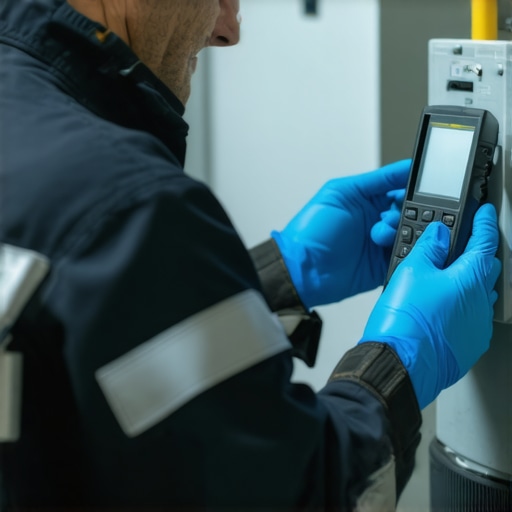
When we talk about proper gloves in the glass world, we are not talking about the leather gardening variety. A professional glass installer utilizes gloves rated for cut resistance, typically under the ASTM F1790-05 standard. We look for Level A4 or higher. These gloves use a combination of glass fibers, stainless steel mesh, and high-performance polyethylene (HPPE) to provide a barrier that can withstand the razor-sharp edge of an annealed glass pane. If you see a technician reaching for a glazing bead or adjusting a sash with their bare hands, you are looking at a liability, not a professional. Beyond cut protection, the gloves serve as a barrier against contamination. In chip repair, the resin is a highly sensitive acrylate. Even the slightest amount of sweat or natural oil can alter the refractive index of the repair, making it visible to the eye and structurally unsound. A mobile service should always arrive with nitrile gloves for chemical handling and cut-resistant gloves for physical glass manipulation.
Thermal Stress and the Mobile Service Environment
In hotter climates, specifically in the South where the Solar Heat Gain Coefficient (SHGC) is the primary enemy of glass stability, the timing of a chip repair is critical. When a mobile service technician arrives on a day where the ambient temperature is ninety-five degrees, the glass temperature can easily exceed one hundred and thirty degrees. If that technician is not wearing thermally insulated gloves, they cannot properly manipulate the glass or the bridge tool used for the repair. The heat transfer from a bare hand can cause localized thermal expansion, potentially turning a minor chip into a full-length crack across the entire pane. We look for the Low-E coating on Surface #2 in these environments to reflect heat back outside, but during a repair, the glass is vulnerable. A pro knows to use a heat shield and wears gloves that allow them to handle hot glass without transferring sudden temperature spikes through their skin.
“Proper installation of fenestration products requires a comprehensive understanding of the interface between the product and the rough opening.” ASTM E2112 Standard Practice
Technical Indicators of a Professional Glass Installer
How do you spot a hack? Look at their tool kit. A master glazier understands that every window is a complex system of water management. Even during a mobile service for a simple glass replacement, the technician should be inspecting the weep hole and the sill pan. If they are replacing a piece of glass in an operable sash, they should be checking the shim placement to ensure the frame remains square within the rough opening. If they aren’t wearing gloves, they aren’t thinking about the long-term bond. They are likely a “caulk-and-walk” artist. The use of proper PPE (Personal Protective Equipment) is the first sign that the technician respects the material. Glass is a liquid that has been cooled to a solid; it is constantly under internal stress. When we use a suction cup to move a heavy unit, we wear gloves to ensure that if a vacuum seal fails, we have the grip and protection to prevent a catastrophe. The absence of gloves suggests a lack of training in the fundamental physics of glass handling.
The Anatomy of a Proper Repair
During a chip repair, the process must be clinical. First, the technician should use a carbide scribe to clear out any loose shards of glass from the impact point. This requires precision. Next, the bridge and injector are mounted. A professional will wear nitrile gloves during this stage to prevent the resins from contacting their skin, as these chemicals can cause dermatological issues over time. Once the resin is injected and cured with a UV light, the excess is scraped off with a razor blade. If the installer is bare-handed, they lack the leverage needed to scrape the resin flush with the glass surface without risking a deep laceration. We also look at the muntin and glazing bead alignment. A technician who values safety will also value the aesthetic and structural details, ensuring that the flashing tape is correctly applied if a full frame replacement is required. They understand that the shingle principle applies to everything: water must always flow down and out, never getting trapped behind the glazing bead where it can rot the wood or corrode the spacer.
Why Same-Day Service Should Never Mean Shortcut Service
The demand for same-day mobile service has led to an influx of technicians who prioritize speed over science. However, the chemistry of glass repair does not speed up just because a customer is in a hurry. The resin needs time to reach the proper viscosity, and the glass needs to be at a stable temperature. A technician who works without gloves is often trying to save seconds, but they are sacrificing the quality of the repair. If they aren’t wearing gloves, they likely aren’t checking the U-factor of the replacement glass or ensuring the warm-edge spacers are intact. They are there to swap the glass and collect a check. You want a glazier who obsesses over the details—someone who knows that a shim is not just a piece of wood, but a critical tool for load distribution. When you see those gloves go on, you know you are dealing with someone who understands that in the world of glass, there is no room for error.