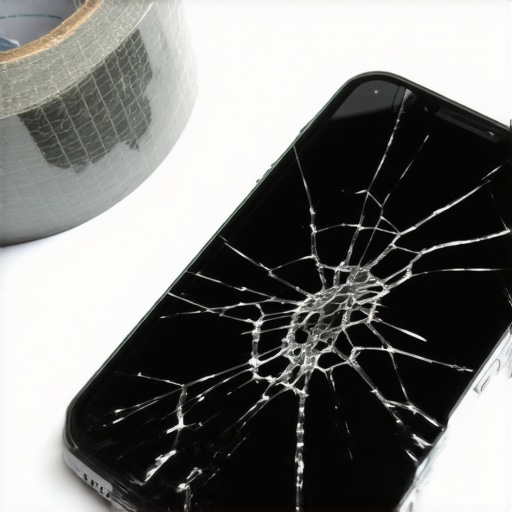
Fixing your cracked screen while you wait at the airport
The High-Stakes Physics of Airport Glass Failures
When you are sitting in the departure lounge and notice a spreading fracture in a glass partition or look out at your vehicle in the short-term parking to see a fresh stone chip, you are not just looking at a cosmetic blemish. You are witnessing a failure in structural integrity that is being exacerbated by the unique atmospheric conditions of an airfield. As a glazier with over two decades in the field, I have seen how the high-frequency vibrations from jet turbines and the extreme pressure differentials caused by localized wind tunnels around hangars can turn a simple chip into a catastrophic spider-web crack in minutes. This is why a mobile service specializing in same-day repair is not a luxury; it is a technical necessity to stabilize the glazing before the dew point shifts or the thermal stress exceeds the glass’s modulus of rupture.
The Condensation Crisis: A Diagnostic Narrative
I recall a specific incident at a regional airport where a facility manager called me in a panic because their new high-performance viewing gallery windows were ‘sweating’ and showing signs of internal fogging. I arrived with my hygrometer and thermal imaging camera. The manager was convinced the glass installer had provided defective units. I had to walk him through the reality of the situation: the interior humidity was hovering at 65% due to a faulty HVAC bypass, while the exterior glass surface was hitting the dew point because of the high-velocity cold air off the runway. It was not a window failure; it was a physics failure. The glass was doing exactly what it was designed to do, but the environment was being mismanaged. This is the level of scrutiny required when dealing with mobile glass service and on-site chip repair. We are not just filling a hole; we are managing a thermal envelope.
“Installation is just as critical as the window performance itself. A high-performance window installed poorly will fail.” AAMA Installation Masters Guide
The Science of the Chip: Why Same-Day Repair Matters
When a stone or debris strikes glass, it creates a localized area of extreme tension. In the world of glazing, we categorize these as bullseyes, star breaks, or cloverleafs. The goal of a professional glass installer using a mobile service is to clear the air and moisture from that break using a vacuum-pressure tool. If you wait, moisture enters the break. In a cold climate like Chicago or Minneapolis, that moisture undergoes a freeze-thaw cycle. Because water expands by approximately 9% when it freezes, the ice acts as a wedge, driving the crack deeper into the lite. Our mobile service utilizes a high-refractive-index resin that mimics the optical properties of the glass itself. We don’t just ‘glue’ it; we perform a molecular bridge that restores the structural capacity of the glazing bead and the overall sash stability.
Technical Anatomy: Low-E and Thermal Performance
In Northern climates, the enemy is heat loss. When we perform a same-day chip repair or replacement at an airport or nearby facility, we must be cognizant of the U-Factor. The U-Factor measures the rate of non-solar heat loss. The lower the number, the better the window is at keeping heat inside. This is achieved through the use of Low-E (low-emissivity) coatings. For a cold-weather application, we look for that coating on Surface #3. This allows the glass to admit solar heat gain during the day while reflecting long-wave infrared radiation back into the building at night. If we are replacing a broken pane in a mobile capacity, we must ensure the replacement matches the existing emissivity levels to avoid thermal bridging, which can lead to condensation on the frame or the shim points within the rough opening.
[IMAGE_PLACEHOLDER]
Decoding the NFRC Label for Mobile Replacements
Before you authorize a same-day replacement, you must understand the NFRC (National Fenestration Rating Council) label. This is the only way to verify that the mobile glass installer is providing a unit that meets the local energy code. We look at the SHGC (Solar Heat Gain Coefficient). In the North, we might want a higher SHGC to help heat the building in the winter, but in an airport setting with massive south-facing glass, we often need a lower SHGC to prevent the ‘greenhouse effect’ that overtaxes cooling systems. Furthermore, the visible transmittance (VT) must be balanced; you want the light, but you don’t want the glare that interferes with ground crew visibility or pilot approach. A master glazier knows that the spacer between the panes is also critical. We move away from old-school aluminum spacers, which act as a thermal bridge, and instead use warm-edge spacers made of stainless steel or structural foam to keep the glazing bead temperature above the dew point.
“The selection of glass type and the integrity of the seal are the primary determinants of a building’s thermal efficiency over a thirty-year lifecycle.” NFRC Performance Standards
The Mechanic of Installation: Beyond the Caulk Gun
The biggest mistake I see from ‘caulk-and-walk’ installers is the failure to manage the rough opening. When we perform a mobile service, we are often working in less-than-ideal conditions. However, the ‘Shingle Principle’ still applies. Water must always be directed down and out. This requires a properly sloped sill pan and the correct application of flashing tape. If the flashing tape is not integrated with the weather-resistive barrier, water will eventually find its way behind the frame, leading to rot in the header or the jack studs. We use shims to ensure the sash is perfectly square within the frame, allowing for smooth operation and a tight seal against the weatherstripping. If the window is not operable, or if the weep holes are clogged by over-zealous caulking, the system will fail. A weep hole is there for a reason: it allows the pressure-equalized rain screen to function, letting moisture escape rather than pooling against the glazing bead.
The Role of Gas Fills in High-Performance Glazing
During a same-day replacement, we often discuss the benefits of Argon or Krypton gas fills. These noble gases are denser than air, which significantly reduces the convective currents within the insulated glass unit (IGU). In a mobile environment, maintaining the integrity of the primary and secondary seals is paramount to ensuring these gases don’t leak out over time. If the seal fails, the gas escapes, and moist air enters, leading to the dreaded internal fogging. As a specialist, I ensure that every mobile unit we install has been tested for seal integrity using a spark-emission spectrography tool if necessary. We are looking for a 90% gas concentration to achieve the rated U-Factor and provide the acoustic insulation needed in high-noise environments like an airport terminal.
Final Verdict: Expertise Over Convenience
Fixing a cracked screen or a chipped window at the airport requires more than just a mobile van and a tube of resin. It requires an understanding of structural glazing, thermal dynamics, and the ASTM E2112 installation standards. Don’t let a salesman talk you into a ‘one-size-fits-all’ solution. Demand to see the NFRC ratings, ask about the spacer technology, and ensure your installer understands the importance of a sill pan and proper flashing tape. Comfort is not a luxury; it is the result of precision engineering and a refusal to cut corners in the rough opening.