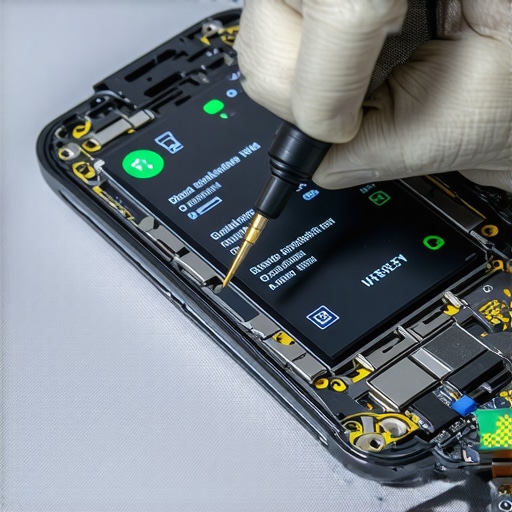
Why your touchscreen ghost touches when it gets slightly warm
The Phantom in the Glass: Why Thermal Expansion Triggers Ghost Touches
You are sitting in your vehicle or standing before a smart-glass interface, and suddenly, the screen starts acting as if an invisible finger is tapping away. In the glazing industry, we do not believe in ghosts; we believe in physics. When you experience ghost touches as the temperature rises, you are witnessing a failure in the thermal management of the glazing assembly. As a master glazier with over two decades in the field, I have seen how a few degrees of Celsius can turn a precision instrument into a chaotic mess. This is not a software glitch. This is a material science problem related to how glass, laminates, and conductive coatings respond to solar energy.
“Installation is just as critical as the window performance itself. A high-performance window installed poorly will fail.” AAMA Installation Masters Guide
A homeowner called me in a panic because their new integrated smart windows were ‘sweating’ and the touch controls were cycling through settings on their own. I walked in with my hygrometer and thermal leak detector and showed them the humidity was 60 percent while the surface temperature of the glass had spiked due to improper SHGC (Solar Heat Gain Coefficient) selection. It wasn’t the windows that were failing; it was the fact that the installer had neglected the thermal bridge between the glass and the rough opening. In this South-facing installation, the glass was absorbing massive amounts of infrared radiation, causing the conductive layers to expand at different rates than the substrate. This microscopic shifting mimics the capacitance of a human finger, leading to what we call ghost touches.
The Physics of the Solar Heat Gain Coefficient (SHGC)
To understand why heat causes these malfunctions, we must look at the NFRC ratings, specifically the SHGC. In Southern or high-heat climates, the enemy is radiant heat. When a glass installer provides a mobile service for a same-day chip repair, they are often dealing with the integrity of the outer layer of a laminated system. However, the internal layers are where the tech lives. Glass has a specific rate of thermal expansion. When you have a multi-layered assembly—glass, Polyvinyl Butyral (PVB) interlayer, and a conductive Indium Tin Oxide (ITO) coating—each material reacts to heat differently. If the Low-E coating is placed on Surface #2 (the inner face of the outer pane), it is designed to reflect heat back outside. If that coating is compromised or if the glass lacks sufficient tinting to manage the SHGC, the internal temperature of the glass sandwich can exceed 150 degrees Fahrenheit. At these temperatures, the dielectric constant of the glass changes, and the capacitive sensors can no longer distinguish between a touch and a thermal spike.
The Role of the Mobile Service and Same-Day Chip Repair
When you seek a same-day chip repair, you are doing more than just fixing a cosmetic blemish. A chip in a high-tech glass assembly acts as a stress concentrator. Heat flows toward the break, creating a localized hot spot. A professional glass installer understands that a chip isn’t just a hole; it is a disruption in the thermal envelope of the pane. Using a mobile service to inject resin into that void restores the structural integrity, but it also helps normalize the heat distribution across the surface. Without this repair, the glass around the chip expands unevenly, which can further exacerbate ghost touch issues in touch-sensitive glazing. We use specific shims and glazing beads to ensure that the glass has room to breathe within its frame, but if the glass itself is overheating, those mechanical clearances won’t save your electronics.
“The selection of glass type and the method of glazing are paramount to the longevity of the fenestration system under thermal stress.” ASTM E2112 Standard Practice
Material Science: Vinyl, Fiberglass, and Thermal Stability
In the world of window replacement, frame material is the silent partner of glass performance. Vinyl is a common choice because it is cost-effective, but it has a high coefficient of thermal expansion. In a hot climate, a vinyl frame can expand so much that it puts pressure on the edges of the glass, squeezing the sash and potentially disturbing the weep holes. Fiberglass, conversely, is much more stable because it is composed mostly of glass fibers and resin, meaning it expands and contracts at nearly the same rate as the glass it holds. When a glass installer fits a touch-sensitive panel into a frame, they must account for this. If the frame is too tight, the mechanical pressure combined with thermal expansion will create ‘false’ touch points at the edges of the screen. We look for the rough opening tolerances to ensure that even at peak summer temperatures, the assembly is not under compression.
Water Management and the Shingle Principle
Even in a discussion about touchscreens, we cannot ignore the ‘Shingle Principle.’ Every glass installation must be designed so that water flows down and out. This involves the use of sill pans and flashing tape to protect the rough opening. If moisture enters the glazing pocket because of a blocked weep hole or a failed glazing bead, it can create a humid microclimate behind the glass. High humidity increases the conductivity of the air and the surfaces around the touch sensors. This is why many ghost touch issues are reported on humid, hot afternoons. The combination of heat-induced expansion and moisture-induced conductivity creates the perfect storm for electronic failure. A master glazier ensures that the flashing system is robust, preventing the ‘caulk-and-walk’ failures that lead to internal rot and electronic shorts.
Decoding the NFRC Label for Your Climate
If you are tired of your tech failing when the sun hits it, you need to stop buying the marketing hype and start buying the numbers. The U-Factor measures how well a window keeps heat inside (critical for the North), but for ghost touches and heat-related failure, the SHGC is king. You want a low SHGC—often below 0.25 in hot regions—to ensure that the sun’s energy is reflected before it ever reaches the conductive layers of your screen. Look for Low-E coatings on Surface #2. This placement is the primary defense against the infrared radiation that causes thermal runaway in touch sensors. Don’t let a salesman talk you into a higher VT (Visible Transmittance) if it means sacrificing your thermal stability. Precision in glazing is about balance.